Short Answer
Embarking on a tarot journey is like stepping into a mystical library where each card holds a unique story, a hidden message, or a playful nudge toward self-discovery. Whether you’re a curious beginner or a seasoned reader looking to deepen your understanding, this guide is your compass to navigating the rich landscape of tarot meanings. From the fiery passion of the Wands to the serene wisdom of the Cups, we’ll explore every card in the deck—uncovering their upright and reversed meanings, their elemental associations, and the challenges they pose. By the end, you’ll not only know what each card represents but also how to weave their wisdom into your daily life, readings, and personal growth. So, grab your deck (or your imagination!), and let’s dive into the enchanting world of tarot together.
The Major Arcana: Your Soul’s Journey Unfolded
The Major Arcana consists of 22 cards that represent the big life lessons, karmic influences, and spiritual awakenings we encounter on our path. These cards are the “big players” in a tarot reading, often signaling pivotal moments or deep transformations. Think of them as the chapters of a book—each one essential to the story.

The Fool (0) kicks off the journey with childlike wonder and a leap of faith. It’s a card of new beginnings, spontaneity, and taking that first step into the unknown. But beware: The Fool’s playful energy can also hint at naivety or recklessness if you’re not grounded. Ask yourself: Are you charging ahead with blind optimism, or are you ignoring the map entirely?
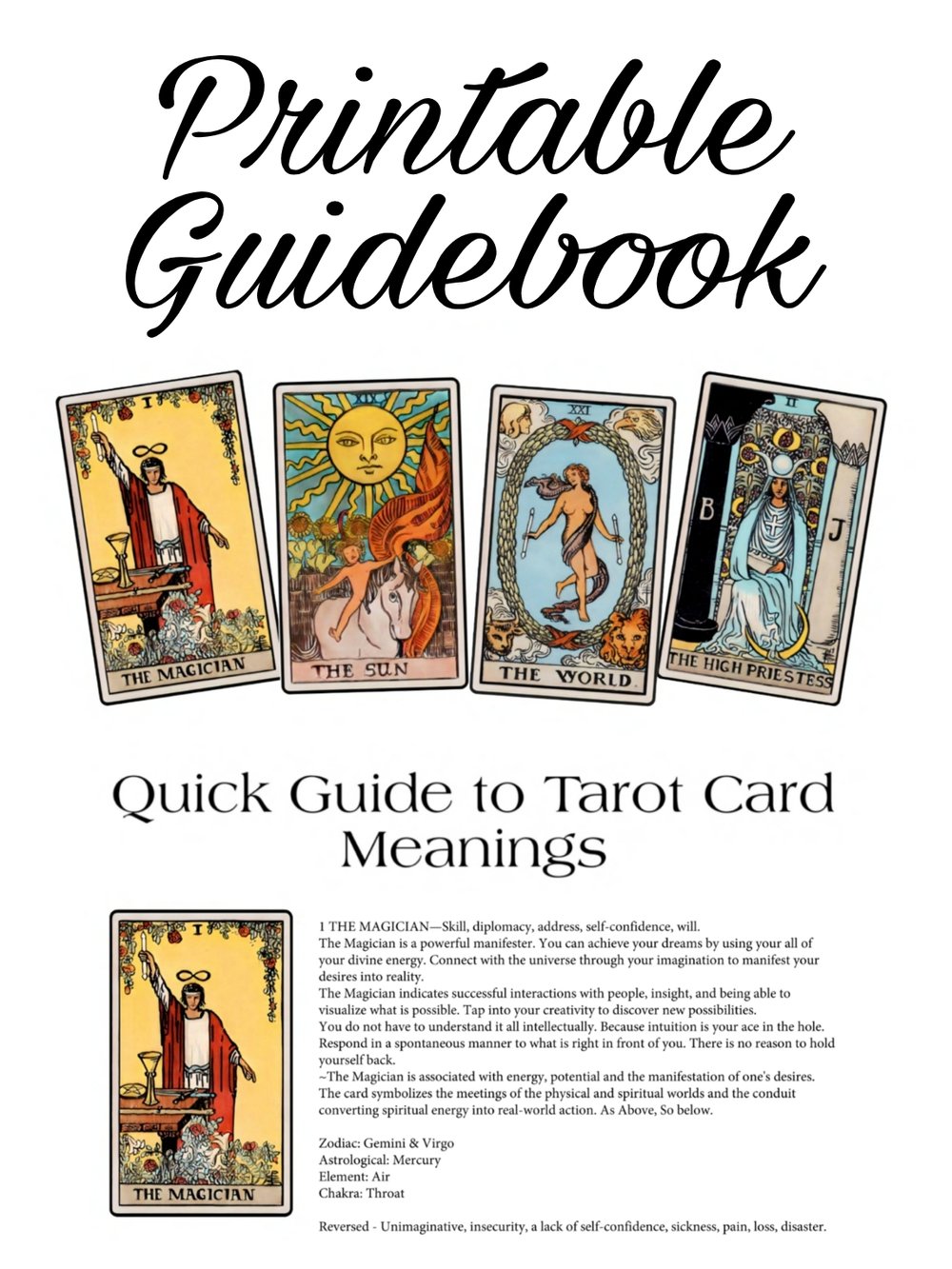
The Magician (I) is the master of manifestation, wielding the tools of the elements to turn dreams into reality. This card encourages you to harness your skills and resources—but it also warns against manipulation or using your power for selfish gains. The challenge? Balancing ambition with integrity.
The High Priestess (II) sits between the conscious and subconscious, inviting you to trust your intuition. She’s the keeper of secrets and hidden knowledge, but her reversed meaning suggests you might be ignoring your inner voice or overanalyzing a situation. The question to ponder: Are you dismissing your gut feelings in favor of logic?
Continue this pattern for all 22 Major Arcana cards, covering their upright and reversed meanings, elemental associations (e.g., The Emperor is Fire of Fire, The Empress is Earth of Earth), and the playful yet profound challenges they present. For example:
Death (XIII) isn’t about literal endings—it’s about transformation. This card signals the death of old habits, relationships, or beliefs to make way for renewal. But reversed, it can indicate stagnation or fear of change. The challenge? Letting go of what no longer serves you, even when it feels scary.
The Tower (XVI) is the card of sudden upheaval, breaking down illusions to rebuild on a stronger foundation. Upright, it’s a wake-up call; reversed, it warns of avoiding necessary destruction. The playful question: Are you clinging to a crumbling structure because it’s familiar, even if it’s harmful?
The Minor Arcana: The Nitty-Gritty of Daily Life
While the Major Arcana deals with life’s grand themes, the Minor Arcana—comprising 56 cards divided into four suits—focuses on the everyday experiences, emotions, and challenges we face. Think of them as the “plot twists” in your personal story, offering nuanced insights into relationships, career, and personal growth.
Wands (Fire) represent passion, creativity, and ambition. The Ace of Wands is a burst of inspiration, but the Three of Wands reversed might suggest delays or unmet expectations. The challenge? Staying motivated when progress feels slow.
Cups (Water) dive into emotions, relationships, and intuition. The Six of Cups is nostalgia and childhood memories, but reversed, it can indicate dwelling on the past or unresolved emotional baggage. Ask yourself: Are you holding onto old wounds that need healing?
Swords (Air) cut through illusions with clarity and intellect. The Queen of Swords is sharp-witted and independent, but her reversed counterpart can signal coldness or over-critical thinking. The playful question: Are you using your words to uplift or to wound?
Pentacles (Earth) ground us in the material world—money, health, and stability. The Ten of Pentacles is family legacy and abundance, but reversed, it warns of financial stress or neglecting practical needs. The challenge? Balancing material security with emotional fulfillment.
For each suit, provide detailed explanations of the Ace through King cards, including their elemental associations, upright and reversed meanings, and the challenges they pose. Use examples like:
Four of Pentacles is about holding onto security, but reversed, it can mean greed or fear of change. The question to ask: Are you hoarding resources out of fear, or are you open to sharing your abundance?
Eight of Swords shows a figure trapped by their own thoughts, but the card’s message is that the bonds are often illusory. Reversed, it suggests breaking free from mental constraints. The playful nudge: Are you your own worst prison guard?
Reading Reversed Cards: The Shadow Side of Tarot
Reversed cards aren’t “bad”—they’re simply offering a different perspective, often highlighting internal struggles, blocked energy, or the need for a shift in approach. For example, the reversed Lovers card might indicate disharmony in a relationship, but it could also suggest a need for self-love or a decision that prioritizes personal values over others’ expectations.
To read reversed cards effectively, consider:
- Blocked Energy: The card’s energy is stifled or suppressed (e.g., reversed Justice might indicate unfairness or a lack of accountability).
- Internal Struggles: The challenge lies within you (e.g., reversed Strength could point to self-doubt or lack of courage).
- External Challenges: The card’s energy is distorted or misapplied (e.g., reversed Ten of Cups might show a fractured family dynamic).
Always ask: What is this card trying to teach me about my current situation? rather than assuming it’s a “negative” omen.
Tarot Spreads to Deepen Your Understanding
Spreads are the frameworks that give structure to your tarot readings. While a single-card pull offers quick insights, multi-card spreads provide a deeper dive into complex situations. Here are three spreads to try:
The Celtic Cross is the classic 10-card spread that covers past influences, present challenges, subconscious factors, and future possibilities. It’s ideal for comprehensive readings but can feel overwhelming for beginners. Start by focusing on the first few cards to build confidence.
The Relationship Spread uses 5 cards to explore dynamics between two people (or parts of yourself). Cards 1-2 represent each person’s feelings, Card 3 shows the connection, Card 4 highlights challenges, and Card 5 offers advice. The playful question: What is the unspoken language between you two?
The Career Path Spread (4 cards) helps you navigate professional challenges or decisions. Card 1: Current situation, Card 2: Strengths to leverage, Card 3: Obstacles to overcome, Card 4: Potential outcome. The challenge? Are you playing to your strengths, or are you ignoring a key asset?
Encourage readers to experiment with spreads, journal their interpretations, and trust their intuition—even if the cards seem contradictory at first.
Common Tarot Pitfalls and How to Avoid Them
Even experienced readers can fall into traps that skew their interpretations. Here are a few to watch out for:
- Over-reliance on Guidebooks: While guidebooks are helpful, they shouldn’t replace your intuition. Ask yourself what the card *feels* like in the context of your reading.
- Ignoring the Question: If your question is vague (e.g., “What’s my future?”), the cards will reflect that vagueness. Refine your queries to get clearer answers.
- Fear of Reversed Cards: Reversed cards aren’t “bad”—they’re just offering a different layer of insight. Embrace them as part of the tarot’s depth.
- Reading for Others Without Permission: Always ask before offering a reading to someone else. Tarot is a personal tool, and not everyone is open to its messages.
Conclusion
Tarot is far more than a deck of cards—it’s a mirror, a guide, and a playful companion on your journey through life’s ups and downs. By understanding the meanings of each card, the nuances of reversed interpretations, and the art of crafting meaningful spreads, you’ll unlock a tool that can illuminate your path, challenge your perspectives, and inspire growth. Remember, the tarot doesn’t predict the future; it reflects the present and offers wisdom to shape what comes next.
So, shuffle your deck, ask a question that sparks curiosity, and let the cards speak. Whether you’re seeking clarity, validation, or a gentle nudge in a new direction, tarot is here to guide you—one card at a time.
FAQ
What is the difference between Major and Minor Arcana cards?
Major Arcana cards represent life's major lessons and spiritual themes, while Minor Arcana cards focus on day-to-day events and personal challenges.
How do I interpret reversed tarot cards?
Reversed cards indicate blocked energy, internal challenges, or external distortions and should not be viewed as purely negative.
What are some beginner-friendly tarot spreads?
The Celtic Cross, Relationship Spread, and Career Path Spread are excellent for gaining deeper insights.
Why should I not rely solely on tarot guidebooks?
Because intuition plays an important role, and cards can have personal meanings beyond the guidebook interpretations.
How can I improve my tarot reading skills?
Regular practice, journaling, exploring different spreads, and trusting your intuition will enhance your readings.
Leave a Reply