Short Answer
Welcome to the ultimate resource for understanding the meanings of all 78 tarot cards. Whether you’re a beginner just starting your journey or an experienced reader looking to deepen your knowledge, this guide will provide comprehensive insights into each card’s symbolism, interpretations, and significance in readings. You’ll discover how to interpret the Major Arcana, Minor Arcana, and Court Cards, along with practical tips for applying these meanings in real-life tarot spreads. By the end, you’ll have a solid foundation to confidently read tarot cards for yourself and others.
Understanding the Structure of the Tarot Deck
The tarot deck consists of 78 cards divided into two main sections: the Major Arcana and the Minor Arcana. The Major Arcana contains 22 cards, each representing significant life events, spiritual lessons, or karmic influences. These cards often signify major turning points or deep personal growth. The Minor Arcana, on the other hand, has 56 cards divided into four suits—Cups, Pentacles, Swords, and Wands—each reflecting everyday situations, challenges, and experiences. The Court Cards, which include Pages, Knights, Queens, and Kings, represent personalities, energies, or people in your life. Understanding this structure is essential for interpreting tarot readings accurately.
The Major Arcana: Your Spiritual Journey Unveiled
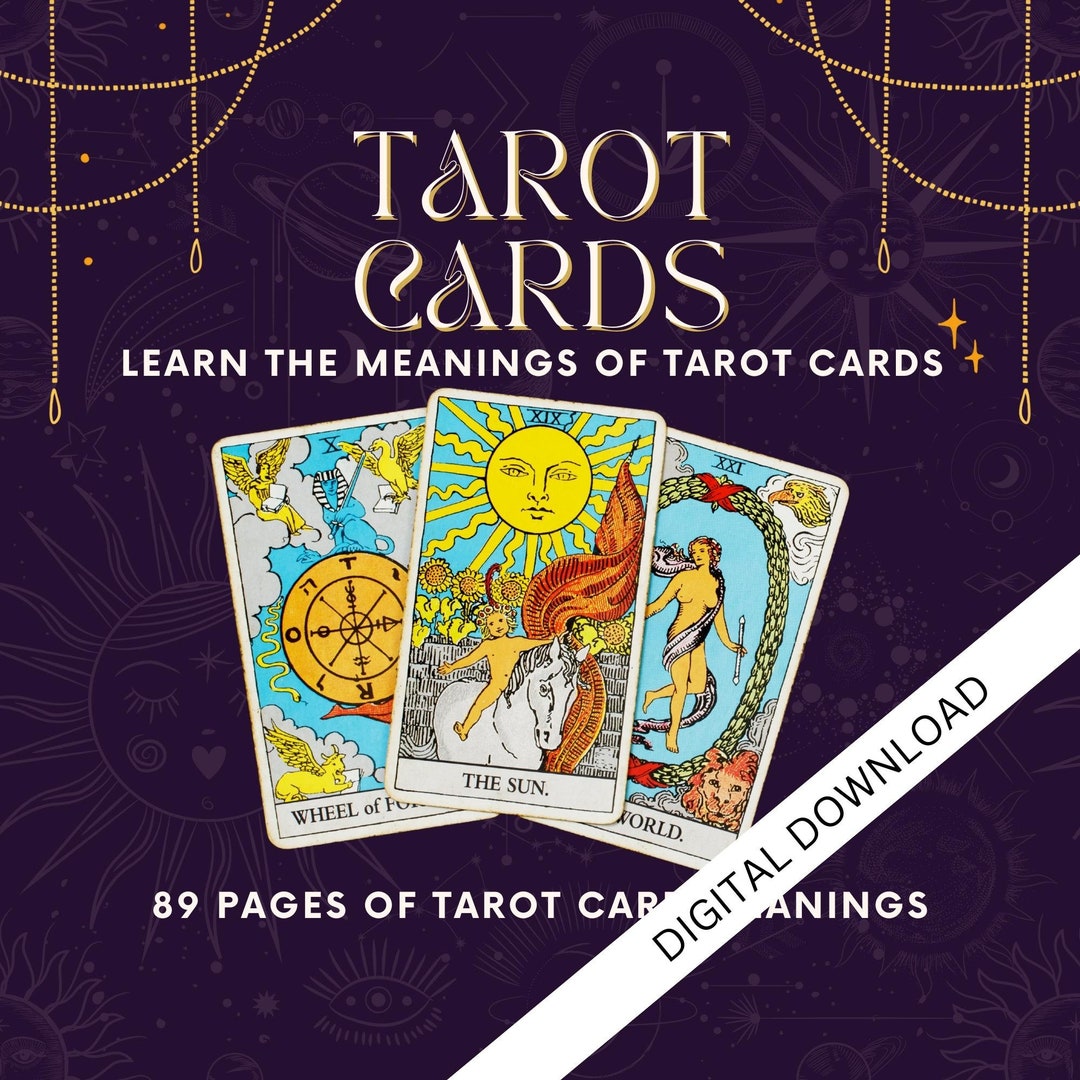
The Major Arcana cards tell a story of personal and spiritual development. Starting with The Fool (card 0), which represents new beginnings and spontaneity, and ending with The World (card 21), symbolizing completion and fulfillment, these cards guide you through life’s most profound lessons. Each card carries rich symbolism and archetypal energy. For example, The Magician (card 1) embodies manifestation and resourcefulness, while The High Priestess (card 2) represents intuition and hidden knowledge. Learning the Major Arcana helps you recognize the overarching themes and spiritual messages in your tarot readings.
Exploring the Minor Arcana: Everyday Life and Challenges
The Minor Arcana delves into the details of daily life, offering insights into relationships, career, finances, and personal growth. The four suits each have unique themes: Cups relate to emotions and relationships, Pentacles to material wealth and practical matters, Swords to intellect and conflict, and Wands to creativity and passion. For instance, the Ace of Cups signifies new emotional beginnings, while the Ten of Pentacles represents financial stability and family legacy. Understanding the Minor Arcana allows you to interpret the nuances of specific situations in your readings, providing clarity and guidance tailored to your circumstances.

Interpreting Court Cards: Personalities and Energies
The Court Cards—Pages, Knights, Queens, and Kings—represent people, energies, or aspects of yourself. Pages often symbolize students, messengers, or new ideas, while Knights embody action, movement, and sometimes impulsiveness. Queens represent mature, nurturing, or receptive energy, and Kings signify authority, mastery, and leadership. For example, the Queen of Swords may indicate an independent, analytical woman, while the Knight of Wands suggests a passionate, adventurous spirit. Learning to interpret Court Cards adds depth to your readings, helping you identify the roles people play in your life or the qualities you need to embody.

Reversed Tarot Cards: Uncovering Hidden Meanings
Reversed tarot cards occur when a card appears upside down in a spread, indicating blocked energy, internal struggles, or the need for introspection. For example, the upright Three of Cups celebrates friendship and joy, while reversed, it may suggest gossip, overindulgence, or emotional distance. Reversals add complexity to your readings, revealing subconscious influences or areas requiring attention. However, interpretations vary—some readers avoid reversals, focusing solely on the upright meanings. Experiment with both approaches to see what resonates with you and enhances your readings.
Practical Tips for Reading All Tarot Cards
To master tarot readings, start by studying one card at a time, noting its imagery, symbolism, and traditional meanings. Use a guidebook or reputable online resource for reference, but trust your intuition to interpret the cards in a way that feels meaningful to you. Practice daily draws or simple spreads to build familiarity with the deck. Keep a tarot journal to track your interpretations and observe patterns over time. When reading for others, ask open-ended questions and encourage them to share their insights—tarot is a collaborative process. Finally, remember that tarot is a tool for reflection, not a definitive answer. Approach each reading with an open mind and a willingness to learn.
Common Misconceptions About Tarot Cards
Many people believe tarot cards predict the future with absolute certainty, but they are better described as a mirror reflecting potential outcomes based on current energies. Another misconception is that tarot is inherently “dark” or associated with evil—tarot is a neutral tool that can be used for guidance, self-discovery, and empowerment. Some also think you need psychic abilities to read tarot, but intuition and symbolic thinking are more important than supernatural gifts. Dispelling these myths helps you approach tarot with a balanced and open perspective, allowing for more accurate and insightful readings.
Conclusion
Mastering the meanings of all 78 tarot cards is a journey of self-discovery and spiritual growth. By understanding the Major Arcana, Minor Arcana, and Court Cards, you gain a comprehensive toolkit for interpreting tarot spreads with confidence. Remember that tarot is a personal and intuitive practice—your interpretations may evolve as you deepen your connection with the cards. Whether you use tarot for guidance, meditation, or creative inspiration, it serves as a powerful resource for navigating life’s challenges and celebrating its joys. Keep exploring, practicing, and trusting your intuition, and let the tarot illuminate your path.
FAQ
What are the Major Arcana cards in tarot?
The Major Arcana consists of 22 cards that represent significant life events, spiritual lessons, and major turning points in tarot readings.
What is the difference between the Minor Arcana and Major Arcana?
The Major Arcana reflects major life themes and spiritual lessons, while the Minor Arcana focuses on everyday situations and challenges through four suits.
How do reversed tarot cards affect readings?
Reversed cards typically indicate blocked energy, internal struggles, or the need for introspection, adding depth and complexity to interpretations.
Do I need psychic abilities to read tarot cards?
No, intuition and understanding of symbolism are more important than psychic abilities for effective tarot reading.
Can tarot cards predict the future?
Tarot cards reflect potential outcomes based on current energies rather than providing absolute predictions of the future.
Leave a Reply