Short Answer
The Death Tarot card is one of the most misunderstood cards in the deck, often evoking fear and dread due to its ominous name and skeletal imagery. However, its true meaning goes far beyond literal death. In this guide, you’ll discover what the Death card truly represents, why it fascinates so many, and how to interpret its messages in readings. By the end, you’ll see why endings are not just necessary but essential for growth, transformation, and renewal.
The Death Tarot Card: More Than Just an Ending
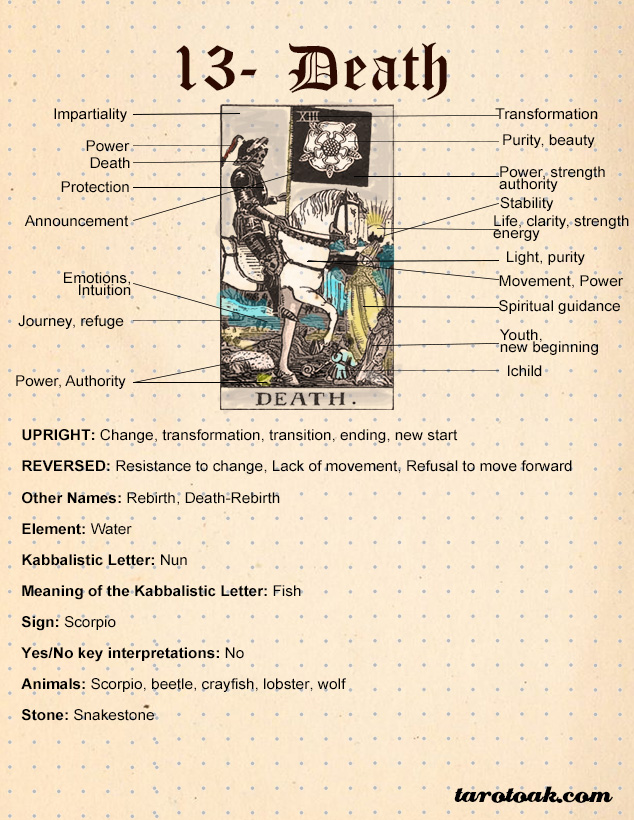
The Death card, numbered XIII in the Major Arcana, is often depicted with a skeletal figure on horseback, holding a black banner adorned with a white rose. Despite its grim appearance, the card rarely signifies physical death in a tarot reading. Instead, it symbolizes transformation, change, and the end of one phase to make way for another. This card represents the natural cycle of life—where decay and endings pave the way for new beginnings.
Many people are drawn to the Death card because it resonates with the universal human experience of fearing the unknown. The card’s imagery forces us to confront the inevitability of change, which can be both terrifying and liberating. Its fascination lies in its honesty: it doesn’t sugarcoat the pain of endings but acknowledges that they are a necessary part of growth.

In readings, the Death card often appears when a major shift is on the horizon. This could be the end of a relationship, a career change, or a personal transformation that requires shedding old habits or beliefs. The card encourages you to embrace these changes rather than resist them, as they are essential for your evolution.
Upright vs. Reversed: Decoding the Card’s Message
The meaning of the Death card shifts depending on whether it appears upright or reversed in a spread. In its upright position, the Death card is a powerful sign of positive transformation. It signals that you are undergoing or about to undergo a significant change that will lead to personal growth. This could manifest as leaving a toxic situation, ending a stagnant phase in your life, or even a spiritual awakening.
When the Death card appears reversed, its message becomes more nuanced. It may indicate resistance to change or an unwillingness to let go of the past. This could manifest as clinging to outdated relationships, careers, or beliefs that no longer serve you. The reversed Death card can also suggest that you are avoiding necessary endings, which may lead to stagnation or missed opportunities.

However, the reversed Death card isn’t always negative. It can also indicate that the transformation you’re experiencing is happening internally rather than externally. For example, you might be processing grief or working through deep emotional changes that aren’t yet visible to others. The key is to reflect on whether the resistance you’re feeling is healthy or if it’s holding you back from necessary growth.
Why Endings Are Necessary for Growth
One of the most profound lessons the Death card teaches is that endings are not the enemy—they are the foundation of new beginnings. Without endings, there can be no space for growth. Consider the natural world: trees shed their leaves in autumn to prepare for new growth in spring. Similarly, the Death card reminds us that letting go of what no longer serves us is essential for progress.
In a tarot reading, the Death card often appears when you’re on the cusp of a major life transition. This could be a career shift, the end of a relationship, or a spiritual awakening. The card reassures you that while these endings may feel painful, they are necessary for your evolution. It encourages you to trust the process, even when the outcome is uncertain.
Many people are drawn to the Death card because it validates their fears about change. It acknowledges that endings can be difficult but also highlights their transformative power. By embracing the message of the Death card, you can learn to see endings not as failures but as opportunities for renewal and rebirth.
Common Misconceptions About the Death Card
One of the biggest misconceptions about the Death card is that it predicts physical death. While the card’s imagery is undeniably dark, its true meaning is far more metaphorical. The Death card is about psychological, emotional, and spiritual transformation rather than literal demise. It’s a card of rebirth, not destruction.
Another common misunderstanding is that the Death card always signifies a negative event. In reality, the card’s message is neutral—it’s the interpretation that determines whether the change is seen as positive or negative. For example, ending a toxic relationship may feel painful in the moment, but it ultimately leads to personal growth and happiness.
The Death card’s fascination also stems from its ability to challenge our deepest fears. It forces us to confront the inevitability of change and the unknown. By doing so, it offers a chance to grow stronger and more resilient. The card’s message is clear: endings are not to be feared, but embraced as a natural part of life’s cycle.
How to Work with the Death Card in Readings
If the Death card appears in your reading, take a moment to reflect on what areas of your life are undergoing transformation. Ask yourself: What old patterns, beliefs, or relationships no longer serve me? The card encourages you to release what is holding you back and make space for new opportunities.
Journaling can be a powerful tool for working with the Death card. Write about the changes you’re experiencing and how they make you feel. Are you resisting them, or are you ready to embrace the unknown? The Death card reminds you that growth often requires discomfort, but the rewards are worth it.
Meditation and visualization can also help you connect with the Death card’s energy. Imagine yourself releasing what no longer serves you and stepping into a new phase of your life. Trust that the universe is guiding you toward your highest good, even when the path isn’t clear.
Conclusion
The Death Tarot card is a powerful reminder that endings are not the end of the story—they are the beginning of something new. Whether it appears upright or reversed, the Death card challenges you to embrace change, release what no longer serves you, and trust in the process of transformation. By understanding its true meaning, you can learn to see endings not as failures but as necessary steps toward growth and renewal.
Next time the Death card appears in your reading, remember: it’s not a warning of doom, but an invitation to evolve. Endings are necessary, and the Death card is here to guide you through them with courage and wisdom.
FAQ
What does the Death card represent in tarot?
It represents transformation, change, and the end of one phase to make way for another, rather than literal death.
Is the Death card always negative?
No, it is a neutral card whose interpretation depends on context; it often signifies necessary endings that lead to growth.
How should I interpret the Death card when reversed?
It may indicate resistance to change or internal emotional transformation not yet visible externally.
Why are endings important according to the Death card?
Endings clear the path for new opportunities, growth, and renewal.
How can I work with the Death card in my readings?
Use reflection, journaling, meditation, and visualization to embrace change and transformation.
Leave a Reply