Short Answer
The King of Cups, one of the prominent figures in the Tarot deck, embodies a profound and multifaceted archetype that extends beyond mere symbolism. This tarot card resonates with emotional depth, compassion, and wisdom, traits that mirror pivotal themes in Christian doctrine. Understanding the King of Cups from a Christian perspective unveils an intricate tapestry of meaning that invites reflection on emotional intelligence and benevolence within the framework of faith.
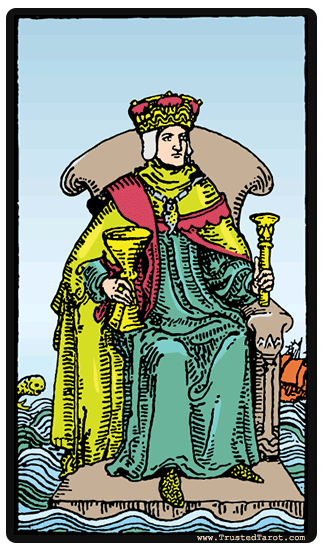
At its core, the King of Cups signifies emotional mastery and the ability to balance feelings with intellect. In a world brimming with tumultuous emotion, this card represents the ideal of emotional stability and mature understanding. The character of the King—sitting regally upon his throne, often depicted with a chalice in hand—emphasizes the importance of nurturing relationships and fostering community. This notion reflects the Christian call to embody compassion and love, resonating deeply with the teachings of Jesus Christ, who is often viewed as the ultimate exemplar of emotional wisdom and kindness.
In Christian literature, the concept of the heart plays a pivotal role. The King of Cups symbolizes not just emotional responses but also the act of loving unconditionally. Jesus, regarded as a figure of mercy, invites believers to embrace others warmly. As Matthew 5:44 proclaims, “But I say to you, Love your enemies and pray for those who persecute you,” the King of Cups reverberates with this idea of empathy towards others, encouraging us to navigate our emotional realms while retaining a gentle spirit.
Beyond this, the rich symbolism embedded in the King of Cups illustrates the dichotomy between firmness and empathy. The King stands as a paragon of authority, engaged in introspection while simultaneously providing guidance to his subjects. This reflects a common observation—that great leaders often possess both strength and sensitivity. In the Christian context, this duality is embodied in the figure of God, who is portrayed as both a steadfast protector and a compassionate father. Leaders within the church are thus called to emulate this balance, leading with both authority and understanding, forging paths of guidance draped in divine love.
Moreover, it is significant to note how the chalice, often synonymous with the King of Cups, serves as a symbol of divine blessing and spiritual nourishment. This imagery can draw parallels to the Communion sacrament in Christianity, where believers partake in the sacred ritual as a remembrance of Christ’s sacrifice and love. Just as the King shares the abundance in his chalice, Christians are called to share in the love and grace bestowed upon them, flowing from hearts filled with gratitude and joy.
The King of Cups also invites introspection about emotional complexities in one’s spiritual journey. In navigating the intricacies of life, it becomes imperative to confront not only external challenges but also the internal turmoil that sometimes clouds one’s faith. The King encourages the acknowledgment and expression of these feelings, fostering a genuine relationship with God. Ephesians 4:26 advises, “In your anger do not sin: Do not let the sun go down while you are still angry,” which echoes the King’s wisdom in using emotional insights to cultivate reconciliation and understanding within oneself and towards others.
The visual representation of the King of Cups frequently evokes tranquility, imbued with serene waters in the background. This symbolism can parallel the notion of peace found in trusting God’s plan. The New Testament frequently emphasizes the comfort of God’s presence amid life’s tempests, as expressed in Philippians 4:7, where peace transcends understanding. The King’s composure serves as a model, depicting how faith can shield against emotional volatility, encouraging believers to remain steadfast in their belief, much like the King whose foundation rests upon the waters of emotional and spiritual depth.
Additionally, the emotional intelligence manifested by the King extends to hand-in-hand relationships with vulnerability. In recognizing one’s own feelings, he provides a quiet strength that encourages openness. This notion resonates with the Christian faith’s understanding of the necessity of vulnerability—realizing that we are all fallible beings in need of grace. By sharing their struggles, Christians demonstrate authenticity, reinforcing community bonds and promoting healing through shared experiences.
Lastly, the King of Cups invites an exploration of mentorship and guidances, resonating with the biblical imperative of discipleship. Just as the King offers wisdom to those he counsels, Christians are called to mentor and guide younger generations in faith. This mirrors the scriptural ethos of sharing knowledge and broadening understanding, as echoed in Proverbs 27:17, “As iron sharpens iron, so one person sharpens another.” The King depicts the role of an educator, intertwining emotional intelligence and spiritual wisdom, creating pathways for growth and enlightenment.
In conclusion, the interpretation of the King of Cups from a Christian perspective offers a rich tableau of emotional intelligence, wisdom, and benevolence. The card not only emphasizes the importance of emotional mastery but also echoes deeper spiritual truths that align with Christian teachings. Through the imagery of compassion, nurturing relationships, and the balance of emotional and spiritual integrity, the King inspires individuals to reflect on their own emotional landscapes, guiding them towards a life of love, understanding, and profound grace.
FAQ
What does the King of Cups represent in tarot readings?
The King of Cups represents emotional balance, compassion, wisdom, and mature understanding in tarot readings.
How is the King of Cups interpreted from a Christian perspective?
From a Christian perspective, the King of Cups symbolizes unconditional love, empathy, spiritual nourishment, and compassionate leadership in alignment with biblical teachings.
What is the significance of the chalice in the King of Cups card?
The chalice symbolizes divine blessing and spiritual nourishment, paralleling the Christian Communion sacrament and the sharing of grace and love.
How can the King of Cups guide personal growth?
The King of Cups encourages emotional introspection, vulnerability, mentorship, and balancing authority with empathy for spiritual and emotional development.

Leave a Reply