Short Answer
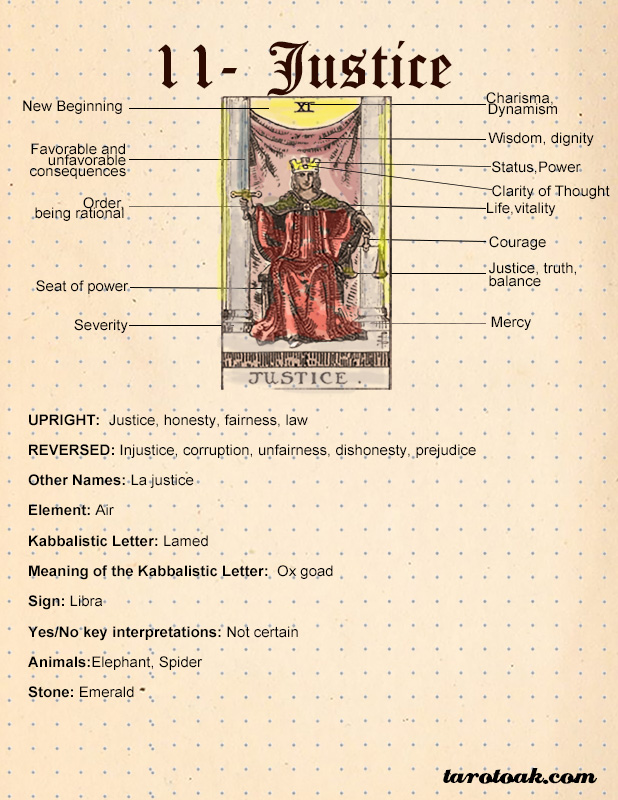
The Justice card, when upright, symbolizes fairness, truth, and the universal principles of equity. However, when reversed, its implications shift drastically, presenting a nuanced spectrum of interpretations. Within a Christian perspective, the Justice Reversed Tarot Card represents a complex dance between moral dilemmas and divine expectations, raising questions about ethical failures and personal accountability.
This card often calls attention to a dissonance between our actions and divine law. In Christianity, there is a strong emphasis on righteousness and justice as reflections of God’s character. Hence, the reversed Justice card can evoke a profound sense of unease, emphasizing how individuals may stray from the path of divine principles. There is a suggestion that when justice is reversed, it may reflect a perversion of moral guidance, leading to personal and social ramifications.
One common observation within the Christian context is that the Justice Reversed tarot card can indicate dishonesty and deceit. When fairness is compromised, individuals are often ensnared in a web of moral ambiguity. The act of self-serving choices, driven by avarice or ambition, can obscure the inherent value of truth. This not only affects personal integrity but also disrupts relationships and communities, reinforcing the notion of original sin as articulated in Christian theology. Sin, as defined in Christian understanding, often stems from failing to align with God’s justice. Thus, the reversed Justice card warns of the spiritual repercussions that ensue when one wanders from God’s laws.
Moreover, examining the implications of injustice—both received and committed—invites deeper reflection on societal structures. For Christians, the notion of systemic sin becomes pertinent. The reverse Justice card might prompt individuals to consider their roles within societal injustices, whether that manifests through passive complicity or active participation. The discomfort stirred by this realization invites an opportunity for repentance—a fundamental tenet of Christianity—highlighting the need for humble introspection and the pursuit of restorative justice.
Among the deeper reasons for fascination with the reversed Justice card lies its propensity to unearth unresolved conflicts. For Christians dealing with personal grievances, this card serves as a stark reminder that unresolved bitterness can lead to spiritual decay. The failure to address grievances or to seek restoration can elicit a cycle of resentment. A Christian understanding of forgiveness emphasizes the necessity of letting go of grudges, suggesting that the reversed Justice card is a plea for reconciliation, urging individuals to heed the teachings of Christ about mercy and forgiveness.
The complexities of the human experience are amplified when one considers that Justice Reversed can also point to a lack of accountability. In reinforcing the detriment of ignoring consequences, this card underscores the importance of moral responsibility. In a world rife with moral relativism, it serves as a clarion call for Christians to adhere to their convictions. Accountability does not merely safeguard individual integrity, but it also reinforces community strength. The absence of accountability can lead to disarray, or what some scholars deem spiritual contagion, a phenomenon where malaise breeds among the uninhibited.
Additionally, the reversed Justice tarot card can signify an internal struggle with ethical dilemmas. It usually evokes feelings of guilt, shame, or uncertainty about making morally sound decisions. Individuals grappling with personal justice are often caught between the secular and the divine. This inherent conflict might manifest in a struggle to discern right from wrong, echoing the Christian call for discernment through prayer and scripture. The act of seeking divine input or wisdom underscores the idea that just actions align closely with divine will—a key focus within Christian teachings.
Furthermore, the reversed Justice card can illustrate the dynamics of power imbalance. In many cases, perceptions of power can lead to exploitation or a failure to act justly. A Christian viewpoint underscores the dialog around servanthood and humility—essential qualities that counteract the temptations of self-aggrandizement. Reflecting on the role of Jesus, who epitomized servant leadership, one can see a stark contrast with the moral perversions signified by the reversed Justice card. Such a juxtaposition compels Christians to reassess their relationship with authority and power, reminding them of the divine expectation to act with integrity and fairness.
Ultimately, the Justice Reversed tarot card serves as a profound locus of contemplation. It delimits the path of ethical failure while illuminating the avenues for repentance and reconciliation through accountability and discernment. The forceful admonishments contained within its imagery prompt Christians to confront their misalignments with divine justice and reflect on the broader societal contexts we inhabit. The call to life lived in accordance with divine laws is both a challenge and an invitation—a potent reminder of the weight of justice in spiritual and communal well-being.
In conclusion, the Justice Reversed card encapsulates a spectrum of moral inquiries that resonate deeply within the Christian ethos. It is an invitation to navigate one’s ethical landscape with vigilance and grace, urging believers to align their lives with the principles of truth and righteousness set forth by divine authority. To embrace this card’s meaning is to acknowledge the complexities of the human experience while fostering a continual pursuit of justice in all facets of life.
FAQ
What does the Justice Reversed tarot card mean in general tarot readings?
In general tarot readings, the Justice Reversed card often signals dishonesty, unfairness, lack of accountability, and moral confusion, indicating a need to address ethical dilemmas and restore balance.
How does the Justice Reversed card relate to Christian beliefs?
Within Christianity, the Justice Reversed card reflects moral failures, spiritual consequences of sin, and the need for repentance, forgiveness, and alignment with God's divine justice and righteousness.
Can the Justice Reversed card indicate personal growth?
Yes, it can highlight internal struggles with ethics and accountability, prompting self-reflection, forgiveness, and reconciliation as important steps toward personal and spiritual growth.

Leave a Reply