Short Answer
The Death tarot card, often perceived with an air of trepidation, carries a depth of meaning that transcends its ominous title. In the context of relationships, particularly when viewed through a Christian lens, the symbolism embedded within this card invites contemplation, reflection, and ultimately a nuanced understanding of transformation and renewal. The juxtaposition of life and death is at the heart of many Christian teachings, making the Death tarot card a particularly intriguing subject for exploration.
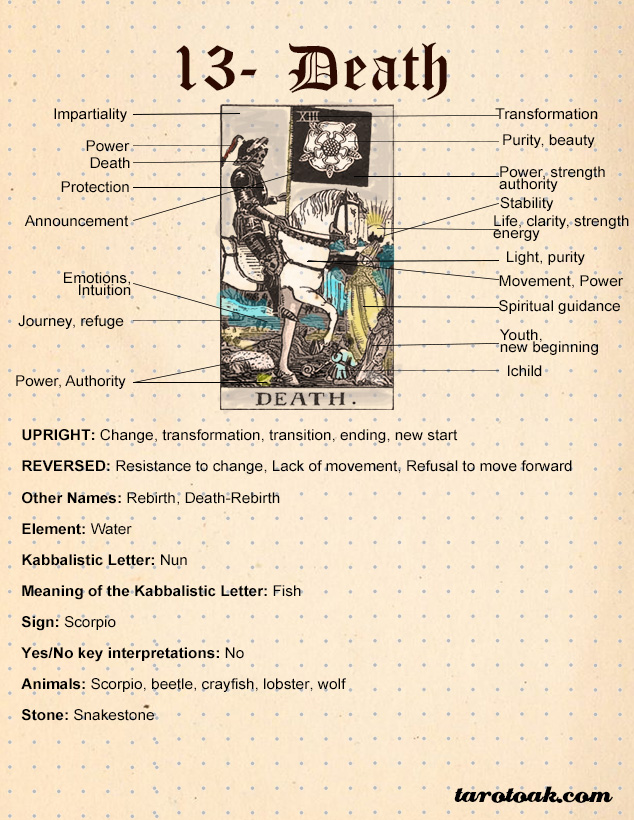
To begin, it’s essential to recognize that the Death card, often represented by a skeletal figure brandishing a scythe, does not foreshadow physical demise. Instead, it epitomizes the cyclical nature of existence—a shedding of the old to make way for new beginnings. This is akin to the Christian belief in resurrection and rebirth, emphasizing the idea that endings are not solely adversities but rather necessary transitions. Within the sphere of relationships, this card serves as a potent reminder that personal growth often necessitates the conclusion of certain dynamics, thereby allowing for fresh connections to emerge.
Consider the various stages of relationships. They frequently mirror the cycle of life: inception, growth, deterioration, and renewal. The Death card resonates with the need for individuals to confront the uncomfortable aspects of their relationships. For Christians, this may translate to examining the essence of love and forgiveness, as taught in biblical doctrines. When faced with the need to end a relationship, whether it be due to conflict or personal growth, Christians are urged to navigate this tumultuous terrain with grace and an understanding of divine purpose.
In relationships marked by toxicity or stagnation, the transformative aspect of the Death card is salient. It encourages individuals to evaluate their emotional investments. Perhaps one partner has outgrown the other or the relationship has devolved into patterns of negativity. The Christian perspective emphasizes that God desires wholeness and peace—principles that may necessitate, at times, a painful but necessary severance. The decision to let go aligns with the fundamental Christian belief that “all things work together for good” (Romans 8:28), suggesting that endings often open doors to new opportunities fashioned by divine will.
Moreover, the Death card beckons introspection. It invites individuals to ponder the nature of their attachments and the roots of their discontent. This is where the intersection of psychological insights and spiritual teachings becomes particularly relevant. True liberation arises from understanding the underlying motives that compel us to remain within unhealthy relationships. By encouraging clarity and honesty in self-reflection, the Death card aligns seamlessly with the Christian doctrine of repentance and renewal. It asks individuals to confront their own faults and failings, and in turn, to seek reconciliation not only with those around them but with their own inner selves.
It is also important to consider how the notion of sacrifice plays a role in both the Death card and Christian relationships. Just as Christ’s sacrifice symbolizes love and redemption, the act of relinquishing a relationship that no longer serves one’s spiritual or emotional well-being can be viewed as an act of love, albeit directed inwardly. By allowing oneself the grace to move on, individuals not only honor their own needs but also affirm their commitment to healthier interactions. This self-honoring choice resonates with the Christian call to love oneself, as reflected in the commandment to “love your neighbor as yourself” (Mark 12:31).
Furthermore, the Death card also signifies a period of transition that may not be readily visible. When relationships dissolve, it is easy to succumb to grief. However, it is crucial to acknowledge that this grief can be a fertile ground for personal growth and spiritual enlightenment. Ecclesiastes 3:1-8 makes clear that there is a time for every matter under heaven—a time to weep, a time to laugh, and crucially, a time to embrace and a time to refrain from embracing. Navigating this cycle gracefully allows individuals to understand the profound wisdom infused within their experiences.
The Death tarot card in the context of relationships serves as a catalyst for profound spiritual introspection. Its messages of transformation echo the fundamental Christian tenets of grace, forgiveness, and renewal. It encourages individuals to embrace the idea that endings can usher in new beginnings, promoting a more fulfilling relational landscape. Thus, when contemplating the Death card, one can find solace in its assurance that every ending is but a prelude to new life—a central theme in both tarot and Christian thought.
In conclusion, the Death tarot card, often misunderstood, encapsulates the essence of transformation and renewal, particularly within the realm of relationships. Through a Christian perspective, it reinforces the understanding that endings can be beautiful and necessary, paving the way for fresh starts imbued with divine purpose. Acknowledging and accepting the cyclical nature of relationships leads to deeper personal growth and an enriched human experience. Armed with this perspective, individuals can learn to navigate the intricate dance of relationships with both faith and courage, aware that every change betokens renewal and hope.
FAQ
What does the Death tarot card mean in relationships?
The Death tarot card signifies transformation and the end of a phase in relationships, encouraging renewal and new beginnings rather than literal death.
Is the Death tarot card a bad omen for love?
No, it represents necessary endings and growth, which can lead to healthier relationships and personal development.
How does the Christian perspective interpret the Death tarot card in relationships?
It aligns the card's themes of transformation with Christian ideas of resurrection, forgiveness, and divine purpose in endings and new beginnings.
Can the Death tarot card indicate toxic relationships?
Yes, it may highlight the need to release unhealthy relationships in order to achieve peace and spiritual well-being.
Leave a Reply