Short Answer
Have you ever drawn two tarot cards and felt like they were whispering a secret just for you? What if those two cards could merge into a single, powerful truth—one that reveals hidden layers of your question, challenge, or journey? In this guide, we’ll explore how two tarot cards can combine to form a deeper, more nuanced message. You’ll learn how to interpret these pairings, recognize patterns, and uncover the playful questions or subtle challenges they pose. By the end, you’ll see how two cards become one truth, offering clarity and insight in unexpected ways.
Why Two Cards Become One Truth
Tarot is a language of symbols, and when two cards appear together, their meanings often intertwine like threads in a tapestry. Alone, each card carries its own energy, but together, they create a story that’s greater than the sum of its parts. This phenomenon is what we call “Combination Meanings”—a way to decode the dialogue between two cards and extract a unified message.
For example, drawing The Magician and The High Priestess might suggest a balance between action and intuition. The Magician represents skill and manifestation, while the High Priestess embodies hidden knowledge and mystery. Together, they hint at a need to trust your instincts while taking deliberate steps forward. The challenge? Avoiding over-analysis or hesitation that could stall your progress.
This interplay isn’t just about adding meanings—it’s about discovering how the cards respond to each other. One card may amplify the other’s strengths, soften its shadows, or introduce a twist that changes everything. The key is to observe their relationship as if they’re characters in a story, each influencing the plot in real time.
How to Approach Two-Card Combinations
Before diving into interpretations, it’s essential to set the stage for your reading. Start by asking a clear question or focusing on a specific area of your life—whether it’s love, career, or personal growth. The more precise your query, the easier it will be to see how the two cards interact. For instance, if you’re wondering about a new relationship, the cards might reveal whether the connection is fated, challenging, or full of potential.
Next, draw two cards and lay them side by side. Take a moment to observe their visual elements, colors, and symbols. Do any themes stand out? For example, The Lovers and Eight of Cups might seem contradictory at first—one speaks of harmony and choice, while the other suggests walking away. But together, they could indicate a relationship that’s beautiful but ultimately unsustainable, urging you to prioritize your own path.
Another approach is to consider the cards’ positions. If you’re using a spread where the first card represents the past and the second the future, their combination might show how past actions are shaping your next steps. Alternatively, if one card is upright and the other reversed, the dynamic becomes even more layered, revealing internal conflicts or external obstacles.
Common Two-Card Combinations and Their Messages
Some pairings appear so frequently that they’ve become tarot classics. Here are a few combinations to familiarize yourself with, along with their potential meanings:
1. The Fool + The World
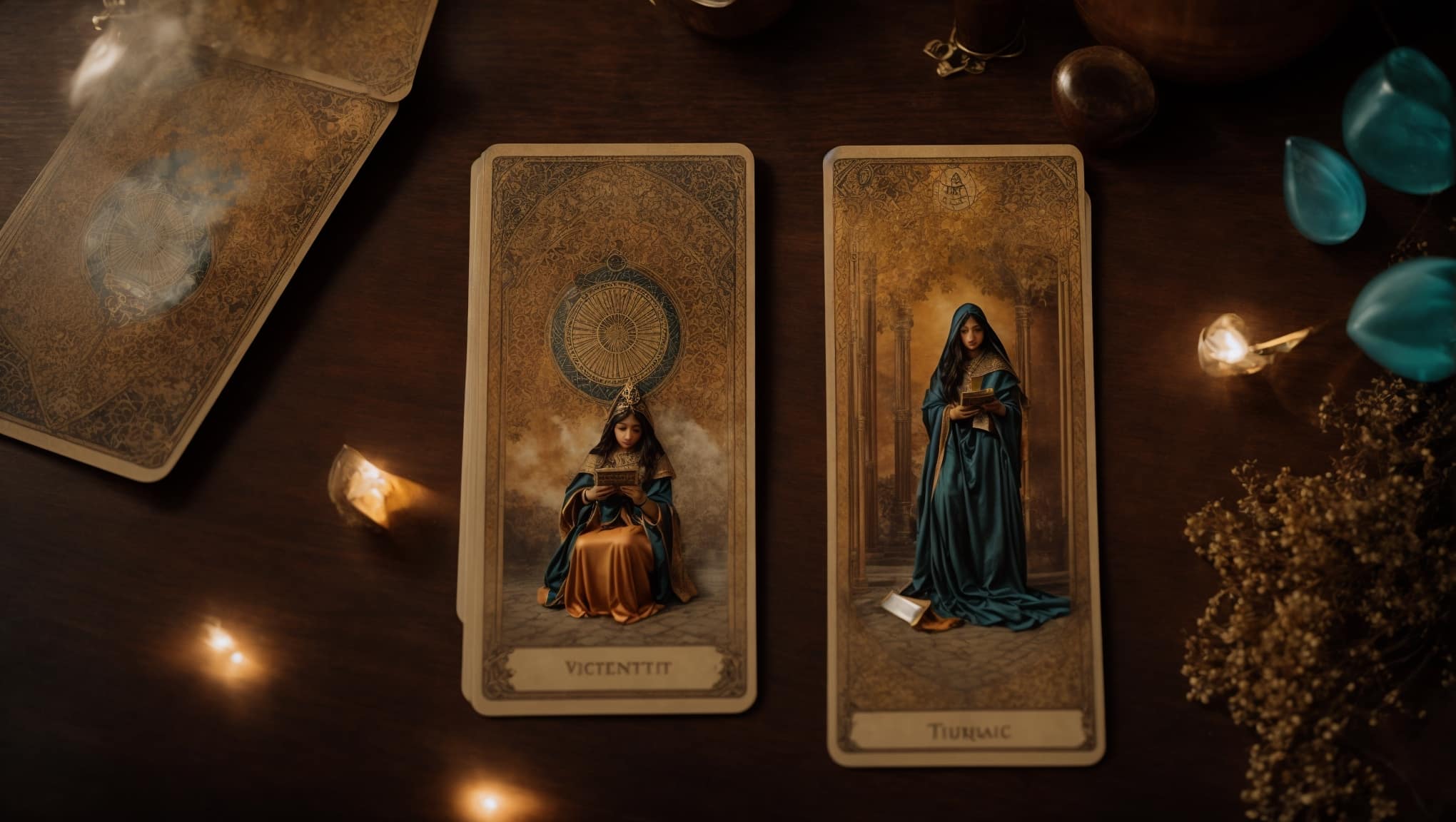
This pairing is all about new beginnings and completion. The Fool represents spontaneity and adventure, while The World symbolizes fulfillment and wholeness. Together, they suggest that you’re on the verge of a major life cycle—perhaps starting a project that will bring you full circle. The playful question here is: Are you ready to leap into the unknown, trusting that you’ll land exactly where you need to be? The challenge? Letting go of the need to control every step of the journey.
2. The Tower + The Star
Destruction and hope rarely go hand in hand, but in tarot, they often do. The Tower signals sudden upheaval, while The Star offers healing and guidance. This combination asks: What if your breakdown is the universe’s way of clearing space for something better? The challenge is to avoid despair during turbulent times and instead look for the silver lining. The message is clear: even when life crumbles, the stars are still there to light your way.
3. Three of Swords + Six of Cups

Heartbreak and nostalgia rarely mix, but this combination does just that. The Three of Swords represents pain, often from the past, while the Six of Cups evokes childhood memories and innocence. Together, they might suggest that old wounds are resurfacing to teach you something new. The playful question: Is your past holding you back, or is it a lesson in disguise? The challenge is to heal without clinging to what once was.
Spotting Patterns in Two-Card Combinations
Not all combinations are as straightforward as the examples above. Sometimes, the cards’ meanings shift based on their suits, numbers, or elemental associations. For instance:
- Same Suit, Different Numbers: If you draw the Ace of Pentacles and the Ten of Pentacles, the message is about material success and legacy. The Ace starts the journey, and the Ten crowns it.
- Opposing Elements: Fire (Wands) and Water (Cups) together can indicate passion clashing with emotion. The question becomes: How do you balance desire with sensitivity?
- Major Arcana Pairings: Two Major Arcana cards (like Justice and Death) often signal karmic lessons or transformative phases. The challenge is to embrace change without resistance.
To spot these patterns, keep a tarot journal where you record your combinations and the insights they bring. Over time, you’ll start to see recurring themes—whether it’s a love of adventure, a fear of commitment, or a need for boundaries.
Playing with Two-Card Combinations
Tarot is as much about intuition as it is about structure. Once you’re comfortable with the basics, try experimenting with your own interpretations. Here’s how:
- Reverse the Cards: Draw two cards and interpret them in reverse. How does the message change? For example, the reversed Five of Cups might suggest wallowing in regret, while the upright Eight of Swords could mean you’re trapped by your own thoughts.
- Add a Third Card: Pull a third card to act as a mediator between the first two. Does it resolve their conflict, or does it introduce a new layer of complexity?
- Use a Timer: Set a timer for one minute and write down the first impressions that come to mind when you see the two cards. Often, your gut reaction holds the most truth.
The goal isn’t to find a “correct” answer but to engage with the cards in a way that feels authentic to you. The more you play, the more you’ll trust your ability to decode their language.
Conclusion
Two tarot cards are like two voices in a conversation—each with its own perspective, but together, they create something entirely new. Whether they harmonize, clash, or challenge each other, their combination is a mirror to your inner world, reflecting questions you may not have dared to ask and truths you’re ready to uncover.
Next time you draw two cards, resist the urge to overthink. Instead, ask yourself: What story are these two trying to tell me? The answer might surprise you. And remember, the most powerful truths often come not from a single card, but from the dance between two.
FAQ
What does it mean when two tarot cards are drawn together?
When two tarot cards appear together, their meanings combine to form a deeper, unified message that can reveal new insights not apparent from each card alone.
How can I interpret two-card tarot combinations?
Interpretation involves observing the cards’ imagery, suits, numbers, and positions, and considering how their energies interact, amplify, or challenge each other within the context of your question.
Are certain two-card combinations more significant than others?
Yes, some combinations, especially involving Major Arcana cards or recurring pairings, carry classic meanings and important messages about life cycles, challenges, and transformations.
Can reversed cards affect the meaning of a two-card combination?
Absolutely. Reversed cards add complexity and may indicate blocked energies, internal conflicts, or obstacles that influence the overall message of the combination.
Leave a Reply