
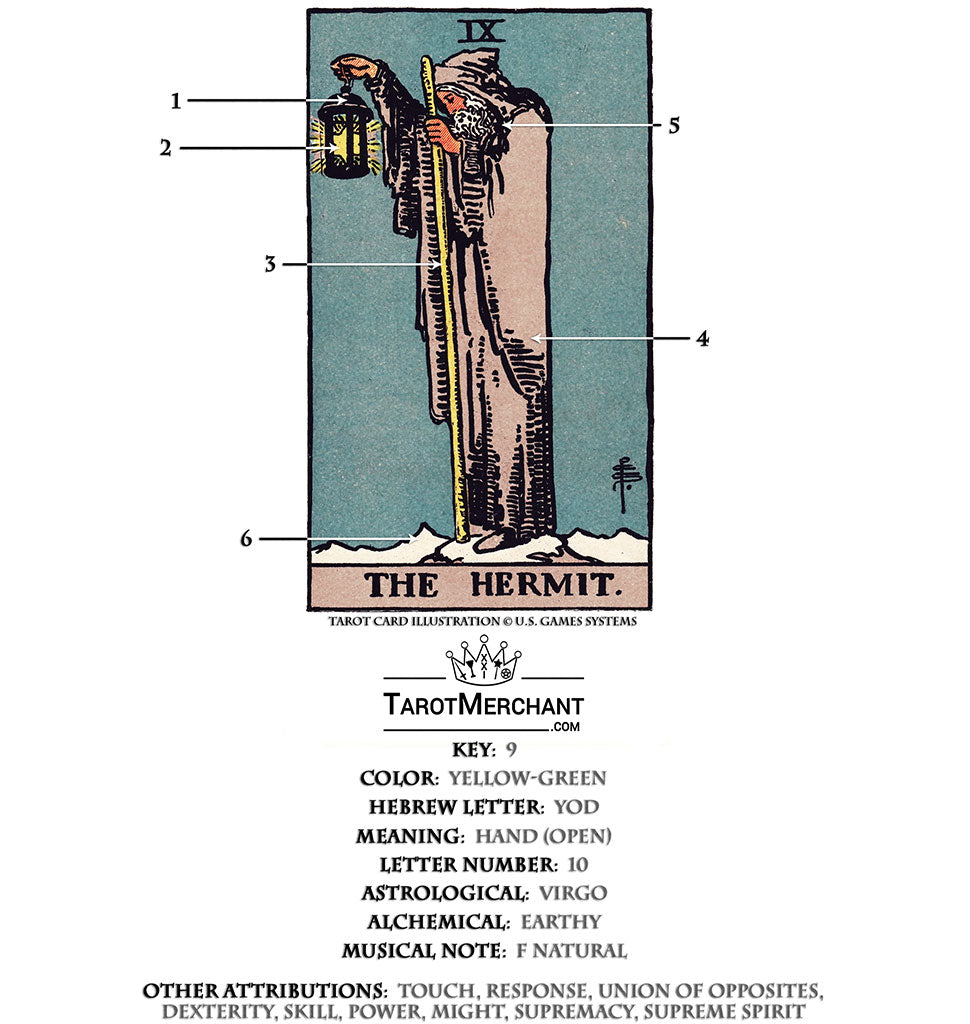
The Hermit card, traditionally associated with introspection and spiritual enlightenment, occupies a unique niche within the tarot’s rich lexicon. In a Christian perspective, however, the implications of the Hermit card delve deep into the realms of solitude, divine communion, and profound inner guidance. This exploration will elucidate the multifaceted dimensions of the Hermit card as it relates to Christian teachings and beliefs.
The Hermit is depicted as a solitary figure, often holding a lantern that symbolizes inner wisdom. This image resonates strongly with Christian ideals of seeking divine guidance through prayer and contemplation. The act of retreating into solitude mirrors the biblical principle of withdrawing from the cacophony of daily life to foster a more intimate relationship with God. In a world teeming with distractions, the Hermit advocates for moments of stillness, echoing Christ’s own practice of retreating into the wilderness for prayer and reflection.
In contemplating the Hermit card, one must acknowledge its significant thematic elements, namely solitude, guidance, and inner light. These elements find a corresponding resonance in Christian spirituality, where solitude is often viewed not as loneliness, but as a sanctuary for spiritual growth. The New Testament is replete with instances where Jesus sought seclusion, emphasizing the importance of finding one’s center within the divine presence. The Hermit, therefore, becomes an archetype—an emissary urging believers to access their intrinsic wisdom through sacred reflection.
The notion of guidance is paramount in interpreting the Hermit card. Within Christian doctrine, Jesus is often referred to as the light of the world. The lantern carried by the Hermit can be seen as a metaphor for this guiding light—the Holy Spirit—which illuminates the often murky path of life. When interpreting this card, one might discern a call to seek divine direction amid uncertainty. It invites believers to listen for God’s voice amidst the clamor of troubles and tribulations, trusting that spiritual guidance is always within reach.
The journey suggested by the Hermit is not one devoid of challenge; rather, it encompasses traversing through shadows to discover the illuminating truth. This is akin to the Christian journey of faith, which involves grappling with doubts and fears before emerging into a deeper understanding of God’s grace. The trials witnessed by many biblical figures, from Job to Paul, exemplify the transformative nature of hardship when approached with faith—a dimension encapsulated by the Hermit’s quest for deeper understanding.
Christian interpretation of the Hermit card further delves into the aspect of mentorship and divine instruction. The Hermit can be perceived as a sage delivering wisdom earned through experience. This aligns with the biblical principle of seeking counsel, as evident in Proverbs 19:20, which encourages listeners to heed wisdom that comes from others. In a Christian context, this card might resonate with individuals who are in a stage of mentorship, whether as a mentor or mentee, emphasizing the reciprocal nature of spiritual learning and growth.
Moreover, the Hermit card signifies self-reflection, an essential component in Christian life. Engaging in self-examination allows individuals to identify areas for growth and sin that require repentance. This mirrors the admonitions of Psalm 139:23-24, which implores believers to examine their hearts and minds. The Hermit urges individuals to take personal stock—assessing their spiritual journeys with honesty and humility—allowing God’s light to penetrate their darker corners.
In terms of emotional resonance, the Hermit card may evoke feelings of isolation, particularly in a modern era where technology often displaces authentic connection. Yet, this solitude can be deemed a fertile ground for spiritual harvest. It echoes the sentiments expressed in Matthew 5:14, where believers are called to be a light in the world. Isolation, when embraced as an opportunity for communion with God, can ultimately foster greater capacity for relational connection with others. Therefore, the Hermit serves as a reminder that solitude can be transcended into solidarity, enriching one’s interactions with the world.
As one reflects upon the implications of the Hermit card through a Christian lens, it becomes clear that the essence of the card encourages a dual navigation—both inward and outward. The path illuminated by the Hermit suggests a movement towards personal enlightenment, but one that is meant to extend beyond oneself to include community. Just as Jesus shared his insights and wisdom with his followers, the journey through the Hermit’s solitude ultimately leads to a compulsion towards service and love for others.
Ultimately, the Hermit embodies the essence of seeking God not only through solitude but also through action—an integration of silent reflection and active faith. The depth of its meaning is profound, inviting believers to introspect while remaining attentive to their divine calling. The lessons of the Hermit transcend self-imposed barriers, illuminating the path toward a life filled with purpose, guided by a steadfast commitment to divine wisdom.





Leave a Comment