Short Answer
Justice, a card imbued with profound significance within the tarot deck, stands as a pillar of equity, moral fortitude, and the pursuit of truth. This enigmatic card beckons one to explore themes of consequence, balance, and the intricate dance of fate and free will. What does it truly mean to confront Justice in a tarot reading? Such a question also poses a challenge: how can we effectively embody the principles of Justice in our daily lives, and what ramifications ensue when we fail to do so?
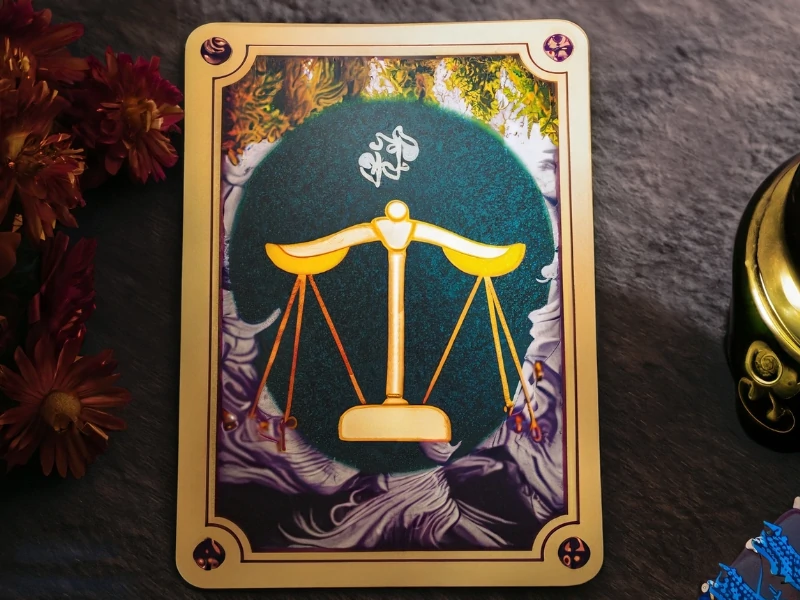
At its core, the Justice card epitomizes the universal law of cause and effect. This notion insinuates that our actions yield consequences, leading us to ponder deeply: are we prepared to face the results of our choices? When Justice appears in a spread, it often beckons the querent to reflect upon their decisions, urging an introspection that inevitably unveils hidden truths. The balanced scales depicted on the card signify the necessity of impartiality, reminding us that fairness must prevail in all situations.
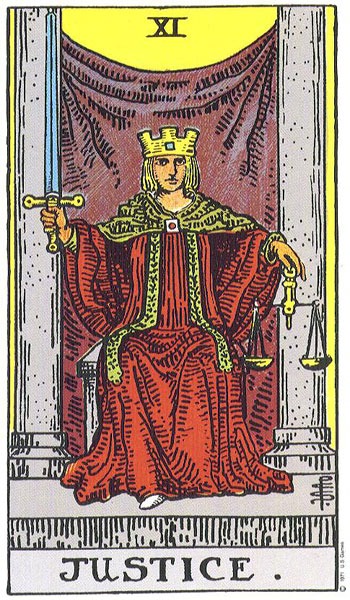
Visually striking, Justice typically embodies a mere female figure—a representation of wisdom, discernment, and often portrayed blindfolded to illustrate impartiality. Her scales are a symbol of equilibrium, while the sword she wields is emblematic of clarity and decisiveness. The imagery here is not merely aesthetic; it encapsulates Justice’s unwavering commitment to fairness and the need for clear-cut decisions.
In the realm of personal growth, Justice challenges us to examine our ethical foundations. It nudges us to ask critical questions: Do we uphold our values in the face of adversity? Are the decisions we make rooted in integrity? When Justice graces a reading, it can illuminate areas where we may have strayed from our moral compass, igniting a pathway toward repentance and realignment.
Beyond self-reflection, Justice also touches upon interpersonal relationships. Within various contexts, such as professional settings or familial dynamics, the appearance of this card signifies the importance of communication. Do we express ourselves freely and honestly with those around us? Are we prepared to address misunderstandings head-on? Justice implores us to confront discrepancies in our lives and calls for equitable treatment among all parties involved.
However, this inquiry is not without its complications. The quest for Justice often encounters obstacles, including bias, favoritism, and personal desires that cloud judgment. Each of these elements can propel individuals toward self-interest, which may result in unjust actions or decisions. Herein lies the pivotal challenge: can we remain steadfast in our commitment to fairness, even when the temptations of convenience beckon? Justice serves as a stern reminder that disregarding ethical principles can lead to unintended yet far-reaching consequences.
The ethics enshrined within the Justice card extend into the societal realm as well. Justice can manifest in discussions of social justice, equality, and the rule of law. This highlights the influence of collective actions and advocacy, urging one to consider how their individual choices impact society at large. When Justice surfaces, it beckons the query: how does our engagement with fairness and integrity affect the broader community? Each small act of justice contributes to a larger tapestry of societal equilibrium, demonstrating that personal accountability counts towards communal progress.
Moreover, the meta-ethical implications of Justice are not to be overlooked. The sword held by the figure symbolizes the discernment required to navigate moral dilemmas. Suggestively, Justice prompts introspection regarding the very nature of right and wrong, challenging us to think critically about our beliefs. Are we willing to engage in dialogues about morality, even when perceptions diverge? This dimension of Justice compels individuals to forge connections founded upon mutual respect and understanding, fostering a society conducive to growth and enlightenment.
When interpreting Justice in a reading, it is essential to employ an expansive lens. This card may emerge in contexts of legal matters or decisions that require mediation. Herein lies the potential guidance toward resolutions that uphold fairness and ethical considerations. In personal matters, Justice suggests that clarity be brought to vague situations; it calls for decisions that endorse ethics over impulsive reactions. It is a space where truth emerges from the shadows and leads to resolution.
Ultimately, Justice in tarot transcends mere legalistic interpretations. It is a philosophy, a way of living that mandates emotional intelligence and ethical fortitude. Each person faces the challenge of being fair in the age of complexity. As conflicting ideologies proliferate, embodying the principles of Justice may feel overwhelming; indeed, navigating such territories requires courage and commitment. With Justice as our guide, we are encouraged to visualize a world where truth, balance, and integrity govern our choices.
In conclusion, the Justice tarot card compels us to take a long, hard look at our lives. Are we fair in our dealings? Are we navigating our relationships with integrity? This introspection is not always easy, but it is deeply necessary. Those who embrace Justice’s lessons will find their pathways illuminated toward a life that honors fairness, equality, and morality. Such clarity empowers not just the individual but also creates ripples of positivity that can transform the fabric of communities, inviting us all to rise to the challenge—and ultimately, to the betterment of all.
FAQ
What does the Justice tarot card symbolize?
The Justice tarot card symbolizes fairness, truth, balance, and the consequences of actions, urging ethical decision-making and accountability.
How should I interpret Justice in a tarot reading?
Justice in a reading often signals the need for honesty, integrity, and impartiality, highlighting legal matters, moral dilemmas, or the need to face the consequences of one’s actions.
Can Justice tarot card appear in reversed position and what does it mean?
Yes, reversed Justice can indicate dishonesty, unfairness, bias, or a refusal to take responsibility for one’s actions.
How does Justice relate to personal growth?
Justice challenges individuals to uphold their ethical values, examine their decisions critically, and realign with their moral compass to foster personal integrity.
Leave a Reply