Short Answer
This guide explores the profound symbolism and psychological depth of the Strength tarot card, offering insights into its imagery, meanings, and the reasons behind its enduring fascination. Whether you’re a seasoned tarot reader or a curious newcomer, you’ll discover how this card transcends its surface-level representation to embody inner resilience, compassion, and mastery over primal instincts.
The Essence of Strength in Tarot
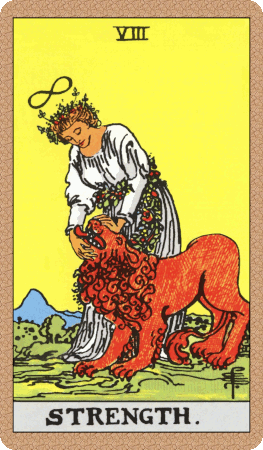
The Strength card, typically numbered VIII in the Major Arcana, is often misunderstood as merely a depiction of physical power. However, its true essence lies in the mastery of inner strength—taming raw emotions, channeling passion into purpose, and embracing gentleness as a form of strength. The card’s imagery, often featuring a figure gently closing the jaws of a lion, symbolizes the triumph of compassion and willpower over brute force. This juxtaposition highlights a deeper truth: true power comes not from domination but from understanding and harmony.
The lion, a recurring motif in tarot, represents untamed instincts, primal energy, or even fear. The woman in the card, often depicted with an infinity symbol above her head, embodies infinite patience, wisdom, and the ability to transform chaos into order. Her calm demeanor contrasts sharply with the lion’s wild nature, illustrating that strength is not about suppression but about integration and balance.
Symbolism and Imagery: A Closer Look
The Strength card’s visual language is rich with meaning. The infinity symbol (∞), often seen above the woman’s head, signifies eternity, boundless potential, and the cyclical nature of life. It suggests that the power she wields is not fleeting but enduring—a reminder that true strength is a lifelong practice rather than a one-time achievement.
The wreath or crown she wears symbolizes victory, not over others, but over one’s own limitations. It’s a mark of self-mastery, indicating that the card’s message is deeply personal. The lemniscate (infinity symbol) and the wreath together emphasize that strength is a journey, not a destination. The card also often features a closed gate or a path, hinting at the idea that inner power unlocks new possibilities and transitions.
In some decks, the woman is shown with a lemniscate around her neck or in her hands, further reinforcing the idea of harnessing infinite energy. The lion, though fierce, is not subdued by force but by love and understanding—a metaphor for how patience and empathy can disarm even the most daunting challenges.

Strength in Modern Context: Why It Resonates Today
In an era dominated by external validation, the Strength card offers a counter-narrative: the power of the inner self. Its message is particularly relevant in today’s fast-paced world, where stress, anxiety, and the pressure to perform can feel overwhelming. The card encourages a shift from outward achievement to inward growth, reminding us that resilience is not about enduring hardship stoically but about transforming it through grace and self-awareness.
Many people are drawn to the Strength card because it validates their struggles with self-doubt and emotional turmoil. It speaks to those who feel they must “toughen up” to survive, offering instead the idea that vulnerability and gentleness are forms of strength. This card resonates with caregivers, healers, and anyone who has ever chosen kindness in the face of cruelty, proving that strength is not the absence of emotion but the mastery of it.
Practical Applications: How to Harness the Energy of Strength
Understanding the Strength card’s symbolism is one thing; applying its lessons is another. Here are practical ways to embody its energy in daily life:
- Mindfulness and Presence: The Strength card teaches the power of being fully present. Practice mindfulness techniques to observe your emotions without being overwhelmed by them. This helps in “closing the lion’s jaws” by acknowledging fears or frustrations without letting them control you.
- Compassionate Communication: Strength is not about winning arguments but about resolving conflicts with empathy. The next time you feel the urge to react aggressively, pause and ask yourself how you can respond with understanding instead.
- Self-Compassion: Often, we are our own harshest critics. The Strength card reminds us to treat ourselves with the same gentleness we would offer a friend. Acknowledge your limitations and celebrate small victories.
- Physical and Emotional Discipline: Practices like yoga, meditation, or even journaling can help channel raw energy into productive outlets. The lion’s energy, when directed mindfully, becomes a source of creativity and drive.
- Setting Boundaries with Grace: Strength isn’t about people-pleasing or suppressing your needs. It’s about knowing when to say no without guilt and when to stand your ground with kindness.
The Psychological and Spiritual Dimensions of Strength
From a psychological perspective, the Strength card aligns with concepts like emotional intelligence and self-regulation. It reflects the ability to manage impulses, delay gratification, and maintain composure under pressure—qualities associated with resilience and mental well-being. Carl Jung’s idea of individuation, the process of integrating the conscious and unconscious mind, also resonates with the Strength card’s theme of harmonizing opposing forces.
Spiritually, the card embodies the principle of ahimsa (non-violence) from Eastern philosophies, where true strength comes from non-resistance and love. It’s a reminder that violence—whether physical, emotional, or psychological—is a sign of weakness, while compassion and patience are acts of courage. The Strength card invites us to see adversity as an opportunity to grow rather than a threat to overcome.
Common Misconceptions and Clarifications
One of the most persistent misconceptions about the Strength card is that it represents brute force or dominance. This misunderstanding likely stems from its placement in the Major Arcana, where cards like The Chariot (often associated with control) and The Emperor (symbolizing authority) follow similar themes. However, Strength’s focus is entirely different—it’s about inner mastery, not external power.
Another misconception is that the card implies passivity or weakness. In reality, the woman in the card is not passive; she is actively engaging with the lion, demonstrating that strength requires action, albeit a different kind of action. It’s not about fighting but about understanding and redirecting energy.
Some also confuse Strength with Justice (card XI), which deals with fairness and cause-and-effect. While both cards involve balance, Justice is about external consequences, whereas Strength is about internal harmony. Recognizing this distinction is crucial for accurate tarot interpretations.
Strength in Different Tarot Decks
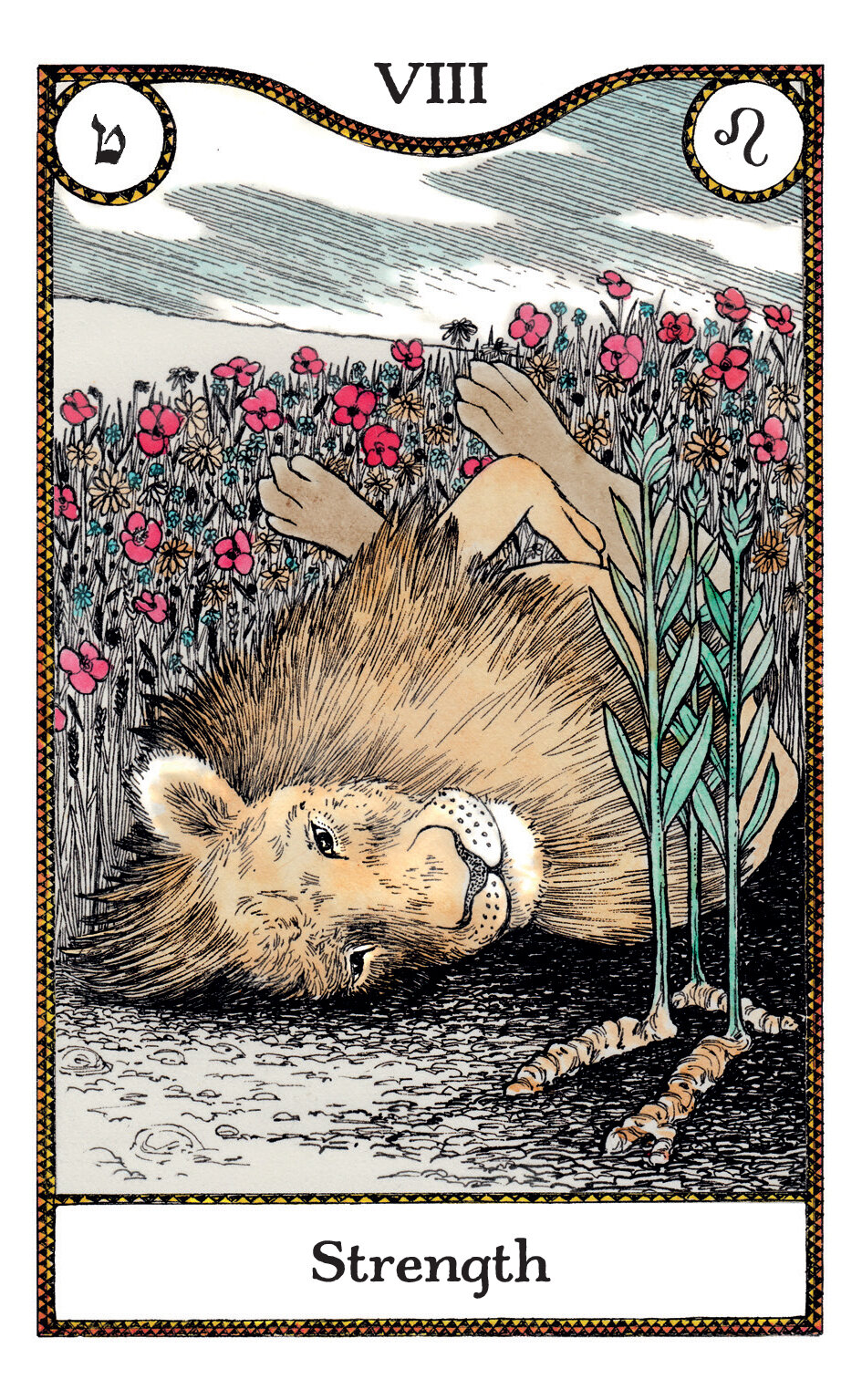
The Strength card’s imagery varies across tarot decks, each offering unique nuances to its meaning. For example:
- Rider-Waite-Smith Deck: The most iconic version, featuring a woman in a white robe with a lemniscate crown, gently closing the lion’s jaws. This depiction emphasizes purity, spiritual strength, and the union of opposites.
- Thoth Tarot Deck: Here, the card is titled “Adjustment,” reflecting the idea of balance and equilibrium. The imagery includes a figure with a sword and a serpent, symbolizing the alchemical process of transformation.
- Modern Witch Tarot: This deck often portrays Strength as a queer or non-binary figure, expanding the card’s message to include diverse expressions of power and identity.
- Wild Unknown Tarot: The lion is depicted as a shadowy figure, and the woman is surrounded by a circle of light, suggesting that inner strength illuminates even the darkest parts of ourselves.
These variations highlight the card’s adaptability and its ability to resonate with different cultural and personal contexts.
Conclusion
The Strength tarot card is far more than a simple illustration of taming a beast—it’s a profound metaphor for the human experience. It challenges us to redefine power, urging us to find strength in vulnerability, compassion, and self-awareness. In a world that often equates strength with aggression or control, this card serves as a gentle yet firm reminder that true power lies in our ability to master ourselves.
Whether you encounter the Strength card in a reading or simply resonate with its message, its lessons are timeless. It teaches that resilience isn’t about enduring hardship without flinching but about transforming it into wisdom. It shows that gentleness can be a form of courage, and that the lion within us—our fears, passions, and untamed emotions—can be guided with love rather than force.
By embracing the energy of Strength, we learn to navigate life’s challenges with grace, to lead with empathy, and to recognize that our greatest battles are often the ones we wage within. In doing so, we unlock a deeper, more sustainable form of power—one that doesn’t just endure but thrives.
FAQ
What does the Strength tarot card symbolize?
It symbolizes inner strength, emotional resilience, compassion, and the ability to master primal instincts and emotions.
How is the Strength card different from physical strength?
It represents mastery over emotions and instincts through patience and compassion, rather than brute physical force.
Why is the lion important in the Strength card?
The lion represents untamed instincts and primal energy, which the figure in the card gently controls through understanding and love.
What practical advice does the Strength card offer?
It encourages mindfulness, compassionate communication, self-compassion, emotional discipline, and setting healthy boundaries.
How do various tarot decks depict the Strength card?
Depictions vary, including the Rider-Waite-Smith’s woman taming a lion, Thoth’s 'Adjustment' with alchemical symbols, and Modern Witch’s inclusive representation.
Leave a Reply