Short Answer
Ever wondered if your abuela’s deck of Spanish playing cards could do more than just shuffle through a game of Mus or Brisca? What if those vibrant, gold-trimmed cards held whispers of the future—or at least a playful nudge toward self-reflection? In this guide, we’ll explore how Spanish playing cards, often overlooked as mere game pieces, can step into the realm of tarot. You’ll learn how to interpret their symbols, poses a fun question to your deck, and even tackle a lighthearted challenge that blends tradition with intuition. By the end, you might just find that your family’s deck has been waiting to share its stories all along.
What Are Spanish Playing Cards and How Do They Relate to Tarot?
Spanish playing cards, commonly known as the Spanish deck or *naipes españoles*, consist of 48 cards divided into four suits: *oros* (coins), *copas* (cups), *espadas* (swords), and *bastos* (clubs). Unlike the standard 52-card deck, these cards feature unique imagery—kings, knights, jacks, and numbered cards from 1 to 9, plus the *sota* (jack), *caballo* (knight), and *rey* (king). While they’re primarily used for games like Mus, Brisca, and Chinchón, their rich symbolism and archetypal figures make them ripe for divination.
Tarot, on the other hand, uses a 78-card deck with the Major and Minor Arcana, but the core idea is similar: cards as mirrors to life’s questions. Spanish playing cards lack the elaborate illustrations of tarot, but their simplicity allows for creative interpretation. Think of them as a stripped-down, ancestral version of tarot—closer to your abuela’s kitchen table than a mystical oracle’s velvet cloth. By assigning meanings to the suits and face cards, you can transform a deck of *naipes* into a tool for guidance, albeit with a more rustic charm.
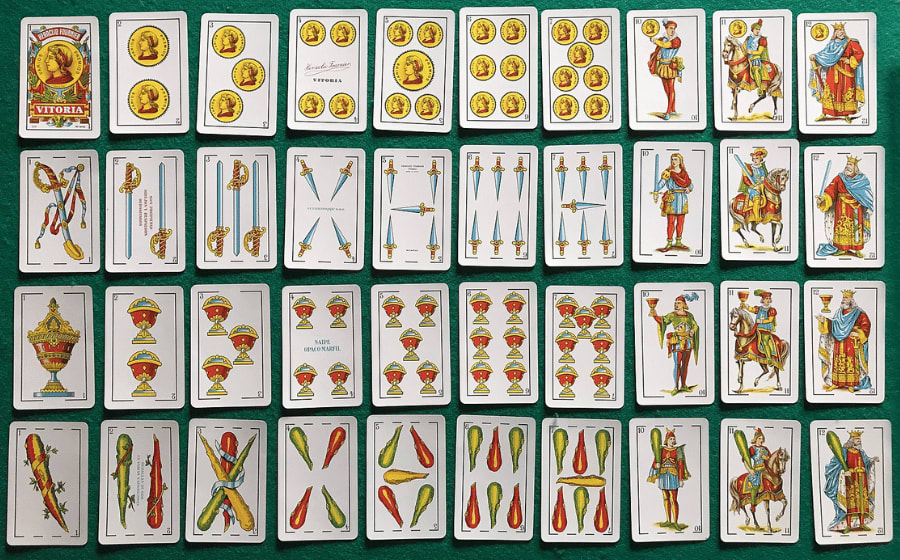
Assigning Tarot-Like Meanings to Spanish Playing Cards
To use Spanish playing cards as a tarot-like guide, start by aligning their suits with traditional tarot elements. Here’s a simple framework:
- Oros (Coins): Represent material wealth, career, and practical matters. In tarot, this aligns with the suit of Pentacles—abundance, security, and tangible rewards. Pulling a high coin card (like the Rey de Oros) might suggest financial opportunities or a need to focus on stability.
- Copas (Cups): Symbolize emotions, relationships, and intuition. Mirroring the tarot’s Cups suit, these cards reflect love, creativity, and subconscious desires. The 3 of Copas, for example, could signify celebration or emotional connections.
- Espadas (Swords): Govern intellect, conflict, and decision-making. Like the Swords suit in tarot, these cards deal with challenges, clarity, and sometimes harsh truths. Drawing the 7 of Espadas might indicate a need to cut through confusion or face a difficult choice.
- Bastos (Clubs): Relate to passion, energy, and action. Aligned with the Wands suit in tarot, these cards suggest inspiration, growth, and movement. The 5 of Bastos could signal a burst of motivation or a new project taking shape.
For face cards, assign meanings based on their roles:
- Rey (King): Authority, mastery, or a person in your life embodying these traits.
- Caballo (Knight): Action, movement, or a messenger bringing news.
- Sota (Jack): Youthful energy, curiosity, or a message from your subconscious.
Remember, this is a flexible system. Feel free to adapt meanings to resonate with your intuition or cultural context. The goal is to make the deck feel like an extension of your own wisdom.
Posing a Playful Question to Your Spanish Tarot Deck
Before diving into a reading, craft a question that’s open-ended yet focused. The key is to avoid yes/no queries—Spanish playing cards thrive on nuance. Here are some examples to spark your creativity:
- “What energy should I embrace this week to feel more aligned with my goals?”
- “What lesson is my family trying to teach me through my abuela’s deck?”
- “How can I balance my practical responsibilities with my creative passions?”
- “What hidden opportunity is waiting for me in my current situation?”
Once you’ve chosen your question, shuffle the deck while focusing on it. Some readers prefer to cut the deck into three piles and reassemble them, while others simply fan the cards and let their fingers guide them to a card. Trust your instincts—this is, after all, a playful experiment.

The Challenge: A 3-Card Spread with a Twist
Ready to test your newfound skills? Try this 3-card spread, but with a twist: interpret the cards in the context of a traditional Spanish game. Here’s how:
- Past (Game: Mus): The first card represents a past situation or lesson, as if it’s a card played in a round of Mus. Ask: “What strategy or mindset did I use here?”
- Present (Game: Brisca): The second card reflects your current state, like a card leading in a game of Brisca. Ask: “What suit (or energy) is dominating my life right now?”
- Future (Game: Chinchón): The third card offers insight into what’s coming, akin to a card that could win a round of Chinchón. Ask: “What move should I make to ‘win’ in this situation?”
For example, if you draw the Rey de Oros (King of Coins) for the past, it might suggest you’ve relied on leadership or practicality to navigate a challenge. The 7 of Copas (Cups) in the present could indicate you’re daydreaming about emotional fulfillment. The future card, say the 2 of Bastos (Clubs), might advise you to take bold action to turn your dreams into reality.
This challenge blends divination with the playful competitiveness of Spanish card games, making the reading feel more like a conversation with your deck than a rigid ritual.
Common Pitfalls and How to Avoid Them
While Spanish playing cards can be a delightful tool for self-reflection, there are a few traps to watch out for:
- Overcomplicating the Meanings: Resist the urge to assign tarot-like depth to every card. Sometimes, a card is just a card—a 4 of Espadas might simply mean “take a break” rather than “you’re avoiding a difficult truth.”
- Ignoring Intuition: Don’t get stuck on rigid interpretations. If the 3 of Bastos feels like it’s screaming “start a garden,” go with it—even if it doesn’t fit the traditional meaning of Clubs.
- Forcing a Reading: If the cards feel flat or uninspired, take a break. Spanish playing cards work best when the energy is light and curious, not forced or desperate.
- Neglecting the Deck’s History: Remember, these cards have been shuffled through generations. Ask yourself: “What stories has this deck already seen?” The wear and tear on the edges might hold as much wisdom as the symbols themselves.
Conclusion
Spanish playing cards are more than just a nostalgic relic from your abuela’s kitchen—they’re a bridge between tradition and intuition, games and guidance. By reimagining their suits and face cards through a tarot-like lens, you can unlock a playful, personal way to explore life’s questions. Whether you’re pulling a single card for daily insight or diving into a 3-card spread with a game-inspired twist, the key is to approach the deck with curiosity and lightheartedness.
So next time you shuffle a deck of *naipes españoles*, ask yourself: What if these cards have been waiting to tell me a story? The answer might just surprise you—especially when it comes with a side of laughter and a sprinkle of *mala suerte* (bad luck) for good measure.
FAQ
What are Spanish playing cards?
Spanish playing cards, or naipes españoles, are a 48-card deck divided into four suits: oros (coins), copas (cups), espadas (swords), and bastos (clubs), traditionally used for games like Mus and Brisca.
Can Spanish playing cards be used for tarot readings?
Yes, by assigning tarot-like meanings to the suits and face cards, Spanish playing cards can be adapted for divination and self-reflection, offering a simpler, ancestral form of tarot.
How do Spanish playing card suits correspond to tarot suits?
Oros correspond to Pentacles (material matters), Copas to Cups (emotions and relationships), Espadas to Swords (intellect and conflict), and Bastos to Wands (passion and action).
What is a recommended tarot spread using Spanish playing cards?
A 3-card spread inspired by Spanish games—Past (Mus), Present (Brisca), and Future (Chinchón)—is suggested, with each card interpreted in the context of its game and personal insight.
What are some common pitfalls when using Spanish playing cards for tarot?
Avoid overcomplicating meanings, ignore rigid interpretations in favor of intuition, do not force readings, and respect the deck’s history and wear as part of its wisdom.
Leave a Reply