Short Answer
Embark on a journey through time as we unravel the enigmatic origins of tarot cards and their evolving meanings. This guide will illuminate the historical roots of tarot, tracing its transformation from a humble card game to a profound tool for divination and self-reflection. Discover how each card’s symbolism has shifted across centuries, reflecting cultural, artistic, and spiritual shifts. By the end, you’ll gain a fresh perspective on tarot’s enduring legacy and its place in modern practice.
The Ancient Origins: Tarot Beyond Divination
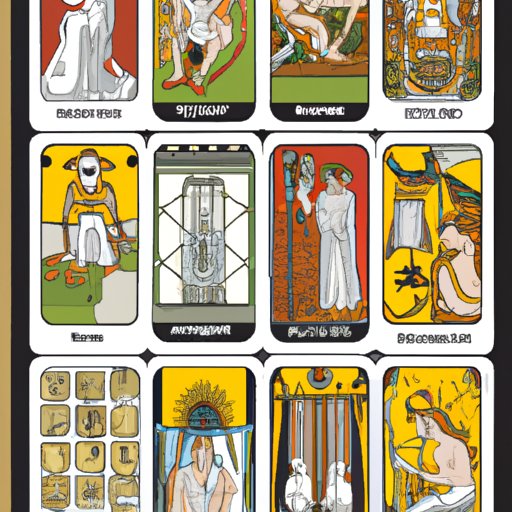
Tarot cards are often shrouded in mystery, with many assuming their sole purpose was fortune-telling. However, their story begins far earlier than most realize. The earliest iterations of tarot emerged in 15th-century Europe, not as mystical tools, but as playing cards. The Visconti-Sforza deck, created in Italy around 1440, is one of the oldest surviving examples. These decks were lavishly hand-painted for nobility, featuring intricate designs that mirrored the societal hierarchies of the time.
The structure of these early decks laid the foundation for modern tarot. They consisted of four suits—Cups, Swords, Coins, and Batons—along with court cards representing royal figures. The Major Arcana, the 22 symbolic cards that now hold deep spiritual significance, were not yet a standard feature. Instead, they evolved later, borrowing from allegorical and religious imagery of the Renaissance. This historical layer reveals that tarot’s roots are as much about art and power as they are about mysticism.
From Game to Oracle: The Evolution of Tarot’s Purpose
The shift from tarot as a game to a divination tool is a fascinating tale of cultural adaptation. By the late 18th century, occultists began reimagining tarot as a system of esoteric wisdom. French mystic Antoine Court de Gébelin famously claimed in 1781 that tarot held ancient Egyptian secrets, though this theory has since been debunked. Nevertheless, his ideas sparked a movement that linked tarot to Hermeticism, Kabbalah, and other esoteric traditions.
The Rider-Waite-Smith deck, illustrated by Pamela Colman Smith and published in 1909, revolutionized tarot’s symbolic language. Its vivid imagery and accessible interpretations made the cards relatable to a broader audience. The deck’s inclusion of detailed scenes on the Minor Arcana cards bridged the gap between abstract symbols and storytelling, allowing readers to weave narratives from the cards. This innovation democratized tarot, transforming it from an elite pastime into a tool for personal insight.
Decoding the Major Arcana: A Timeline of Symbolism
The Major Arcana cards—such as The Fool, The Magician, and The World—are the heart of tarot’s symbolic language. Each card carries layers of meaning that have evolved over centuries, reflecting changing spiritual and philosophical landscapes. For instance, The Fool, often depicted as a carefree traveler, originally symbolized innocence and potential, but modern interpretations emphasize its connection to spontaneity and new beginnings.
In the 19th century, occultists like Eliphas Lévi and the Hermetic Order of the Golden Dawn assigned deeper esoteric meanings to the Major Arcana, linking them to astrological correspondences and the Tree of Life in Kabbalah. This syncretic approach fused diverse traditions into a cohesive system, giving tarot its reputation as a mirror of the human experience. Today, the Major Arcana is seen as a journey of personal growth, with each card representing a stage in the hero’s quest for self-discovery.

Cultural Crossroads: How Different Traditions Shaped Tarot
Tarot’s journey is a tapestry woven from multiple cultural threads. In Italy, the cards were tied to Renaissance humanism, while in France, they became intertwined with revolutionary ideals. The Romantic era of the 19th century saw tarot embraced by artists and writers, who saw it as a vehicle for exploring the subconscious. Meanwhile, in the 20th century, tarot found a home in the New Age movement, where it was repurposed as a tool for meditation and self-help.
Each culture added its own flavor to tarot’s symbolism. In Spain, the Catalan Tarot decks retained medieval motifs, while in England, the Golden Dawn system introduced complex astrological and alchemical references. Even the imagery of the cards has been reinterpreted across the globe—Japanese tarot decks, for example, often blend traditional Western symbolism with Eastern aesthetics. This cross-pollination underscores tarot’s adaptability, proving that its meanings are not fixed but fluid, shaped by the hands that use them.
Modern Tarot: A Living Tradition
Today, tarot is more popular than ever, with decks ranging from the classic to the avant-garde. Contemporary artists and authors continue to redefine tarot’s boundaries, creating decks that reflect diverse identities and experiences. From Marseille Tarot decks that preserve historical designs to modern witchcraft decks that challenge traditional imagery, the evolution of tarot is far from over.
This living tradition invites you to engage with tarot not just as a relic of the past, but as a dynamic conversation between history and the present. Whether you’re a seasoned reader or a curious newcomer, tarot offers a unique lens to explore the human condition. Its cards are not just tools for divination—they are mirrors, inviting you to reflect on your own journey.
Conclusion
The history of tarot is a testament to humanity’s enduring fascination with symbolism and meaning. From its origins as a nobleman’s pastime to its role as a spiritual guide, tarot has continually reinvented itself, reflecting the values and aspirations of each era. By understanding its historical roots, you gain not only knowledge but also a deeper appreciation for the cards’ power to illuminate the unseen.
As you explore tarot’s rich tapestry, remember that its true magic lies in its ability to adapt. The meanings of the cards are not set in stone; they are shaped by the hands that hold them and the hearts that interpret them. Whether you seek wisdom, inspiration, or simply a new perspective, tarot invites you to step into its world—a world where history and mystery intertwine.
FAQ
What are the historical origins of tarot cards?
Tarot cards originated in 15th-century Europe as playing cards for nobility, with the Visconti-Sforza deck being one of the oldest surviving examples.
When did tarot cards transition from a game to a tool for divination?
Tarot evolved into a divination tool primarily in the late 18th century when occultists began attributing esoteric meanings to the cards.
What is the significance of the Major Arcana in tarot?
The Major Arcana consists of 22 symbolic cards that represent spiritual and philosophical themes, evolving over centuries to portray a journey of personal growth.
How have different cultures influenced tarot symbolism?
Tarot symbolism has been shaped by Renaissance humanism in Italy, French revolutionary ideals, the Romantic era’s subconscious exploration, and New Age spirituality, among others.
What role does the Rider-Waite-Smith deck play in tarot history?
Published in 1909, the Rider-Waite-Smith deck revolutionized tarot by introducing vivid imagery and detailed scenes, making tarot more accessible and interpretive.
Leave a Reply