Short Answer
Welcome to a deep exploration of The Judge Tarot card—Justice. In this guide, you’ll uncover the rich symbolism, historical roots, and modern interpretations of this powerful archetype. Whether you’re a seasoned tarot reader or a curious newcomer, you’ll discover how Justice embodies balance, truth, and the consequences of our actions. From its visual metaphors to its role in readings, this card serves as a mirror reflecting the universal law of cause and effect. By the end, you’ll see why Justice is more than a card—it’s a cosmic judge of our choices and their ripple effects.
The Symbolism of Justice: A Tapestry of Meaning
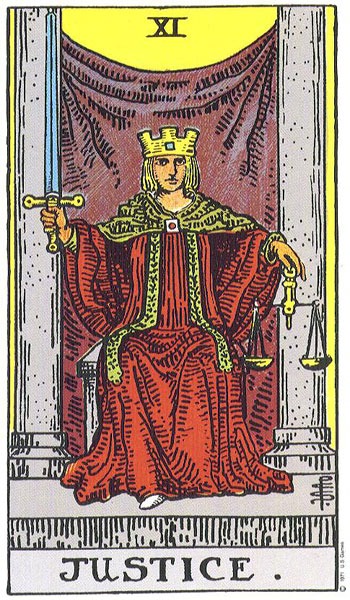
The Justice card is a masterclass in symbolism, each element carefully chosen to convey its message. At its core, the figure of Justice is often depicted as a crowned woman seated between two pillars, holding a sword in one hand and scales in the other. The sword, often double-edged, represents the power of reason and the clarity needed to cut through deception. It reminds us that truth, though sometimes sharp, is essential for growth. The scales, perfectly balanced, symbolize fairness and the impartial weighing of actions—no favoritism, no bias, just the cold, hard reckoning of karma.
The crown atop Justice’s head signifies authority and higher knowledge, suggesting that this card isn’t just about earthly justice but divine or karmic retribution. The red robe she wears is a nod to passion and vitality, while the blue or green cloak beneath it represents intuition and harmony. Even the colors play a role: red for action, blue for truth, and green for growth. Together, these elements paint a picture of a force that is both nurturing and unyielding—a reminder that every action has a reaction, and every choice casts a shadow.
In some decks, Justice is paired with the number 11 (or 8 in older traditions), linking it to the astrological sign Libra, the scales. This connection underscores the card’s themes of equilibrium and the delicate dance between opposing forces. Whether you’re drawn to the Rider-Waite-Smith’s serene figure or the bold, modern interpretations of contemporary decks, the symbolism remains a powerful tool for introspection.
Justice in Tarot Readings: What the Cards Reveal
When Justice appears in a tarot spread, it’s rarely a neutral event. This card is a clarion call to examine your life with honesty and accountability. In a career reading, Justice might signal a promotion tied to merit or a legal matter requiring fairness. In relationships, it could indicate a need to address unresolved conflicts or karmic debts. The message is clear: what you sow, you will reap. But Justice isn’t just about punishment—it’s also about reward for those who act with integrity.
In a past-present-future spread, Justice in the past position suggests that past actions are now coming to light, demanding resolution. In the present, it may indicate a critical decision or a moment of reckoning. For the future, it often points to a fair outcome, though one that requires patience and perseverance. When Justice appears alongside other cards, its meaning can shift. Paired with The Chariot, it may highlight a victory through discipline; with The Hanged Man, it could suggest a period of suspended judgment. The key is to look at the context—Justice’s role is to illuminate the path forward, not to dictate it.
For those seeking guidance, Justice encourages you to ask: Am I acting with integrity? Have I considered the consequences of my choices? It’s a card that demands self-reflection, urging you to align your actions with your highest values. Ignoring its message can lead to imbalance, while embracing it can bring clarity and resolution.
The Historical and Cultural Roots of Justice
The concept of Justice is ancient, woven into the fabric of human civilization. From the Egyptian goddess Ma’at, who weighed the hearts of the dead against the feather of truth, to the Greek goddess Themis, blindfolded to symbolize impartiality, the archetype of Justice has evolved but never faded. In medieval Europe, Lady Justice became a staple of legal systems, her blindfold representing objectivity and her scales a symbol of fairness. Even the tarot deck, born in 15th-century Italy, borrowed from these traditions, embedding Justice as a card of moral reckoning.
Tarot’s Justice card has roots in the cardini of the Italian Renaissance, where it was often associated with the virtue of Temperance or Fortitude. Over time, it solidified its place in the Major Arcana as a card of consequence. The shift from VIII to XI in some decks (like the Rider-Waite-Smith) reflects a deeper understanding of its themes—Justice isn’t just about balance; it’s about the cosmic ledger of life. This historical journey shows how Justice transcends cultures and eras, remaining a universal symbol of accountability.
In modern times, Justice has taken on new layers of meaning. In feminist interpretations, the blindfold is sometimes removed, symbolizing the fight against systemic bias. In psychological readings, it represents the superego—the part of the mind that enforces moral standards. Whether viewed through a spiritual, legal, or psychological lens, Justice remains a potent force, reminding us that the universe keeps score.
The Unique Appeal of Justice: Why It Resonates
What makes Justice so compelling? For starters, it’s a card that refuses to be ignored. Unlike more abstract Major Arcana cards, Justice feels tangible—it’s the voice of karma knocking at your door. Its appeal lies in its duality: it’s both comforting and terrifying. On one hand, it offers the promise of fairness; on the other, it warns of the price of misdeeds. This tension is what makes Justice so psychologically rich. It forces us to confront our shadows and celebrate our virtues.
Artistically, Justice is a favorite among tarot creators. The Rider-Waite-Smith’s depiction, with its serene figure and golden crown, exudes timeless elegance. Modern decks, like the Wild Unknown or the Light Seer’s, reimagine Justice with bold colors and abstract forms, making it accessible to contemporary audiences. The card’s visual versatility ensures it resonates across cultures and artistic styles, from the gothic to the minimalist. Whether you’re drawn to its classical beauty or its avant-garde interpretations, Justice’s visual language speaks to the universal human experience of seeking balance.
For seekers, Justice is a guide in times of moral ambiguity. It doesn’t offer easy answers but instead asks you to dig deeper. In a world where injustice often goes unchecked, this card is a reminder that truth, though delayed, is never truly absent. Its appeal is in its honesty—a rare quality in a world full of half-truths and evasion. Justice doesn’t sugarcoat; it holds up a mirror and says, Look. Learn. Act.
Working with Justice: Practical Insights and Rituals
If Justice has appeared in your reading, it’s time to take action. Start by journaling about areas of your life where you feel out of balance. Are there relationships, habits, or decisions that need reevaluation? Justice encourages you to make amends where necessary and to stand firm in your integrity. Meditation on this card can involve visualizing the scales tipping in your favor, or the sword cutting away doubt and fear. Light a green or blue candle to invoke harmony and truth, and place the Justice card in front of you as a focal point.
For those facing a legal or ethical dilemma, Justice suggests seeking counsel from trusted advisors—but ultimately, the decision must be yours. Trust your inner voice, the one that knows right from wrong. If you’re on the receiving end of a karmic lesson, use this time to reflect on how you can grow. Justice isn’t about blame; it’s about growth. In creative projects, this card can inspire works that explore themes of morality, justice, or redemption. Artists and writers often find Justice a muse for stories of conflict and resolution.
Rituals involving Justice can include writing down a situation you’re grappling with and then burning the paper (safely!) as a symbolic release. Alternatively, place a coin or a small scale on your altar to represent fairness. The key is to engage with the card’s energy actively—Justice rewards those who are willing to confront their truths, not those who passively wait for outcomes.
Conclusion
The Judge Tarot card—Justice—is a beacon of truth in a world often clouded by illusion. It’s a card that demands honesty, accountability, and courage, but it also offers the promise of resolution and fairness. Whether it appears in a reading as a warning or a blessing, its message is clear: the universe is always watching, and balance will be restored. By understanding its symbolism, historical roots, and practical applications, you can harness Justice’s energy to navigate life’s challenges with wisdom and integrity.
Embrace Justice not as a punisher, but as a guide—a cosmic accountant who ensures that every action is met with its rightful consequence. In doing so, you align yourself with the natural order of things, where truth prevails and harmony is restored. Let Justice be your ally, and you’ll find that even in the darkest moments, the scales will tip in your favor.
FAQ
What does the Justice tarot card symbolize?
Justice symbolizes fairness, balance, truth, and the consequences of actions in tarot readings.
How is the Justice card used in tarot readings?
It signals calls for accountability, integrity, legal or ethical issues, and karmic consequences depending on the reading context.
What is the historical significance of the Justice card?
Justice draws from ancient legal and moral archetypes, evolving through cultural and tarot traditions as a symbol of cosmic and earthly law.
How can I work with the Justice card practically?
By reflecting on personal integrity, meditating on balance and fairness, journaling on decisions, and using rituals that invoke harmony and truth.
Leave a Reply