Short Answer
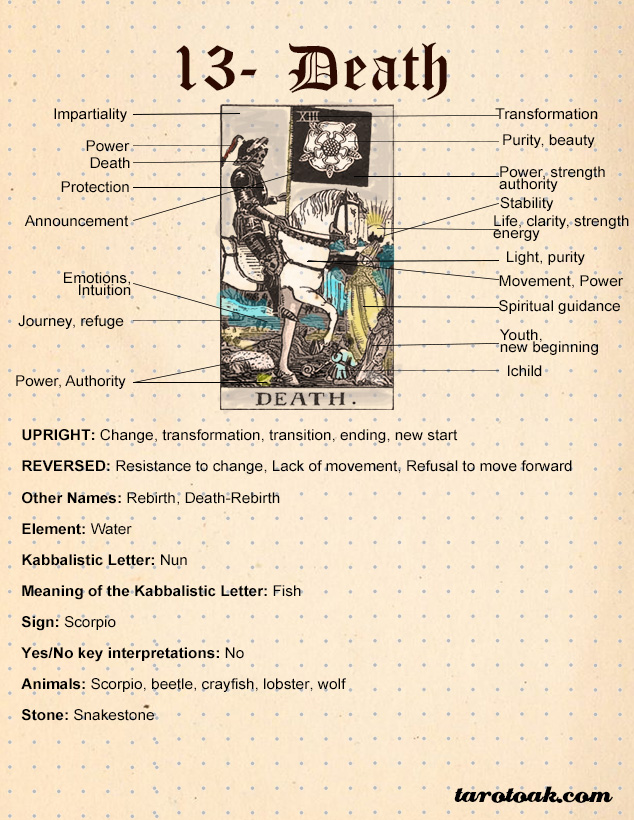
The Death tarot card, often bewildering in its nomenclature and imagery, evokes a spectrum of interpretations, particularly within the realm of love from a Christian perspective. A common misconception is that the Death card signifies an end in the most literal sense. Instead, it encapsulates themes of transformation, renewal, and substantial evolution—a process akin to the metaphorical resurrection. This duality manifests as an observation worth examining: how, despite its austere nomenclature, the Death card paves the way for deeper emotional revelations and understanding in romantic relationships.
In the Christian paradigm, death is not the ultimate cessation but rather an initiation into an eternal existence. This belief lays the foundation for the interpretation of the Death tarot card. When it emerges in a reading concerning love, it often encourages individuals to relinquish old patterns and embrace change. This change can signify the end of a mismatched relationship, allowing two souls to part ways amicably, or it can suggest the profound metamorphosis of an existing relationship, urging partners to evolve into more authentic versions of themselves.
At the crux of the Death tarot card’s powerful symbolism is the inevitability of change. In love, this card often addresses the necessity of letting go of unhealthy attachments or a stagnant relationship that no longer serves its purpose. In Christianity, letting go aligns with the principles of selflessness and divine will. Just as Christ embraced change through sacrifice, individuals may find themselves at a juncture where the relinquishing of past loves or behaviors is imperative for spiritual and emotional growth.
Moreover, the Death tarot card encourages introspection. It beckons individuals to look within and confront the emotional residues clinging to their hearts. In relationships, this can reveal underlying issues such as deceit, miscommunication, or unrecognized desires. By acknowledging these shadows, partners can work towards rehabilitation in their union or embrace the liberating prospect of dissolution, if necessary. Such transformations are essential for achieving authentic connections, resonating closely with the Christian ethos of seeking the truth, even when it is uncomfortable.
As relationships evolve, the symbolism of the Death card imparts a vital lesson: love requires ongoing renewal. It invites partners to transcend superficiality and engage in a deeper exploration of their affection for one another. This renewing spirit often aligns with the concept of resurrection in Christianity, which symbolizes fresh beginnings. When couples reach an impasse, instead of perceiving the situation as the end, they can view it as an opportunity for rebirth. Renewed commitment, more profound conversations, and shared experiences can profoundly enrich their bond.
The Death card also holds significance in terms of addressing fear—fear of change, fear of loss, and fear of the unknown. In any love scenario, fear can paralyze individuals from making necessary choices. Christianity teaches that faith triumphs over fear; thus, when interpreting the Death card, partners are urged to harness their faith to navigate through the unpredictable landscape of love. This act of courageous faith often results in unveiling profound affection and commitment.
At a more spiritual level, the Death tarot card can also signify the need for spiritual alignment within romantic relationships. In Christianity, love is often viewed as a divine gift—something that must be nurtured, respected, and honored. When the Death card appears, it may signal that one or both partners need to recalibrate their spiritual priorities. Couples may be prompted to engage in prayer, seek counsel from trusted mentors, or immerse themselves in community to rejuvenate their relationship. Such practices transcend secular love narratives and root their connections in something much deeper, echoing Christian teachings on love and service.
Ultimately, the Death card in a love reading invites deep reflection on the fluid and transformative nature of relationships. It propels individuals to embrace change, not with trepidation, but with the understanding that change is essential for growth. Furthermore, when viewed through a Christian lens, it serves as a reminder of the eternal cycle of life, death, and rebirth. Recognizing that love, like life, is not a static phenomenon but rather an evolving journey can enrich individual experiences and foster more profound connections.
In conclusion, while the Death tarot card undeniably evokes fear and trepidation, particularly regarding love and relationships, a closer examination reveals its nuanced messages of transformation and renewal. Christian principles underpin the potential for growth, introspection, and divine alignment. By embracing the lessons derived from the Death card, one can navigate the complexities of love with grace, faith, and an abiding acceptance of change. It beckons individuals to welcome new beginnings and relinquish the past, ultimately conveying that in love, as in life, the end is merely the prelude to a fresh chapter—a worthy testament to the enduring power of love in its infinite forms.
FAQ
What does the Death tarot card mean in a love reading?
It represents transformation, the end of old patterns or relationships, and opportunities for renewal and deeper connection.
Is the Death card always negative in love readings?
No, it often encourages positive change and growth rather than literal death or loss.
How does Christianity influence the Death card's meaning in love?
Christianity interprets it as a symbol of resurrection and eternal life, focusing on spiritual growth and new beginnings.
Can the Death card indicate a stronger relationship?
Yes, it can signal profound metamorphosis and evolution of the partnership.
What spiritual actions are suggested when the Death card appears?
Prayer, seeking guidance, and engaging with community for spiritual realignment.
Leave a Reply