Short Answer
In the realm of tarot, the Judgment card holds a unique and multifaceted symbolism that resonates deeply within both esoteric traditions and the Christian faith. While tarot enthusiasts often embrace the card as a pivotal moment of renewal and awakening, its implications are rich with theological undercurrents that deserve scrutiny. This card does not merely signify a time of reckoning; it provokes an exploration of morality, redemption, and divine justice, themes that find their echo throughout biblical scripture.
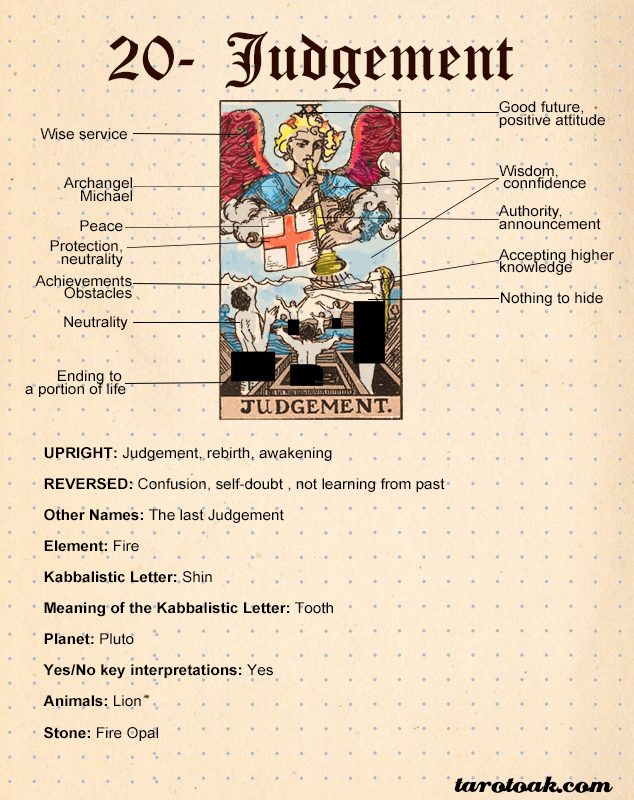
The image depicted on the Judgment card often features an angelic figure, notably reminiscent of the angel Gabriel, heralding a summons to resurrection. This striking representation aligns with Christian eschatology, where the notion of resurrection plays a critical role. In Christianity, Judgment Day is anticipated as a final evaluation of one’s life, a moment accompanied by the immense weight of divine judgment. Thus, the card serves as a poignant reminder of accountability before a higher power, a theme that reverberates not just through tarot, but also through the teachings of Christ.
One common observation is that the Judgment card elicits a sense of urgency. There is an inherent call for individuals to examine their lives critically, to reflect on their actions, and to confront the consequences of their choices. This parallels the Christian paradigm of repentance, where believers are urged to seek forgiveness and atonement, thus revitalizing their relationship with God. The process of self-examination represented by this card resonates profoundly with the Christian call to humility and contrition, engaging one’s conscience in a manner that is both revelatory and transformative.
Often, the Judgment card may be misconstrued as harbinger of doom; however, its implications extend beyond mere condemnation. At its core, it is an invitation to elevate one’s moral compass, highlighting the potential for spiritual rebirth and evolution. In Christianity, the act of judgment is not solely punitive; it is restorative and offers a pathway to salvation. It intimates that, while one’s past may be fraught with transgressions, the divine mercy remains available for all who truly seek it. This duality of the card—that of final judgment and awakening—mirrors the Christian understanding of God’s unyielding love juxtaposed with His righteousness.
The cyclical nature of the Judgment card also underscores the concept of time in relation to one’s spiritual journey. Just as Christ spoke of seasons of sowing and reaping (Galatians 6:7), the card signifies moments where one must confront the “fruits” of their labor. This may provoke discomfort, but it also proffers hope; for it suggests that repentance and acknowledgment of wrongdoing can lead to genuine transformation—a cornerstone of the Christian faith. Therein lies the deeper reason for the fascination with the Judgment card: it is a manifestation of divine grace that allows individuals to transcend their prior selves and embark on a path toward enlightenment and grace.
The Judgment card also invokes the theme of community and collective awakening. In the Christian context, the Church embodies a communal entity that is called to judge and uplift its members. The communal aspect of judgment becomes essential as it reminds believers of their responsibilities toward one another. In turn, this fosters an environment where individuals are encouraged to seek redemption not in isolation, but supported by a faith community. Here, the Judgment card subtly advocates for interdependence, mirroring biblical exhortations to bear one another’s burdens (Galatians 6:2). This interplay of personal and communal resurrection serves to amplify the card’s significance within the Christian paradigm.
A fascinating dimension lies in how the Judgment card illuminates the concept of vocation. Within Christianity, every individual is believed to have a divine purpose and calling, echoed through the words in Ephesians 2:10. The card prods individuals to contemplate whether they are aligning their lives with their divine purpose and fulfilling their role in God’s grand design. This relentless pursuit of purpose speaks to a deeper human yearning for meaningful existence; thus, the allure of the Judgment card persists as it encourages self-discovery and spiritual alignment that is not only personal but also pivotal to communal harmony.
Moreover, the card functions as a potent metaphor for the transitional phases we inevitably encounter throughout our lives. Just as believers are often called to experience renewal through faith, the Judgment card signals a metamorphosis urging individuals to shed past identities and emerge anew. This transformative notion resonates with the biblical idea of being “born again” (John 3:3), a rebirth that embodies both a spiritual awakening and the potential for new life driven by faith and purpose.
In conclusion, the Judgment card in tarot evokes deep-seated reflections on themes of resurrection, redemption, and individuality within a communal framework, richly interwoven with Christian doctrine. Its multifaceted symbolism beckons individuals to confront their life choices, while simultaneously offering hope and a pathway for renewal. Ultimately, the card serves as a reminder that judgment—both divine and personal—carries with it an invitation to embrace transformation, live with integrity, and remain steadfast in the pursuit of one’s sacred purpose, nurturing the eternal hope of salvation found within the Christian faith.
FAQ
What is the basic meaning of the Judgment tarot card?
It represents a pivotal moment of awakening, moral evaluation, and the opportunity for spiritual renewal.
How does the Judgment card relate to Christian beliefs?
Its imagery and themes echo Christian eschatology, focusing on resurrection, divine judgment, repentance, and salvation.
Can the Judgment card be interpreted negatively?
Though sometimes seen as ominous, it primarily offers hope and a chance for transformation rather than doom.
What spiritual lessons does the Judgment card teach?
It encourages accountability, humility, alignment with divine purpose, and communal responsibility.
Leave a Reply