Short Answer
Welcome to your ultimate guide on the Tarot Glossary – Terms You Keep Forgetting. Whether you’re a beginner or an experienced reader, certain Tarot terms can slip your mind when you need them most. This guide will refresh your memory on essential vocabulary, ensuring you feel confident interpreting cards, understanding symbols, and communicating effectively about Tarot. From foundational concepts to nuanced interpretations, we’ll cover everything you need to strengthen your Tarot practice. By the end, you’ll have a reliable reference to turn to whenever a term feels fuzzy.
Understanding the Basics: Core Tarot Terms
Before diving into complex interpretations, it’s crucial to grasp the fundamental terms that form the backbone of Tarot reading. These words appear in every deck’s guidebook and are frequently used in discussions among readers.
Arcana: This term refers to the two main categories of Tarot cards: the Major Arcana and Minor Arcana. The Major Arcana consists of 22 cards representing significant life events or spiritual lessons (e.g., The Fool, The Lovers). The Minor Arcana has 56 cards divided into four suits—Cups, Pentacles, Swords, and Wands—each reflecting everyday experiences. Understanding the distinction between these groups helps you interpret the depth of a reading.
Suits: Each suit in the Minor Arcana corresponds to an element and a specific area of life. Cups relate to emotions and relationships, Pentacles to material wealth and practical matters, Swords to intellect and conflict, and Wands to creativity and ambition. Recognizing these associations allows you to quickly identify the themes in a spread.
Reversed Cards: When a card appears upside down in a spread, it’s considered reversed. Reversals can indicate blocked energy, internal struggles, or the opposite of the card’s upright meaning. For example, The Tower upright signifies sudden upheaval, while reversed may suggest resistance to change or delayed consequences. Always check the guidebook for specific interpretations, as reversals can vary by reader.

Intermediate Terms: Deepening Your Tarot Vocabulary
Once you’re comfortable with the basics, expanding your vocabulary will enhance your ability to craft insightful readings. These terms add layers of meaning and precision to your interpretations.
Elemental Dignities: This concept evaluates the compatibility of cards based on their elemental associations. For instance, a Swords card (air) may clash with a Cups card (water) in a spread, indicating tension or misalignment. Conversely, two Pentacles cards (earth) might suggest stability. Using elemental dignities helps you identify harmonious or conflicting energies in a reading.
Court Cards: Often the trickiest part of the deck, Court Cards represent personalities or people in your life. Each suit has four Court Cards: Page, Knight, Queen, and King. Pages often symbolize messages or new beginnings, Knights suggest action or movement, Queens represent mature energy or a person embodying the suit’s qualities, and Kings denote authority or mastery. Pay attention to the card’s suit and position in the spread to determine whether it refers to someone in your life or an aspect of yourself.
Shadow Work: A term borrowed from psychology, shadow work in Tarot involves exploring the hidden or repressed parts of your psyche. Cards like The Devil, Three of Swords, or The Tower often surface during shadow work, prompting you to confront fears, insecurities, or past traumas. This practice is transformative but requires sensitivity and self-compassion.
Advanced Concepts: Elevating Your Tarot Practice
For those looking to refine their skills, these advanced terms will help you analyze spreads with greater depth and accuracy. They’re especially useful for professional readers or those studying Tarot theory.
Astrological Correspondences: Many Tarot decks, such as the Rider-Waite-Smith, align cards with astrological signs and planets. For example, The Empress corresponds to Venus, and The Emperor aligns with Aries. Understanding these connections allows you to incorporate astrological insights into your readings, adding another dimension to your interpretations.
Kabbalistic Attributions: Tarot cards are also linked to the Kabbalistic Tree of Life, a mystical symbol representing the divine structure of the universe. Each card corresponds to a path or sephirah on the tree, offering a spiritual framework for understanding its meaning. For instance, The High Priestess is associated with the path between Binah (understanding) and Chokmah (wisdom). Exploring these connections can deepen your spiritual practice.
Synchronicity: Coined by Carl Jung, synchronicity refers to meaningful coincidences that occur in a reading. For example, if you pull The Star card while thinking about hope, it may feel like a synchronistic message from the universe. Recognizing synchronicity validates the intuitive nature of Tarot and reinforces the idea that the cards are a tool for tapping into deeper truths.
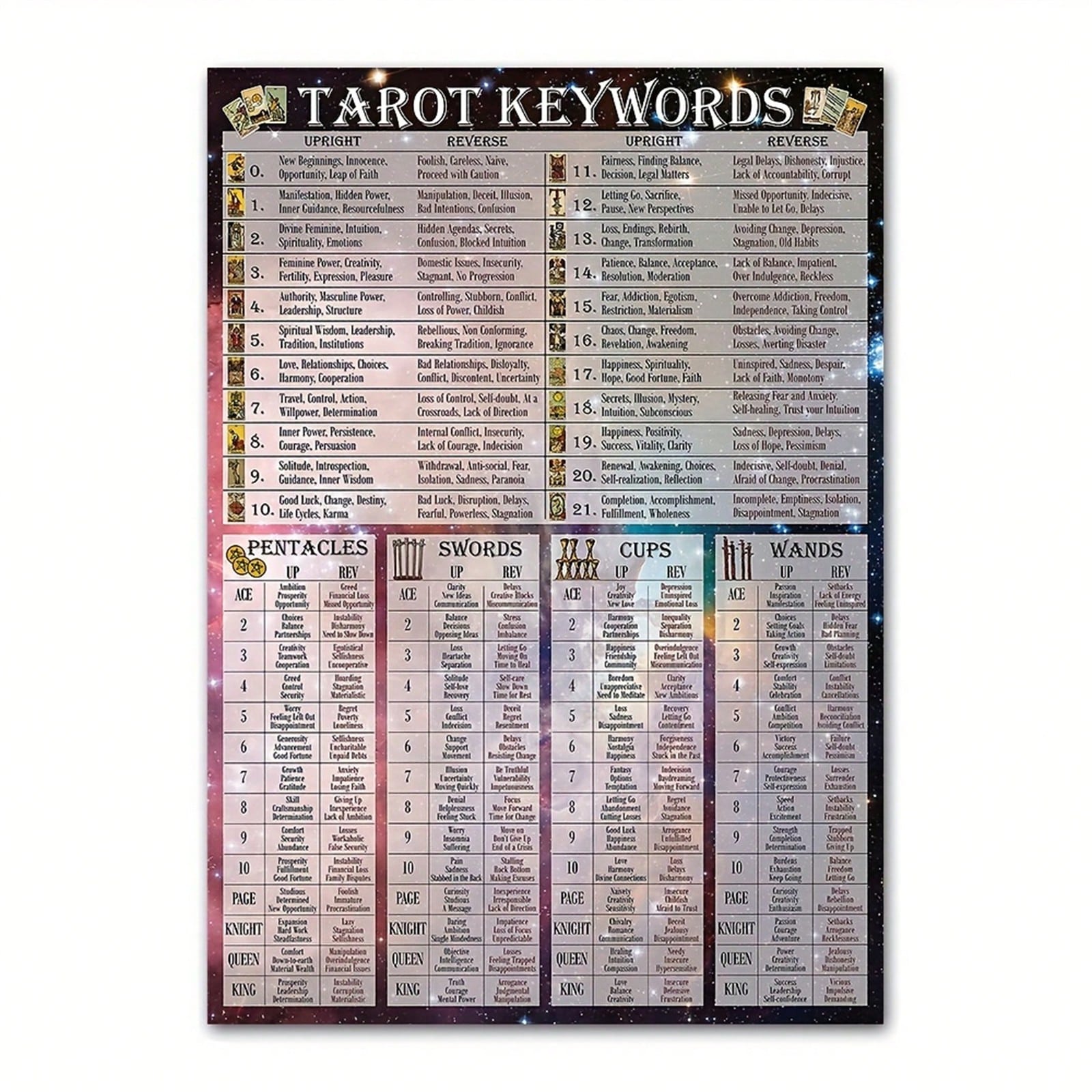
Practical Tools: Creating Your Own Tarot Glossary
While this guide covers essential terms, every reader’s understanding of Tarot evolves over time. Creating a personal glossary is a powerful way to solidify your knowledge and tailor it to your unique style. Here’s how to get started:
Journaling: Keep a dedicated Tarot journal where you note down definitions, personal interpretations, and examples of each term in action. For instance, write about a time you pulled The Hermit and how its meaning resonated with a current life situation. Over time, your journal will become a personalized reference guide.
Flashcards: Use physical or digital flashcards to memorize terms and their meanings. Apps like Anki or Quizlet allow you to create custom decks with images, making it easier to recall definitions during readings. Focus on one suit or set of terms at a time to avoid overwhelm.
Visual Aids: Charts and posters, like the one shown above, can serve as quick references during readings. Hang a Tarot keywords chart near your reading space or save a digital version on your phone for easy access. Visual aids reinforce memory and help you associate terms with their meanings at a glance.
Common Pitfalls and How to Avoid Them
Even experienced readers can fall into traps that dilute the accuracy of their readings. Being aware of these pitfalls will help you maintain clarity and integrity in your practice.
Over-Reliance on Guidebooks: While guidebooks are helpful, relying on them exclusively can stifle your intuition. Instead, use them as a starting point and then trust your gut feelings about a card’s message. For example, if The Three of Cups feels joyful to you but the guidebook describes it as superficial, lean into your interpretation.
Ignoring Card Imagery:
Every detail in a Tarot card—colors, symbols, and characters—holds meaning. Skimming over these elements can lead to shallow interpretations. Take time to study the imagery in your deck. For instance, The Magician’s tools (wand, cup, sword, pentacle) represent the four suits, while the infinity symbol above his head signifies infinite potential. Paying attention to these details enriches your understanding.
Forcing Meanings: It’s easy to force a card’s meaning to fit a narrative, especially when you’re eager for clarity. Instead, allow the cards to guide you. If a spread feels unclear, revisit the basics or seek a second opinion from another reader. Trust that the right interpretation will emerge with time and reflection.
Conclusion
Mastering the Tarot glossary is an ongoing journey, but with the right tools and mindset, you can build a strong foundation for your readings. From core terms like Arcana and suits to advanced concepts like astrological correspondences and Kabbalistic attributions, each piece of vocabulary adds depth to your practice. Remember that Tarot is as much about intuition as it is about knowledge—use this guide as a reference, but always trust your inner wisdom.
As you continue your Tarot journey, revisit this glossary whenever a term feels unfamiliar. Over time, these terms will become second nature, allowing you to focus on the deeper messages the cards have to share. Whether you’re reading for yourself or others, a solid grasp of Tarot terminology will enhance your confidence and clarity, making every spread a meaningful experience.
FAQ
What is the difference between Major Arcana and Minor Arcana?
The Major Arcana consists of 22 cards representing significant life events or spiritual lessons, while the Minor Arcana has 56 cards divided into four suits that reflect everyday experiences.
What does a reversed Tarot card mean?
A reversed card appears upside down and can indicate blocked energy, internal struggles, or the opposite of the card’s upright meaning.
How can elemental dignities improve my Tarot readings?
Elemental dignities assess the compatibility of cards based on their elemental associations, helping identify harmonious or conflicting energies in a spread.
What is shadow work in Tarot?
Shadow work involves exploring hidden or repressed parts of the psyche through Tarot cards, helping confront fears and past traumas for personal growth.
How do astrological correspondences enhance Tarot interpretation?
Astrological correspondences link Tarot cards to zodiac signs and planets, adding another layer of meaning and insight to readings.
Leave a Reply