Short Answer
Have you ever glanced at a clock, a movie title, or even a building’s cornerstone and wondered about the mysterious symbols etched in Roman numerals? These ancient characters—once the language of an empire—still hold power today, shaping how we perceive time, history, and even modern design. In this guide, we’ll unravel the secrets behind Roman numerals, explore their hidden meanings in images, and reveal how they can shift your perspective on numbers, art, and culture. Whether you’re a history enthusiast, a designer, or simply curious, prepare to see these symbols in a whole new light.
The Ancient Language of Power: What Are Roman Numerals?
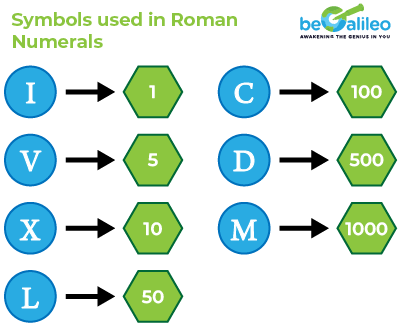
Roman numerals are a numeral system that originated in ancient Rome, used extensively throughout the Roman Empire for trade, engineering, and record-keeping. Unlike our familiar Arabic numerals (1, 2, 3), Roman numerals rely on seven core symbols: I (1), V (5), X (10), L (50), C (100), D (500), and M (1000). These symbols can be combined to represent any number, following specific rules of addition and subtraction. For example, IV represents 4 (5 – 1), while IX stands for 9 (10 – 1).
The elegance of Roman numerals lies in their simplicity and adaptability. They were not just a tool for calculation but a visual language that conveyed authority and tradition. Emperors used them to inscribe laws and victories on monuments, while architects etched them into the foundations of temples and aqueducts. Today, they endure in unexpected places—from the credits of Hollywood films to the faces of analog clocks—serving as a bridge between antiquity and modernity.
Decoding the Symbols: How Roman Numerals Work
Understanding Roman numerals begins with mastering their basic symbols and the rules that govern their combination. The system is additive by default, meaning that when a smaller numeral follows a larger one, their values are added together. For instance, VI translates to 6 (5 + 1), and XIII means 13 (10 + 1 + 1 + 1). However, there’s a twist: subtraction comes into play when a smaller numeral precedes a larger one. This is seen in IV (4) and IX (9), where the smaller numeral is subtracted from the larger one to create a more compact representation.
The rules extend further with larger numbers. For example, XL represents 40 (50 – 10), while CD stands for 400 (500 – 100). This subtractive principle not only simplifies writing but also adds a layer of sophistication to the numerals. It’s a system that rewards attention to detail—where a single misplaced symbol can drastically alter the meaning. This precision is part of what makes Roman numerals so enduring; they demand a moment of pause, inviting us to engage more deeply with the numbers we encounter.
Beyond their practical use, Roman numerals carry a symbolic weight. They evoke a sense of timelessness, connecting us to an era of gladiators, senators, and monumental architecture. When you see “MMXXIV” (2024) inscribed on a cornerstone or a movie poster, it’s not just a date—it’s a nod to history, a silent tribute to the past that frames our present.
Roman Numerals in Modern Culture: Where Do You See Them?
Roman numerals are far from relics of the past; they thrive in contemporary culture, often in ways that subtly influence our perceptions. One of the most visible places you’ll encounter them is on analog clocks and watches. The use of Roman numerals on timepieces isn’t merely decorative—it’s a statement. It suggests a connection to tradition, elegance, and perhaps even a rejection of the digital age’s cold precision. Brands like Rolex and Cartier frequently use Roman numerals in their designs, positioning their products as timeless and luxurious.
In the world of entertainment, Roman numerals add gravitas to titles and credits. Consider the opening crawl of a Star Wars film, where the year is often rendered as “MCMLXXX” (1980) or “MMVI” (2006). This choice isn’t arbitrary; it elevates the moment, making it feel grander and more significant. Similarly, Super Bowl events are identified by Roman numerals (e.g., Super Bowl LVIII), a tradition that began in 1971. The numerals create a sense of continuity and prestige, tying each event to a larger historical narrative.
Even in architecture and design, Roman numerals serve as a subtle yet powerful tool. They appear on building cornerstones, commemorative plaques, and public monuments, where their presence suggests permanence and importance. The use of these symbols in modern contexts often serves to anchor new creations in history, giving them a sense of weight and authority. It’s a clever way to infuse everyday objects with a touch of the extraordinary.

The Hidden Psychology: Why Roman Numerals Feel Timeless
There’s something inherently intriguing about Roman numerals that goes beyond their functional use. Psychologically, they trigger a sense of curiosity and wonder, prompting us to pause and decode their meaning. Unlike Arabic numerals, which are processed almost instantaneously, Roman numerals require a moment of mental effort. This cognitive engagement makes them feel more deliberate and meaningful. When you see “IV” instead of “4,” it’s not just a number—it’s an invitation to think deeper.
This psychological effect is leveraged in marketing and branding to create a sense of exclusivity and sophistication. Products or events that use Roman numerals often position themselves as premium or high-status. Think of luxury watches, high-end real estate developments, or even tattoo designs. The numerals add an air of mystery and tradition, making the associated product or idea feel more valuable. It’s a subtle form of storytelling, where the symbols themselves become part of the narrative.
Roman numerals also tap into our collective memory of history and mythology. They’re the language of ancient Rome, the empire that shaped Western civilization. When we see these symbols, we’re subconsciously reminded of gladiators, emperors, and the rise and fall of one of history’s greatest civilizations. This connection to the past gives Roman numerals a sense of gravitas, making them ideal for commemorative purposes. Whether it’s a wedding date, a building’s inauguration year, or a historical anniversary, Roman numerals lend an air of permanence and significance.
From Numbers to Art: The Aesthetic Appeal of Roman Numerals
Beyond their functional and psychological appeal, Roman numerals possess a unique aesthetic quality that has captivated artists and designers for centuries. Their geometric shapes—I, V, X, and L—are clean, bold, and visually striking. This simplicity makes them incredibly versatile, allowing them to blend seamlessly into a variety of artistic styles, from classical to modern minimalism. In typography, Roman numerals are often used to convey elegance and authority, making them a popular choice for logos, posters, and book covers.
Artists and designers frequently use Roman numerals to evoke a sense of timelessness or to reference historical themes. For example, a contemporary painting might incorporate Roman numerals in its composition to juxtapose the old with the new, creating a dialogue between past and present. In graphic design, these numerals can be stylized to fit the theme of a project, whether it’s a vintage-inspired poster or a futuristic digital interface. Their adaptability ensures that they remain relevant across different mediums and eras.
The visual appeal of Roman numerals is also evident in educational materials. Posters, flashcards, and children’s books often use these symbols to teach counting and arithmetic, capitalizing on their bold and memorable shapes. The contrast between the straight lines of “I” and the angles of “V” and “X” makes them easy to recognize, aiding in visual learning. This aesthetic quality ensures that Roman numerals continue to be a staple in both educational and artistic contexts.

Conclusion
Roman numerals are more than just an ancient numbering system—they are a bridge between the past and present, a tool for storytelling, and a source of aesthetic inspiration. From the grand monuments of Rome to the subtle details of a modern wristwatch, these symbols carry a weight that transcends their numerical value. They invite us to pause, to question, and to connect with history in a way that Arabic numerals simply don’t. Whether you encounter them in art, architecture, or pop culture, Roman numerals challenge you to see beyond the surface, to appreciate the layers of meaning embedded in their timeless design.
Next time you see “IV” on a clock or “MCMXXIV” on a building, take a moment to reflect on what these symbols represent—not just as numbers, but as a testament to human ingenuity and the enduring power of tradition. In a world that often prioritizes speed and efficiency, Roman numerals remind us of the beauty in deliberation, the elegance in simplicity, and the stories that numbers can tell.
FAQ
What are Roman numerals?
Roman numerals are a numeral system originating from ancient Rome, using combinations of letters from the Latin alphabet to represent numbers.
How do Roman numerals work?
Roman numerals use seven core symbols (I, V, X, L, C, D, M) combined by rules of addition and subtraction to represent numbers.
Where are Roman numerals commonly used today?
They are commonly seen on clocks, movie credits, building cornerstones, event titles like the Super Bowl, and luxury branding.
Why do Roman numerals feel timeless?
They evoke history and tradition, requiring cognitive effort to read, which adds a psychological sense of exclusivity and significance.
What is the aesthetic appeal of Roman numerals?
Their geometric shapes are visually striking and adaptable to various artistic and design styles, conveying elegance and authority.
Leave a Reply