Short Answer
Welcome to your ultimate guide to Tarot for Beginners with Meanings Printed! Whether you’re curious about divination, self-discovery, or simply looking for a fun new hobby, this guide will walk you through the essentials of Tarot reading. You’ll learn how to interpret cards, understand their meanings, and even create your own cheat sheets for quick reference. By the end, you’ll have the confidence to perform readings, cleanse your deck, and explore different spreads—all while deciding if Tarot is a helpful tool or just a clever trick.
What Is Tarot and Why Use Printed Meanings?
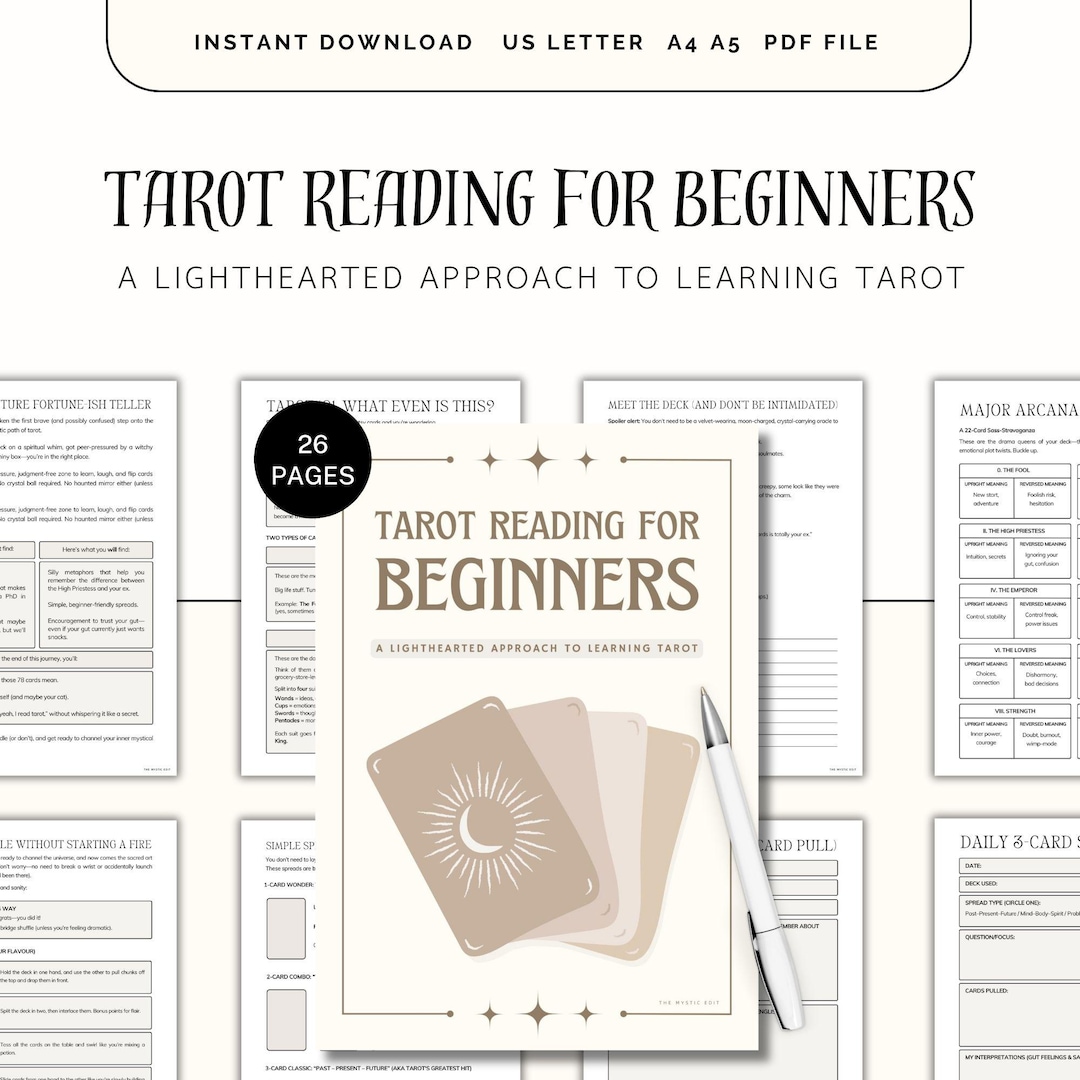
Tarot is a deck of 78 symbolic cards used for divination, meditation, and personal growth. Each card carries a unique meaning, often tied to archetypes, numerology, or elemental energies. While some readers rely solely on intuition, others use printed meanings as a guide—especially when starting out. Printed cheat sheets act as a bridge between memorization and instinct, helping beginners familiarize themselves with the cards without feeling overwhelmed. They’re not cheating; they’re a tool to accelerate learning and build confidence in your interpretations.
For example, the Major Arcana cards (like The Fool or The Lovers) represent life’s big themes, while the Minor Arcana (divided into suits like Cups, Swords, Wands, and Pentacles) reflect everyday situations. A printed guide can highlight these distinctions, making it easier to spot patterns in your readings.
Essential Tarot Cards for Beginners to Memorize
Not all 78 cards need to be memorized at once. Start with these foundational cards to build a strong base:
- The Fool (0): New beginnings, spontaneity, and taking a leap of faith.
- The Magician (I): Manifestation, skill, and harnessing your resources.
- The High Priestess (II): Intuition, mystery, and subconscious wisdom.
- Ten of Cups: Emotional fulfillment, family, and harmony.
- Three of Swords: Heartbreak, sorrow, but also healing.
- Eight of Pentacles: Hard work, craftsmanship, and dedication.
Use a printed cheat sheet to note keywords for each card (e.g., “The Tower = sudden change, chaos”). Over time, these associations will become second nature, allowing you to focus on the nuances of each reading.
How to Cleanse and Care for Your Tarot Deck
Before diving into readings, it’s crucial to cleanse your deck to remove any lingering energies. Here are beginner-friendly methods:
- Smudging: Pass the deck through sage or palo santo smoke while setting an intention to clear negativity.
- Moonlight: Place your deck under a full moon overnight to recharge its energy.
- Salt: Sprinkle sea salt over the cards (avoid direct contact) or place them in a salt bowl for a few hours.
- Shuffling: Some readers believe shuffling the deck with focused intent is enough to reset its energy.
Store your deck in a silk bag or wooden box when not in use to protect it from dust and electromagnetic interference (like Wi-Fi signals). A well-cared-for deck will serve you better and feel more attuned to your energy.
Simple Tarot Spreads for Quick Readings
Spreads are layouts that determine how cards are drawn and interpreted. For beginners, start with these easy options:
- Single-Card Pull: Draw one card daily for a quick insight or affirmation.
- Three-Card Spread: Past, Present, Future (or Mind, Body, Spirit).
- Celtic Cross (Simplified): A 5-card spread focusing on the central issue, challenges, subconscious influences, and potential outcomes.
Printed guides often include diagrams for these spreads, making it simple to visualize where each card fits. As you practice, you’ll develop your own variations and preferences.

Interpreting Reversed Cards: A Beginner’s Guide
Reversed cards (upside-down) can indicate blocked energy, internal struggles, or a need to reflect. While some readers ignore reversals, others find them valuable. Here’s a basic approach:
- Blocked Potential: The card’s energy is stifled (e.g., The Lovers reversed may suggest disharmony in relationships).
- Internal Reflection: The message is about self-examination (e.g., The Hermit reversed could mean isolation or avoiding solitude).
- Delayed Timing: The card’s energy hasn’t manifested yet (e.g., Five of Pentacles reversed might signal recovery from financial hardship).
Printed cheat sheets often color-code reversals for quick reference. Experiment with both upright and reversed interpretations to see what resonates with you.
Creating Your Own Tarot Cheat Sheets
Personalized cheat sheets are a game-changer for beginners. Here’s how to make one:
- Gather Materials: Use a notebook, index cards, or a digital app like Canva.
- List Keywords: Assign 1-3 words to each card (e.g., “The Chariot = determination, control, victory”).
- Add Imagery: Sketch or print small images of each card to reinforce memory.
- Include Spreads: Note the positions for common spreads (e.g., “Position 3 in a 3-Card Spread = Present”).
- Review Regularly: Update your sheet as you learn new interpretations.
A well-designed cheat sheet becomes a portable reference that grows with your skills. It’s not about memorizing rigid meanings but creating a foundation you can adapt over time.
Common Mistakes Beginners Make (And How to Avoid Them)
Even with printed guides, it’s easy to fall into traps. Here are pitfalls to watch for:
- Over-Reliance on the Guide: Don’t let the cheat sheet replace your intuition. Use it as a starting point, then trust your gut.
- Fear of Reversals: Reversed cards aren’t “bad”—they’re just nuanced. Approach them with curiosity, not dread.
- Ignoring Card Interactions: The meaning of a card can shift based on neighboring cards. Look for patterns, not isolated symbols.
- Rushing Readings: Take time to shuffle, focus your question, and observe the cards’ imagery. A rushed reading is less insightful.
Printed guides can help you avoid these mistakes by providing structure, but the real magic happens when you combine knowledge with personal insight.
Conclusion
Tarot for Beginners with Printed Meanings is a powerful way to demystify the cards and build confidence in your readings. Whether you view it as a spiritual tool, a psychological exercise, or a creative outlet, Tarot offers endless possibilities for exploration. Printed cheat sheets are not a shortcut—they’re a stepping stone that bridges the gap between confusion and clarity. As you practice, you’ll find your own rhythm, blending traditional meanings with your unique perspective. So grab a deck, shuffle with intention, and let the cards guide you on this fascinating journey. The only “cheat” is giving yourself permission to learn at your own pace.
FAQ
Is using printed meanings considered cheating in Tarot reading?
No, using printed meanings or cheat sheets is a helpful tool for beginners to learn card interpretations and build confidence. It bridges the gap between memorization and intuition.
How do I cleanse my Tarot deck before use?
Common cleansing methods include smudging with sage or palo santo, moonlight charging, salt bowls (without direct contact), and focused shuffling to clear residual energies.
What are reversed Tarot cards and how should I interpret them?
Reversed cards appear upside-down and can indicate blocked energy, internal reflection, or delayed timing. Beginners should approach them as nuanced messages rather than negative omens.
How many Tarot cards should beginners memorize at first?
Beginners should start with foundational cards such as The Fool, The Magician, The High Priestess, Ten of Cups, Three of Swords, and Eight of Pentacles to build a solid base.
What are some simple Tarot spreads recommended for beginners?
Easy spreads include the Single-Card Pull for daily insights, the Three-Card Spread representing Past, Present, and Future, and a simplified Celtic Cross focusing on key influences.
Leave a Reply