Short Answer
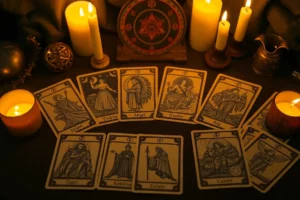
Have you ever pulled a tarot card during a reading, only to realize it’s upside down? If so, you’re not alone—this phenomenon, known as a “reversed” or “upside-down” tarot card, is a common experience for both beginners and seasoned readers. But what does it really mean when a tarot card appears upside down? Does it signify bad luck, a blocked energy, or something entirely different? In this comprehensive guide, we’ll explore the hidden meanings behind reversed tarot cards, how to interpret them, and why they might actually be a playful challenge from the universe. By the end, you’ll feel confident in deciphering these upside-down messages and using them to deepen your tarot practice.
What Are Upside-Down Tarot Cards?
When a tarot card appears upside down during a reading, it’s often referred to as a “reversed” card. This doesn’t necessarily mean the card is negative—instead, it suggests that the card’s energy is either internalized, blocked, or manifesting in a way that’s less obvious than its upright counterpart. Think of it as a card whispering its message in a different tone, like a song played backward. Some tarot readers believe reversed cards indicate challenges, delays, or internal struggles, while others see them as opportunities for growth or hidden truths. The key is to approach them with curiosity rather than fear.
Why Do Tarot Cards Appear Upside Down?
There are several reasons why a tarot card might land upside down during a reading. One possibility is simple physics—if the deck isn’t shuffled thoroughly or if the cards are fanned out carelessly, gravity can do the rest. However, many readers believe there’s a deeper significance. Some interpret reversed cards as a sign that the querent (the person asking the question) is resisting the card’s energy or that the universe is nudging them to look inward. Others see it as a playful twist, suggesting that the card’s message is more nuanced than it first appears. Whether you view it as a cosmic joke or a meaningful message, the upside-down card invites you to pause and reflect.
How to Interpret Reversed Tarot Cards
Interpreting reversed tarot cards requires a blend of intuition and traditional meanings. Here’s a step-by-step approach to decoding them:
- Compare to the Upright Meaning: Start by recalling the upright meaning of the card. Then, ask yourself how its energy might be altered when reversed. For example, the upright Three of Cups represents celebration and friendship, while reversed, it could signal gossip, overindulgence, or a need to reconnect with others on a deeper level.
- Look for Blocked Energy: Reversed cards often highlight areas where energy is stagnant or suppressed. If you draw the reversed Five of Pentacles, for instance, it might indicate financial stress or feeling isolated, but also a reminder to seek support rather than suffer in silence.
- Consider Internal vs. External: Some reversed cards point to internal struggles, like self-doubt (e.g., reversed The High Priestess) or fear of change (reversed The Tower). Others may reflect external challenges, such as a reversed Six of Wands suggesting a setback in recognition or pride.
- Use Your Intuition: Trust your gut feeling. If a reversed card feels heavy, it might be a warning. If it feels light, it could be a nudge to embrace a hidden opportunity. Your first impression is often the most accurate.

Common Misconceptions About Reversed Cards
One of the biggest myths about reversed tarot cards is that they’re always negative. While some reversed cards can indicate challenges, they’re not inherently “bad.” In fact, they often serve as a wake-up call or a reminder to adjust your approach. Another misconception is that reversed cards are less important than upright ones. On the contrary, they can offer profound insights that upright cards might overlook. For example, the reversed Ten of Swords might seem dire at first glance, but it can also signal the end of a painful cycle and the beginning of healing. Always give reversed cards the attention they deserve.
Reversed Tarot Cards by Suit and Major Arcana
To help you navigate reversed cards with confidence, here’s a breakdown of how reversals might alter the meaning of key cards:
Major Arcana Reversals
- The Fool (Reversed): Recklessness, poor judgment, or a lack of direction. It’s a reminder to think before you leap.
- The Lovers (Reversed): Disharmony in relationships, misalignment with values, or a need to choose wisely.
- Death (Reversed): Resistance to change, stagnation, or fear of transformation.
- The Star (Reversed): Despair, disillusionment, or a loss of hope. It’s a call to reconnect with your inner light.
Minor Arcana Reversals by Suit
- Wands (Reated to passion and creativity):
- Ace of Wands (Reversed): Lack of inspiration or a stalled project.
- Three of Wands (Reversed): Delays in progress or a need to reassess your plans.
- Cups (Related to emotions and relationships):
- Two of Cups (Reversed): Imbalance in a relationship or unrequited love.
- Eight of Cups (Reversed): Avoiding emotional growth or clinging to the past.
- Swords (Related to intellect and conflict):
- Five of Swords (Reversed): Reconciliation or letting go of a petty conflict.
- Knight of Swords (Reversed): Impulsiveness or a need to slow down and think critically.
- Pentacles (Related to finances and stability):
- Four of Pentacles (Reversed): Financial insecurity or a fear of letting go of control.
- Ten of Pentacles (Reversed): Family conflicts or instability in home life.
How to Work with Reversed Tarot Cards in Readings
Incorporating reversed cards into your tarot practice can add depth and nuance to your readings. Here are some tips to make the most of them:
- Ask Open-Ended Questions: Instead of asking, “Will I get the job?” try, “What do I need to know about my job search?” This allows reversed cards to highlight underlying issues or hidden opportunities.
- Use Clarifying Cards: If a reversed card feels unclear, pull an additional card to shed light on its message. For example, if the reversed Seven of Cups appears, you might draw the Two of Cups to see if it’s about indecision in love.
- Journal Your Insights: Keep a tarot journal to track reversed cards over time. You’ll start to notice patterns in your readings and how these cards reflect your life’s ebb and flow.
- Embrace the Challenge: View reversed cards as a playful challenge from the universe. They’re not there to discourage you but to guide you toward a deeper understanding of your path.
When to Ignore Reversed Cards (Sometimes!)
While reversed cards can offer valuable insights, they’re not always necessary. In some readings—especially quick or intuitive ones—you might choose to focus only on upright cards. For example, if you’re doing a simple past-present-future spread, reversed cards might complicate the message without adding clarity. Trust your instincts: if a reversed card feels like overkill, it’s okay to set it aside and focus on the upright energies.
Conclusion
Upside-down tarot cards are far more than just a quirk of fate—they’re a gateway to deeper self-awareness and a richer tarot practice. Whether you see them as warnings, hidden blessings, or playful cosmic nudges, reversed cards invite you to look beyond the surface and explore the layers of meaning in your readings. The next time a card lands upside down, take a deep breath and ask yourself: What is this card trying to tell me in a different way? With an open mind and a curious heart, you’ll uncover the magic in every twist and turn of your tarot journey.
FAQ
What does it mean when a tarot card appears upside down?
An upside-down tarot card, also known as a reversed card, often indicates internalized energy, blocked energy, or a different manifestation of the card’s upright meaning. It may suggest challenges, delays, or hidden opportunities.
Are reversed tarot cards always negative?
No, reversed cards are not inherently negative. While some may indicate challenges, they often offer important insights, warnings, or opportunities for growth that upright cards might not reveal.
How can I interpret reversed tarot cards effectively?
To interpret reversed cards, compare them to their upright meanings, consider whether they indicate blocked or internal energy, use intuition, and, if needed, draw clarifying cards to better understand their messages.
Should I always include reversed cards in my readings?
Not necessarily. In some quick or simple readings, you might choose to focus only on upright cards to avoid overcomplicating the message. It depends on your personal preference and the reading’s purpose.
What are some common misconceptions about reversed tarot cards?
Common misconceptions include that reversed cards are always bad or less important than upright cards. In reality, they can provide unique and profound insights that complement the upright card meanings.
Leave a Reply