Short Answer
Welcome to your daily guide to unlocking the wisdom of the tarot. Each day, a single card is drawn to offer insight, guidance, and a fresh perspective on your journey. Whether you’re seeking clarity, inspiration, or a gentle nudge in the right direction, the daily tarot card serves as a mirror to your inner world and the energies surrounding you. In this guide, you’ll discover how to interpret your card, the unique language it speaks, and the transformative power it holds for your day ahead.
The Symbolism Behind the Card: Decoding the Visual Language
Every tarot card is a canvas painted with symbols, colors, and archetypes that speak a silent language. The imagery on your daily card is carefully chosen to evoke emotions and provoke thought. For instance, a card featuring a tower struck by lightning might symbolize sudden change or upheaval, while a serene figure meditating under a tree could represent inner peace and grounding. These visual cues are not random; they are steeped in centuries of tradition and collective unconscious wisdom. By paying attention to the details—such as the posture of a figure, the presence of animals, or the time of day depicted—you can uncover layers of meaning that resonate with your current circumstances.
Colors play a crucial role in the card’s message. Warm hues like red and orange often signify passion, energy, or urgency, while cooler tones like blue and green evoke calmness, healing, or growth. The contrast between light and shadow in the card can also highlight dualities in your life, such as balance versus chaos or intuition versus logic. As you study the card, ask yourself: What emotions does this image stir within me? What memories or situations does it remind me of? The answers often hold the key to understanding the card’s personal significance.

Archetypes and Universal Themes: The Tarot’s Timeless Narrative
The tarot is a tapestry woven with archetypes—universal symbols and characters that appear across cultures and time periods. These archetypes act as bridges between the collective unconscious and your personal experience. For example, The Magician card often represents resourcefulness, skill, and the power to manifest your desires, while The High Priestess embodies intuition, mystery, and the subconscious mind. By recognizing these archetypes in your daily card, you tap into a shared human language that transcends individual differences.
Each suit in the tarot also carries its own thematic resonance. Cups, for instance, are tied to emotions, relationships, and creativity, while Swords delve into intellect, conflict, and communication. Pentacles ground us in the material world, focusing on finances, work, and stability, while Wands ignite our passions, ambitions, and spiritual fire. When your daily card appears, consider which suit it belongs to and how its themes might be playing out in your life. Are you navigating a complex emotional decision (Cups), grappling with a tough conversation (Swords), building a new project (Wands), or focusing on practical matters (Pentacles)? The archetypal language of the tarot helps you frame your challenges and opportunities in a way that feels both familiar and profound.
The Card’s Position: Past, Present, or Future?
While a daily tarot card is often interpreted as a snapshot of your current energies, its position in a spread can offer additional layers of meaning. If the card is drawn in a “past” position, it may reflect a recent influence or unresolved issue that’s shaping your present moment. For example, The Five of Cups in the past position could indicate lingering regret or loss that’s still affecting your emotional state. In the “present” position, the card highlights what’s most relevant to you right now—perhaps a decision to make or an emotion to acknowledge. The Three of Swords in the present might suggest heartache or a painful truth you’re currently facing.
If the card is drawn in a “future” position, it serves as a gentle prophecy, offering insight into where your current path might lead. However, it’s important to remember that the tarot doesn’t predict a fixed outcome but rather presents possibilities based on your current trajectory. For instance, The Star in the future position could signify hope and healing on the horizon, while The Tower might warn of an unexpected disruption that ultimately leads to growth. Use the card’s message as a compass rather than a crystal ball, guiding you toward choices that align with your highest good.
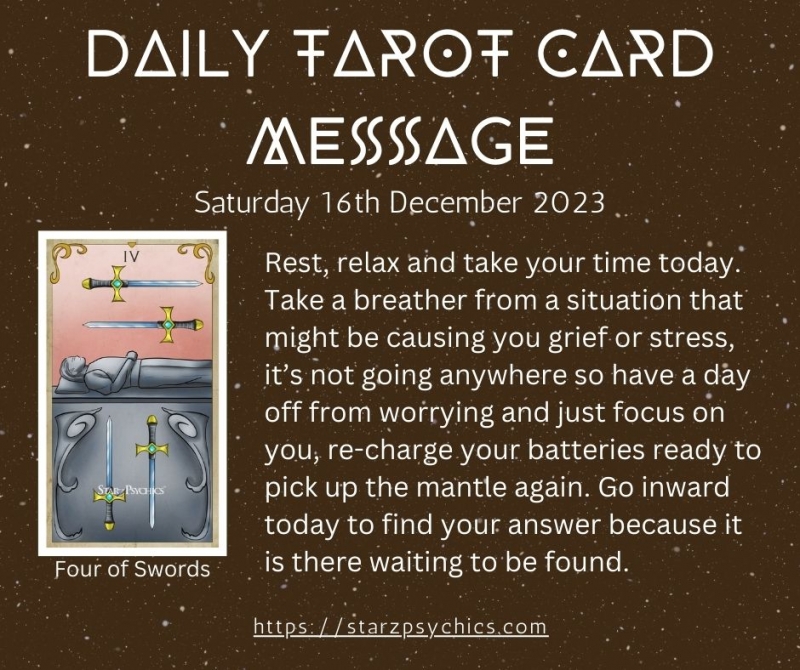
Personalizing the Message: How to Relate the Card to Your Life
The true magic of the daily tarot card lies in its ability to speak directly to your soul. While traditional interpretations provide a foundation, the most powerful insights come from your personal connection to the card. Start by journaling your immediate reactions to the image. What stands out to you? Does the card evoke a specific memory, person, or situation? For example, if you draw The Empress, you might reflect on your relationship with nurturing—are you giving yourself the care you deserve, or do you need to embrace more abundance in your life?
Another powerful technique is to ask the card a question and observe how its imagery or symbols respond. If you’re feeling stuck in a career dilemma, you might ask, “What do I need to know about my professional path today?” and then interpret the card’s symbols as answers. The presence of a key in The Hierophant could suggest seeking wisdom from a mentor, while a road in The Chariot might indicate a need for determination and focus. Trust your intuition—sometimes the card’s message is subtle, appearing in the form of a gut feeling or a sudden realization rather than a clear-cut answer.
It’s also helpful to consider the card’s energy in the context of your day. If you draw The Sun, you might approach your tasks with optimism and joy, knowing that clarity and success are within reach. Conversely, The Moon could signal a day where intuition is heightened, and you should trust your instincts over logic. By weaving the card’s energy into your daily routine, you create a harmonious dialogue between the tarot’s wisdom and your lived experience.
Common Misconceptions and How to Avoid Them
One of the most pervasive myths about tarot is that it’s a tool for fortune-telling, capable of predicting exact outcomes. In reality, the tarot is a mirror that reflects potential paths and inner dynamics, not a fixed script for the future. Avoid approaching your daily card with rigid expectations or a desire to “control” its message. Instead, view it as a conversation partner—a wise friend who offers perspective but doesn’t dictate your choices.
Another common pitfall is over-reliance on guidebooks or online interpretations. While these resources can provide valuable context, they often strip away the personal and intuitive aspects of tarot reading. Your connection to the card is unique, and no two people will experience the same image in the same way. Resist the urge to force a card into a predefined meaning; instead, let its message unfold naturally through your own reflections.
Lastly, don’t dismiss “negative” cards out of hand. Cards like The Devil or Ten of Swords are often feared, but they carry essential lessons about boundaries, release, and transformation. The tarot’s power lies in its balance—it doesn’t shy away from darkness but instead illuminates it so you can navigate it with awareness and courage. Embrace all cards as teachers, regardless of their initial appeal.
Conclusion
The daily tarot card is more than a fleeting glimpse into the future—it’s a daily ritual of self-discovery, a moment to pause and listen to the whispers of your subconscious. By engaging with the card’s symbolism, archetypes, and personal resonance, you transform a simple image into a profound guide for your day. Whether the card brings clarity, comfort, or a gentle challenge, its message is a reminder that you are never alone on your journey. The tarot doesn’t offer easy answers, but it does offer something far more valuable: the courage to ask the right questions and the wisdom to interpret the answers with an open heart.
So, as you draw your card each day, approach it with curiosity and reverence. Let its metaphors speak to you, its archetypes inspire you, and its energy guide you. The tarot is a living tradition, one that evolves with you and reflects the ever-changing landscape of your life. Embrace its mysteries, trust its insights, and watch as it becomes an indispensable companion on your path to growth and understanding.
FAQ
What is a daily tarot card?
A daily tarot card is a single card drawn each day to provide insight, guidance, and reflection relevant to that day's energies.
How do I interpret the symbols on a tarot card?
Interpret symbols by considering imagery, colors, archetypes, and your personal experiences to find meanings that resonate with you.
Is tarot fortune-telling accurate?
Tarot is not a tool for exact predictions but a guide that reflects potential influences and helps you make informed choices.
How can I make tarot more meaningful to me?
Personalize your reading by journaling feelings, asking questions, and trusting your intuition rather than relying solely on guidebooks.
What should I do if I draw a 'negative' card?
Understand that these cards teach important lessons about challenges, boundaries, and transformation, and should be embraced as part of growth.
Leave a Reply