Short Answer
Tired of endlessly Googling tarot card meanings every time you pull a card? You’re not alone. Many tarot enthusiasts find themselves stuck in an endless loop of searching for interpretations, only to feel more confused than before. This guide is designed to help you break free from that cycle by providing a comprehensive, easy-to-access resource for Rider Waite Tarot card meanings. Whether you’re a beginner or a seasoned reader, you’ll discover how to interpret cards intuitively, understand their deeper symbolism, and save time while deepening your connection to the deck. By the end, you’ll have a go-to reference that eliminates the need for constant online searches, allowing you to focus on the magic of your readings.
Why Rider Waite Tarot Cards Are the Gold Standard
The Rider Waite Tarot deck, first published in 1909, remains the most widely used and recognized tarot deck in the world. Created by A.E. Waite and illustrated by Pamela Colman Smith, this deck introduced a visual language that has influenced nearly every modern tarot deck. Unlike earlier decks that relied on abstract symbols, the Rider Waite Tarot features rich, narrative illustrations that make each card’s meaning more accessible and relatable. This deck’s imagery is steeped in esoteric traditions, including astrology, Kabbalah, and alchemy, yet its symbols are presented in a way that feels intuitive even to beginners. The cards are divided into two main groups: the Major Arcana (22 cards representing life’s big themes) and the Minor Arcana (56 cards divided into four suits—Cups, Pentacles, Swords, and Wands—each reflecting everyday experiences). Understanding the structure of the Rider Waite Tarot is the first step toward mastering its meanings.
Major Arcana: The Soul’s Journey Unfolded
The Major Arcana cards tell the story of the Fool’s journey—a metaphorical path through life’s challenges, lessons, and transformations. Each card represents a significant milestone or archetype, such as The Magician (manifestation and skill), The High Priestess (intuition and mystery), or The Tower (sudden upheaval and revelation). Unlike the Minor Arcana, which deals with day-to-day events, the Major Arcana cards often signify deeper spiritual or karmic influences. For example, pulling The Lovers card might suggest a choice between duty and desire, while The Death card (despite its ominous name) rarely signifies physical death—instead, it represents transformation and rebirth. To interpret these cards effectively, pay attention to the imagery: colors, symbols, and characters all carry clues. The Fool, for instance, is often depicted at the edge of a cliff, symbolizing spontaneity and risk-taking, while The Hermit holds a lantern, representing inner wisdom and solitude. By familiarizing yourself with these archetypes, you’ll start to see patterns in your readings that reveal the bigger picture of your life’s journey.

Minor Arcana: The Language of Everyday Life
The Minor Arcana cards are where the Rider Waite Tarot gets personal. Divided into four suits—Cups (emotions and relationships), Pentacles (money and material world), Swords (intellect and conflict), and Wands (creativity and passion)—these cards reflect the nuances of daily life. Each suit contains 14 cards: Ace through 10, plus four court cards (Page, Knight, Queen, King). For example, the Ace of Cups represents new emotional beginnings, while the Five of Pentacles might indicate financial struggle or feeling left out in the cold. Court cards add another layer of meaning, often representing people or personality traits. A Queen of Swords, for instance, could symbolize a sharp-witted, independent woman in your life or an aspect of your own personality that values logic over emotion. To interpret Minor Arcana cards, consider their suit’s elemental association (Cups = Water/emotions, Pentacles = Earth/material, Swords = Air/intellect, Wands = Fire/energy) and the card’s number (e.g., 3s often signify creativity or collaboration, while 8s may indicate movement or change). The key is to blend these elements with the card’s imagery—for instance, the Three of Wands shows a figure gazing at three ships on the horizon, suggesting expansion and foresight.
Reversed Cards: When Energy is Blocked or Internalized
Reversed tarot cards (those pulled upside down) can be a source of confusion, but they’re also incredibly insightful. A reversed card doesn’t necessarily mean the opposite of its upright meaning—instead, it often indicates that the card’s energy is internalized, delayed, or blocked. For example, the upright Three of Cups celebrates friendship and joy, but reversed, it might suggest gossip, overindulgence, or feeling left out of social circles. Similarly, the upright Ten of Swords (a card of painful endings) reversed could imply resistance to change or lingering bitterness. When interpreting reversals, ask yourself: Is the energy of this card being suppressed, or is it manifesting in a way that’s not immediately visible? Reversals can also highlight areas where you’re ignoring your intuition or avoiding a difficult truth. However, not all readers use reversals—some prefer to focus solely on the upright meanings to keep readings straightforward. Experiment with both approaches to see what resonates with you.
Symbolism Deep Dive: Decoding the Hidden Messages
The Rider Waite Tarot is a masterclass in symbolism, with every detail—from colors to objects—carrying meaning. Take The Empress, for instance: her lush surroundings, crown of stars, and scepter shaped like a Venus symbol all point to fertility, abundance, and feminine power. The High Priestess, seated between two pillars (one black, one white), represents duality and the balance between conscious and subconscious minds. Even seemingly minor details, like the lion at The Strength card’s feet or the rainbow in The Chariot, add layers of interpretation. To deepen your understanding, study the symbolism of each suit: Cups often feature water, fish, or chalices (emotional nourishment), while Swords are filled with sharp objects, clouds, or stormy skies (intellectual conflict). Keep a journal of symbols you encounter frequently in your readings—they’ll become a personal shorthand for your intuitive insights. Over time, you’ll develop a visual vocabulary that makes interpreting cards faster and more intuitive.
Creating Your Personal Tarot Guide: A Step-by-Step Approach
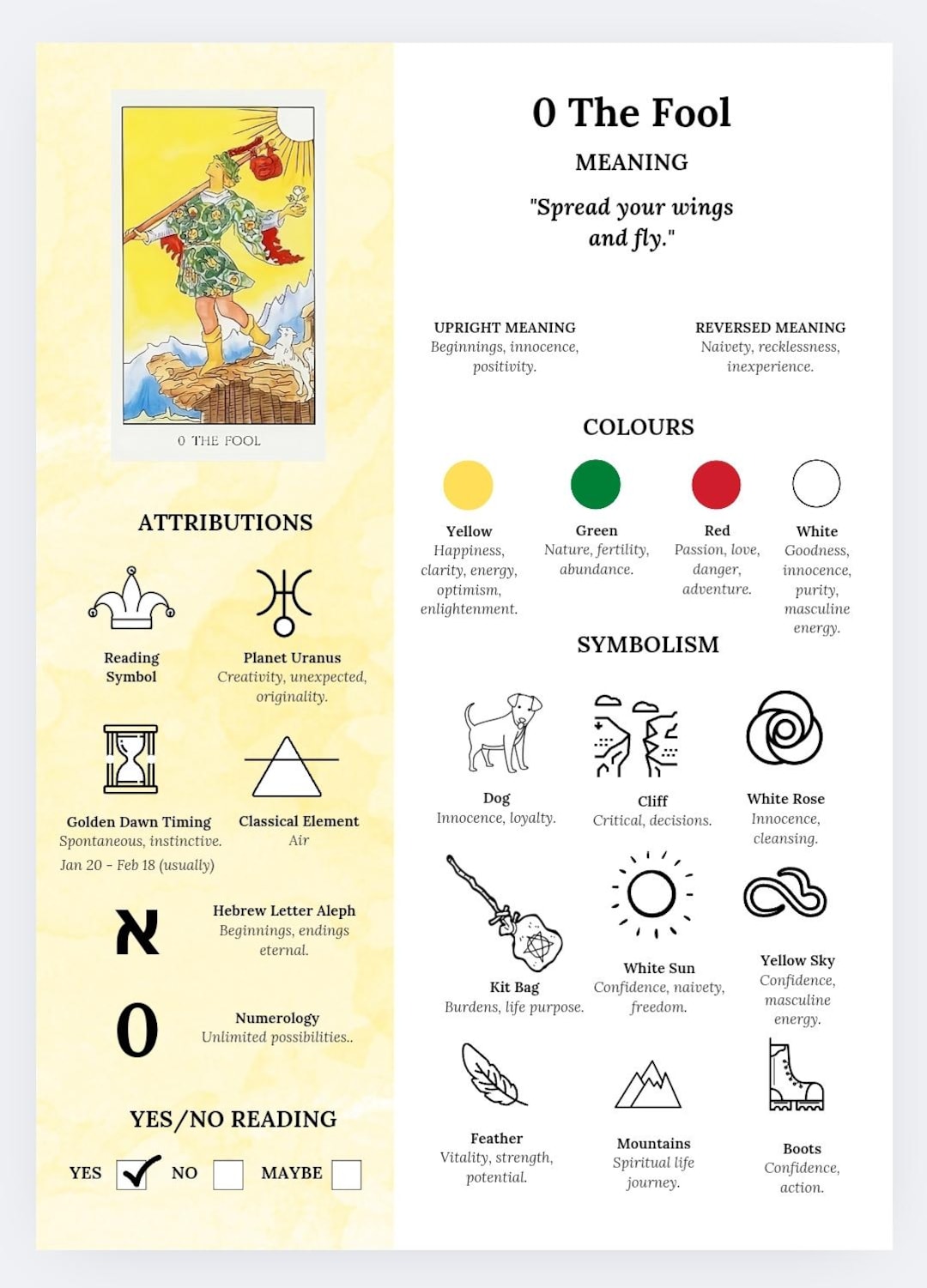
Instead of relying on scattered online resources, create your own tarot guide tailored to your intuition and experiences. Start by printing or purchasing a Rider Waite Tarot guidebook (or use this guide as a foundation) and annotate it with your own interpretations. For each card, write down: 1) the traditional meaning, 2) your personal associations (e.g., how the card relates to your life), and 3) any recurring symbols or themes you notice. Over time, your guide will become a living document that reflects your unique relationship with the deck. Another helpful exercise is to pull one card daily and journal about its relevance to your day. This builds familiarity and confidence in your interpretations. You can also create visual aids, like mood boards or Pinterest collections, to reinforce your understanding of each card’s energy. The goal isn’t to memorize rigid definitions but to develop a flexible, intuitive approach that feels authentic to you.
Common Pitfalls and How to Avoid Them
Even experienced tarot readers fall into traps that can muddy their interpretations. One of the biggest is over-reliance on guidebooks, which can stifle your intuition. Instead of reading the description first, try describing the card in your own words before checking its traditional meaning. Another pitfall is taking cards too literally—remember, tarot is a tool for reflection, not a fortune-telling device. For example, pulling The Tower doesn’t mean a literal collapse is coming; it’s more likely a sign to prepare for unexpected change. Avoid “card shopping” (pulling multiple cards until you get the answer you want) or reading for others without their consent. Finally, don’t ignore the context of a reading. A card’s meaning can shift dramatically depending on its position in a spread or the question asked. For instance, The Death card in a career spread might indicate a major transition, while in a love spread, it could suggest letting go of an unhealthy relationship.
Conclusion
The Rider Waite Tarot is more than just a deck of cards—it’s a mirror to the soul, a tool for self-discovery, and a guide through life’s twists and turns. By mastering its symbolism, understanding the interplay between Major and Minor Arcana, and developing your own intuitive approach, you’ll transform your tarot practice from a frustrating search for meanings into a fluid, insightful experience. The key is to move beyond rote memorization and engage with the cards on a personal level. Whether you’re pulling a single card for daily guidance or diving into a complex spread, let the imagery speak to you. Over time, you’ll find that the answers you seek aren’t hidden in endless Google searches—they’re already within the cards, waiting for you to unlock their wisdom. So set aside the habit of Googling every card, and instead, let the Rider Waite Tarot become your trusted companion on the journey of self-reflection.
FAQ
What is the Rider Waite Tarot?
The Rider Waite Tarot is a widely used tarot deck created by A.E. Waite and illustrated by Pamela Colman Smith, known for its rich imagery that facilitates card interpretation.
How do I interpret reversed tarot cards?
Reversed tarot cards often indicate that the card’s energy is internalized or blocked rather than showing the direct opposite of its upright meaning.
What should I include in my personal tarot guide?
Include traditional meanings, personal associations with each card, and any recurring symbols or themes you notice during readings.
Leave a Reply