Short Answer
In this guide, you’ll explore the profound connection between the Root Chakra and tarot, uncovering how your deepest fears and insecurities manifest in your spiritual and emotional life. You’ll learn practical tarot spreads designed to reveal blockages, interpret symbolic messages, and restore balance to your foundational energy center. Whether you’re new to chakra work or a seasoned practitioner, this guide offers insights to transform fear into empowerment and ground yourself in stability.
The Root Chakra: Your Foundation of Fear and Security
The Root Chakra, or Muladhara in Sanskrit, is the first of the seven primary chakras and serves as the foundation of your energy system. Located at the base of the spine, it governs feelings of safety, survival, and stability. When balanced, it fosters confidence, resilience, and a deep sense of belonging. However, when blocked or overactive, it can manifest as anxiety, financial stress, or a pervasive sense of insecurity. This chakra is often called “your fear lives here” because it holds the primal fears tied to survival—fear of scarcity, instability, or not having enough.
Tarot can act as a mirror to these fears, revealing hidden patterns and subconscious blocks. By working with the Root Chakra through tarot, you invite clarity into areas where fear has taken root, allowing you to address the root causes rather than just the symptoms. This practice isn’t just about identifying fear; it’s about reclaiming your power by understanding its origins and transforming it into grounded strength.
Why Tarot is a Powerful Tool for Root Chakra Healing
Tarot serves as a bridge between the conscious and subconscious mind, making it an ideal tool for Root Chakra work. The imagery in tarot cards often reflects primal themes—earth, survival, and the physical body—which directly correlate with the Root Chakra’s domain. Cards like The Tower, Five of Pentacles, or The Hermit can reveal deep-seated fears about security, abandonment, or lack. When these cards appear in a Root Chakra-focused spread, they signal areas where energy is stagnant or misaligned.
Moreover, tarot provides a safe space to confront fears without judgment. Unlike traditional therapy, which may require time and resources, a tarot session allows you to explore your inner landscape in a structured yet intuitive way. The act of drawing cards and interpreting their messages can ground you in the present moment, helping you recognize that many fears are based on past experiences or future projections rather than current reality. This realization alone can be transformative, shifting your relationship with fear from one of avoidance to one of understanding and release.
Common Root Chakra Fears Revealed Through Tarot
Certain tarot cards frequently emerge when exploring Root Chakra blockages. Recognizing these patterns can help you pinpoint specific fears and address them directly. For example:
- The Tower: Represents sudden upheaval or loss of security. In a Root Chakra reading, this card may indicate a deep-seated fear of instability or a subconscious belief that safety is fragile.
- Five of Pentacles: Highlights feelings of lack, financial struggle, or isolation. This card often points to fears about not having enough—whether it’s money, resources, or emotional support.
- Three of Swords: Reflects heartbreak or betrayal tied to family or home. This card can reveal fears of abandonment or rejection within your foundational relationships.
- Eight of Wands: While often associated with fast-moving energy, in a Root Chakra context, it may signal fear of change or loss of control over your environment.
By identifying these cards in your readings, you can begin to ask targeted questions: Where in my life do I feel unsafe? What past experiences have shaped my fear of scarcity? How can I create more stability in my daily life? These inquiries open the door to deeper healing and a stronger connection to your Root Chakra.
Designing a Root Chakra Tarot Spread: Step-by-Step Guide
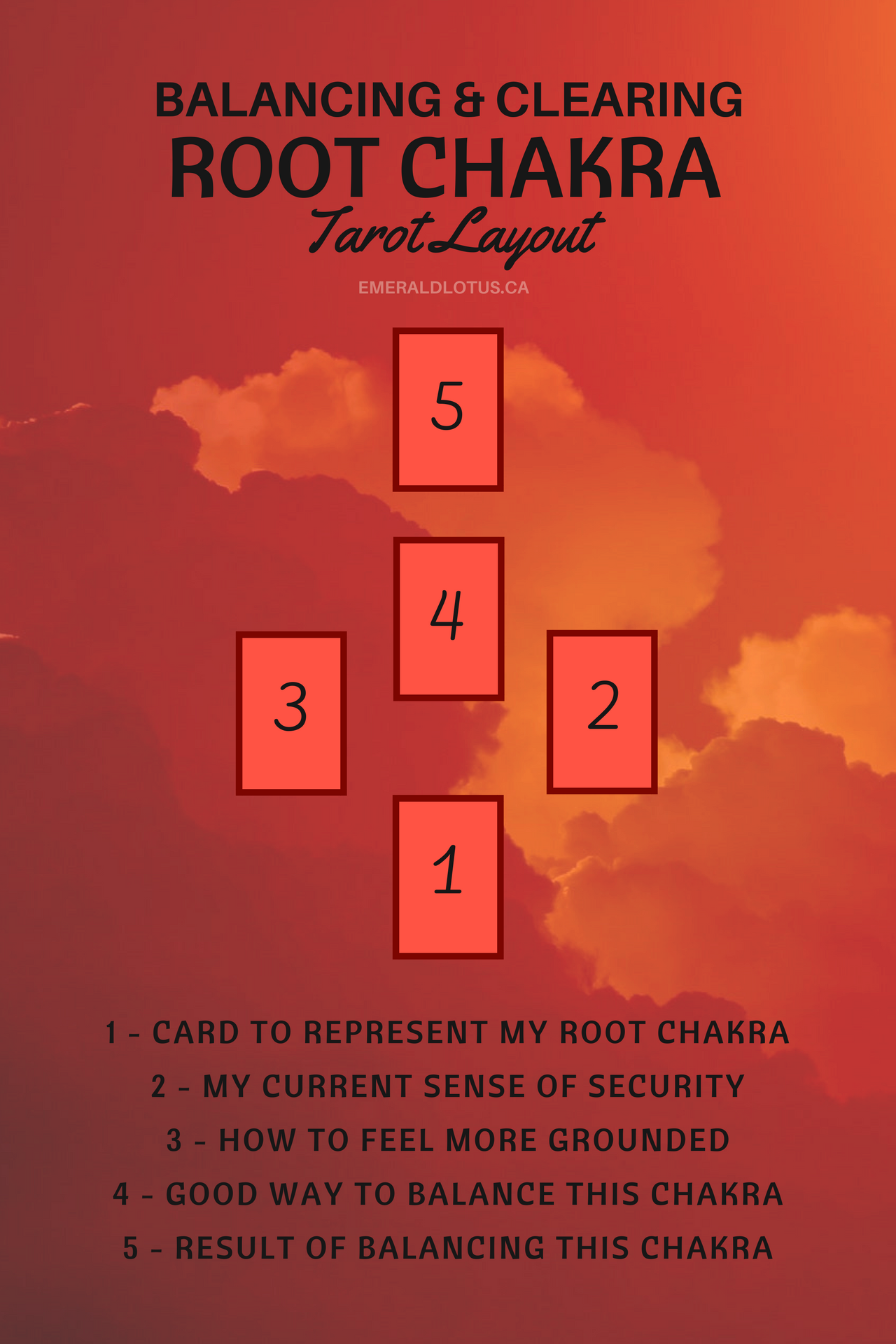
Creating a tarot spread tailored to the Root Chakra allows you to focus your energy on specific areas of blockage or imbalance. Below is a simple yet effective spread you can use in your practice:
- Current Blockage: Draw one card to represent the primary fear or challenge affecting your Root Chakra. What is the core issue you’re avoiding?
- Root Cause: Draw a second card to uncover the origin of this fear. Is it tied to childhood, a past trauma, or a limiting belief?
- Emotional Impact: Draw a third card to explore how this fear manifests emotionally. Are you feeling anxious, restless, or disconnected?
- Supporting Energy: Draw a fourth card to represent a strength or resource you can draw upon to heal. This could be a person, a practice, or an inner quality.
- Action Step: Draw a fifth card for guidance on what you can do to restore balance. Is it grounding, setting boundaries, or practicing self-care?
- Outcome: Draw a sixth card to glimpse the potential result of your healing work. What does a balanced Root Chakra look like for you?
To enhance your reading, place the cards in a circle or cross formation, with the first card at the center. As you lay out each card, take a moment to reflect on its message and how it resonates with your current state. Journaling your interpretations can deepen your understanding and track your progress over time.
Interpreting Root Chakra Messages: Symbolism and Intuition
Interpreting tarot cards in the context of the Root Chakra requires a blend of symbolism and intuition. Start by examining the imagery: Are there earthy tones, roots, or grounding symbols like mountains or trees? Cards like The Empress or The World often carry strong Root Chakra energy, suggesting abundance and wholeness. Conversely, cards with chaotic or disjointed imagery, such as The Tower or Ten of Swords, may indicate fear or disruption in your foundation.
Pay attention to the suits as well. Pentacles, which represent the material world, are particularly relevant to the Root Chakra. A predominance of Pentacle cards in a reading may signal that your fears are tied to practical concerns like money, health, or shelter. Swords, on the other hand, can point to mental or communicative blocks, such as overthinking your security or feeling powerless in your environment.
Trust your intuition when interpreting the cards. If a card resonates strongly with you, even if it doesn’t align with traditional meanings, explore why. Your subconscious mind often communicates through symbols that are uniquely personal. For example, if The Magician appears in a Root Chakra reading, it might suggest that you have the tools to manifest stability but are hesitant to use them. This insight can guide you toward taking proactive steps in your healing journey.
Practical Rituals to Complement Your Tarot Practice
While tarot is a powerful tool for Root Chakra healing, pairing it with practical rituals can amplify your results. Consider incorporating the following practices into your routine:
- Grounding Exercises: Walk barefoot on grass or soil, or visualize roots growing from your feet into the earth. This simple act can help you feel more centered and secure.
- Root Chakra Affirmations: Repeat affirmations like “I am safe,” “I trust in the abundance of the universe,” or “I am grounded in the present moment.” Speak them aloud while holding a grounding stone like black tourmaline or smoky quartz.
- Physical Movement: Yoga poses such as Mountain Pose (Tadasana) or Tree Pose (Vrksasana) can help you reconnect with your body and stabilize your energy.
- Nature Connection: Spend time outdoors, whether it’s gardening, hiking, or simply sitting under a tree. Nature is inherently grounding and can help you release fear.
- Sacred Space Cleansing: Use sage, palo santo, or incense to clear stagnant energy from your home or workspace. A clean, organized environment fosters a sense of safety and control.
Combining these rituals with your tarot practice creates a holistic approach to Root Chakra healing. The cards provide insight, while the rituals help you embody the changes you wish to see.
Overcoming Resistance: Why We Cling to Root Chakra Fears
One of the most challenging aspects of Root Chakra healing is recognizing why we hold onto fears in the first place. Often, these fears are deeply ingrained, shaped by early experiences or societal conditioning. For example, growing up in an unstable environment might lead to a lifelong fear of scarcity, even when current circumstances are secure. Similarly, cultural messages about money, success, or worthiness can reinforce feelings of inadequacy.
Tarot can help you uncover these hidden narratives. A card like The Devil might reveal an unhealthy attachment to material possessions or a belief that you must struggle to be worthy. The Eight of Cups could indicate a fear of leaving behind familiar but toxic situations, even when they no longer serve you. By acknowledging these patterns, you can begin to rewrite the stories that keep you stuck.
It’s important to approach this work with compassion. Healing the Root Chakra isn’t about eliminating fear entirely but learning to navigate it with wisdom and resilience. As you uncover the deeper reasons behind your fears, you’ll find that they often stem from a desire to protect yourself—even if the protection has become outdated or harmful. This understanding can shift your perspective from one of judgment to one of curiosity and growth.
Conclusion: Transforming Fear into Foundation
The Root Chakra is more than just a source of fear; it’s the bedrock of your physical, emotional, and spiritual well-being. By working with tarot, you gain a powerful tool to explore the depths of your insecurities, uncover their origins, and transform them into strength. Whether you’re using a structured spread or simply pulling a single card for insight, tarot offers a pathway to clarity and healing.
Remember that Root Chakra work is a journey, not a destination. It requires patience, self-compassion, and a willingness to confront the parts of yourself that feel unsafe. As you continue to explore this practice, you’ll likely find that your fears begin to lose their grip, replaced by a growing sense of stability and trust in yourself and the universe. The Root Chakra is your foundation—honor it, nurture it, and watch as it becomes the source of your resilience and power.
FAQ
What is the Root Chakra?
The Root Chakra, or Muladhara, is the first chakra located at the base of the spine and governs feelings of safety, survival, and stability.
How can tarot help with Root Chakra issues?
Tarot can reveal hidden fears and blockages related to the Root Chakra, allowing individuals to confront and transform these fears.
What are some common tarot cards associated with the Root Chakra?
Cards like The Tower, Five of Pentacles, and Three of Swords frequently emerge in readings focused on Root Chakra blockages.

Leave a Reply