Short Answer
Welcome to this comprehensive guide on Sideways Tarot—a nuanced and often misunderstood aspect of tarot reading. Unlike traditional upright or reversed interpretations, sideways tarot cards occupy a middle ground, offering layered meanings that bridge the gap between clarity and ambiguity. In this guide, you’ll explore the significance of sideways tarot, how to interpret these cards, and practical ways to incorporate them into your readings. Whether you’re a beginner or an experienced reader, this guide will deepen your understanding of tarot’s dynamic language.
Understanding Sideways Tarot Cards
Sideways tarot cards represent a state of balance, transition, or unresolved energy. They neither lean definitively toward positivity (upright) nor negativity (reversed), but instead suggest a moment of pause or reflection. These cards often appear when the querent is at a crossroads, experiencing internal conflict, or navigating a situation that lacks clear direction. For example, the Three of Cups sideways might indicate a celebration that feels bittersweet—joy mixed with underlying tension.
The sideways position can also highlight a need for patience or a reminder that some questions don’t have immediate answers. Unlike reversed cards, which may signal blockages or challenges, sideways cards encourage the reader to consider the process rather than the outcome. They invite you to ask: What is the lesson here? or What is being revealed in this in-between space?
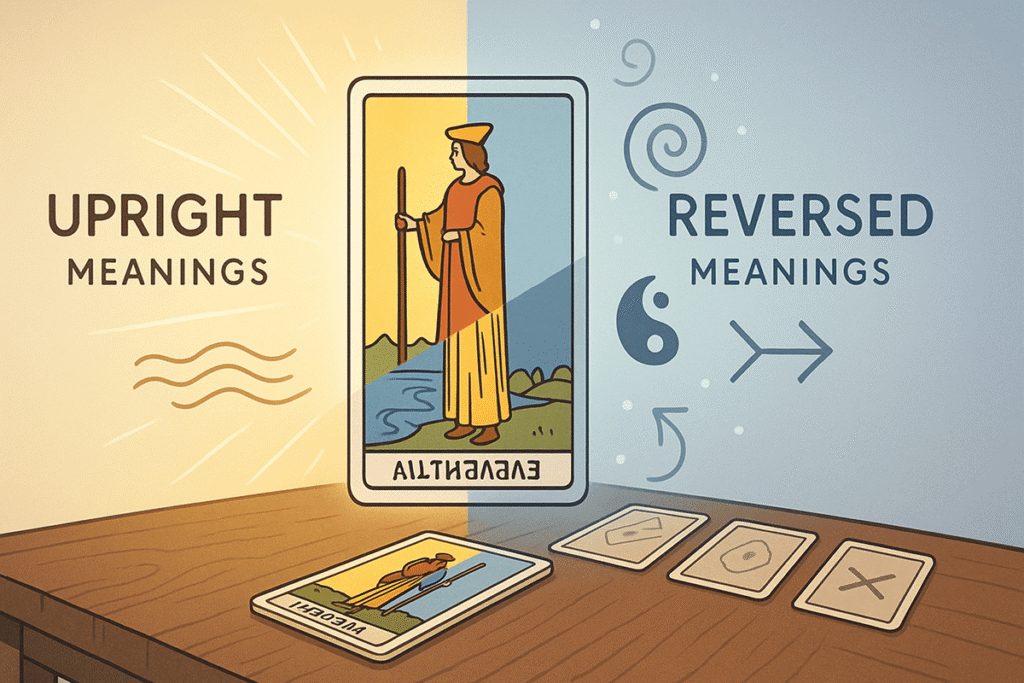
How to Interpret Sideways Tarot Cards
Interpreting sideways tarot cards requires a blend of intuition and traditional symbolism. Start by examining the card’s imagery: Are the figures facing left, right, or slightly tilted? A sideways card might suggest a shift in perspective or a need to look at the situation from a different angle. For instance, the Page of Swords sideways could indicate a message that’s being delivered but not fully understood—perhaps a delay in communication or a need to clarify intentions.
Another approach is to consider the card’s elemental associations. Earth cards (like Pentacles) sideways might reflect stagnation or a need to ground yourself, while Fire cards (like Wands) could symbolize a waning passion or a creative idea that’s simmering rather than igniting. Pay attention to the card’s traditional upright and reversed meanings, then blend them to reflect the sideways energy. For example, the Ten of Cups upright represents harmony, while reversed it may show disconnection; sideways, it could suggest a family dynamic that’s neither perfect nor broken but evolving.

Common Sideways Tarot Cards and Their Meanings
Some tarot cards frequently appear sideways in readings, each carrying distinct messages. Below are a few examples:
- The Lovers (Sideways): A relationship that’s neither fully committed nor broken but in a state of exploration. There may be a need to communicate openly or reassess priorities.
- The Chariot (Sideways): A struggle for control or direction. The querent may feel stuck between two choices, lacking the momentum to move forward.
- Justice (Sideways): A situation where fairness is subjective. The card suggests weighing options carefully but acknowledges that the outcome may not be black and white.
- The Star (Sideways): Hope is present but not fully realized. The querent may need to take small steps toward their goals rather than waiting for inspiration to strike.
These interpretations are fluid—always trust your intuition to refine the meaning based on the card’s placement in the spread and the querent’s concerns.
Sideways Tarot in Different Spreads
Sideways tarot cards can appear in any spread, from a simple 1-card draw to complex Celtic Cross layouts. Their placement often dictates their influence:
- Past Position (Sideways): Indicates a past event that’s neither fully resolved nor forgotten. It may be a lingering influence that shaped the present.
- Present Position (Sideways): Suggests the current situation is in flux. The querent may need to embrace uncertainty rather than forcing a resolution.
- Future Position (Sideways): Hints at a potential outcome that’s still malleable. The querent has the power to shift the direction with their choices.
- Advice Position (Sideways): Recommends patience or a change in approach. The sideways card advises the querent to observe rather than act impulsively.
For multi-card spreads, note how many sideways cards appear. A spread with multiple sideways cards might signal a period of limbo or a need to address several areas of life simultaneously.
Practical Tips for Reading Sideways Tarot Cards
To master sideways tarot interpretations, consider the following strategies:
- Observe the Card’s Orientation: Is it leaning left, right, or slightly tilted? Left may indicate reflection or the past, while right could suggest future potential.
- Compare Upright and Reversed Meanings: Blend the two interpretations to find the middle path. For example, the Five of Pentacles upright shows hardship, reversed suggests recovery; sideways might imply financial stress that’s improving but not yet resolved.
- Ask Open-Ended Questions: Instead of asking “Will I get the job?” try “What energy surrounds my job search right now?” Sideways cards thrive on exploration.
- Use Clarifying Cards: If a sideways card feels too vague, pull an additional card to shed light on its message. For instance, a sideways Death card might be clarified by the Temperance card, suggesting a transformative process that’s neither sudden nor gentle.

Sideways Tarot and the Querent’s Journey
Sideways tarot cards often reflect the querent’s emotional or mental state. They can appear during times of indecision, grief, or spiritual growth. For example, the Hermit sideways might indicate a seeker who’s neither fully isolated nor engaged with the world—they’re in a phase of quiet introspection. Recognizing this can help the querent understand that their hesitation is a natural part of the process.
In readings for others, sideways cards serve as a reminder to approach the situation with empathy. They validate the querent’s feelings without labeling them as purely positive or negative. This can be especially helpful in readings about relationships, career changes, or personal development, where the path forward isn’t always clear.
Conclusion
Sideways tarot cards are a powerful tool for navigating life’s gray areas. They remind us that not every question has a definitive answer and that some experiences are meant to be felt rather than rushed. By embracing the sideways position, you open yourself to a richer, more nuanced understanding of tarot’s wisdom. Whether you’re a reader or a querent, these cards encourage you to pause, reflect, and trust the journey—even when the path isn’t straight.
FAQ
What are sideways tarot cards?
Sideways tarot cards represent a state of balance and ambiguity, offering nuanced interpretations that lie between upright and reversed meanings.
How do I interpret a sideways tarot card?
To interpret a sideways tarot card, blend the traditional upright and reversed meanings, considering the card’s imagery and elemental associations.
Leave a Reply