Short Answer
Welcome to our in-depth exploration of the Sola Busca Tarot, one of the most historically significant and visually striking decks in the world of tarot. Whether you’re a seasoned tarot enthusiast, a historian, or simply curious about the origins of modern tarot, this guide will provide you with a comprehensive understanding of the deck’s rich heritage, artistic intricacies, and enduring influence. From its mysterious creation to its modern reinterpretations, we’ll cover everything you need to know about the Sola Busca Tarot and why it continues to captivate readers and scholars alike.
The History and Origins of the Sola Busca Tarot
The Sola Busca Tarot is widely regarded as the oldest surviving complete tarot deck, dating back to the late 15th century. Unlike many early tarot decks that have been lost to time, the Sola Busca Tarot has survived in remarkably good condition, offering a rare glimpse into the origins of tarot as both a playing card game and a divinatory tool. The deck is believed to have been created in Northern Italy, possibly in the region of Ferrara or Milan, around 1491. This places it in a pivotal moment in history when tarot was transitioning from a mere card game to a medium for esoteric and spiritual exploration.
The deck is named after the Sola Busca family, who were prominent in the region during the Renaissance. It is thought that the deck was commissioned as a luxury item, reflecting the artistic and intellectual trends of the time. The intricate engravings and Latin inscriptions on the cards suggest that the deck was not only a tool for play but also for scholarly or mystical study. The Sola Busca Tarot is a testament to the Renaissance fascination with symbolism, mythology, and the occult, making it a cornerstone of tarot history.
Artistic and Symbolic Features of the Sola Busca Tarot
One of the most striking aspects of the Sola Busca Tarot is its artistic style, which blends elements of Renaissance art with esoteric symbolism. The deck consists of 78 cards, including the Major Arcana and Minor Arcana, each rendered in a detailed engraving style that was popular in the 15th century. The cards are rich in allegorical imagery, drawing from classical mythology, medieval iconography, and early Christian themes. Unlike the more abstract and symbolic imagery found in later tarot decks like the Rider-Waite-Smith, the Sola Busca Tarot is densely packed with narrative and symbolic detail, inviting deeper interpretation.
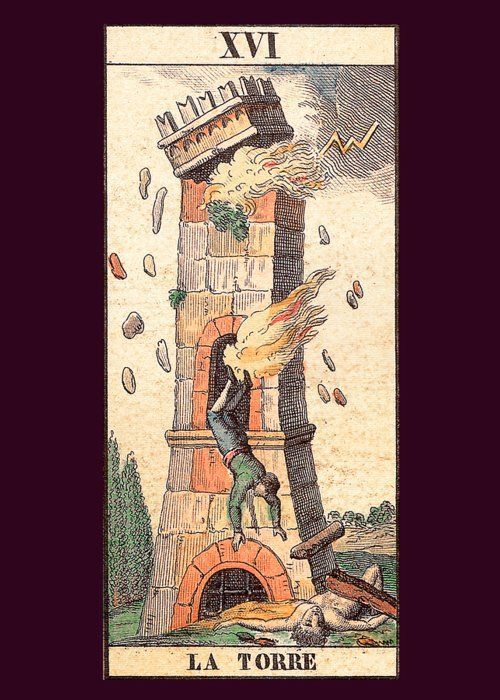
The Major Arcana cards, in particular, are filled with intricate scenes that tell a story. For example, the Fool card features a figure dressed in a jester’s outfit, holding a staff and a sack, while the Tower card depicts a dramatic scene of a falling figure surrounded by flames. These images are not merely decorative; they are layered with meaning, reflecting the Renaissance worldview that saw the universe as a tapestry of interconnected symbols. The Minor Arcana cards also follow this tradition, with each suit (Cups, Swords, Coins, and Batons) featuring scenes that are both literal and symbolic, often drawing from everyday life as well as mythological tales.
The use of Latin inscriptions on the cards adds another layer of complexity to the deck. These inscriptions are not just decorative; they often provide clues to the intended meaning of the cards. For instance, the Latin phrase “SOLA BUSCA” appears on several cards, possibly referencing the family who owned the deck or a symbolic phrase related to the deck’s themes. The inscriptions, combined with the visual symbolism, make the Sola Busca Tarot a rich field for study and interpretation, appealing to both historians and modern tarot readers.
The Sola Busca Tarot in the Context of Tarot History
The Sola Busca Tarot holds a unique position in the history of tarot, bridging the gap between early playing cards and the esoteric tarot decks that emerged in the 18th and 19th centuries. While the origins of tarot are still debated, the Sola Busca Tarot is one of the few surviving decks from the 15th century, providing invaluable insight into the early development of the tarot tradition. Unlike later decks, which were often designed with divinatory purposes in mind, the Sola Busca Tarot seems to have been created primarily as a luxury item, possibly for the entertainment and edification of a wealthy patron.
Despite its origins as a playing card deck, the Sola Busca Tarot has been embraced by modern tarot readers and scholars for its deep symbolic content. The deck’s imagery has influenced countless later tarot decks, from the Marseille Tarot to the Rider-Waite-Smith Tarot. However, the Sola Busca Tarot remains distinct in its complexity and narrative richness, offering a more immersive and detailed experience than many of its successors. Its survival through the centuries also makes it a vital link to the past, allowing us to trace the evolution of tarot imagery and symbolism over time.
Modern Reinterpretations and Reprints of the Sola Busca Tarot
While the original Sola Busca Tarot is housed in the Pinacoteca di Brera in Milan, Italy, its influence has extended into the modern era through various reprints and reinterpretations. In the 20th and 21st centuries, several publishers have released facsimile editions of the deck, allowing contemporary tarot enthusiasts to experience its intricate artwork firsthand. These reprints often include detailed commentary and analysis, helping readers to decode the symbolism and understand the historical context of the cards.
One notable modern reinterpretation is the Sola Busca Revisited deck, which offers a fresh take on the original artwork while staying true to its Renaissance roots. This deck, created by artist and tarot enthusiast Seven, features updated engravings that retain the spirit of the original while making the imagery more accessible to modern audiences. The Sola Busca Revisited deck has been praised for its high-quality printing and thoughtful design, making it a popular choice for both collectors and active tarot readers.
In addition to reprints and reinterpretations, the Sola Busca Tarot has also inspired artists and designers to create derivative works that pay homage to its style. These modern decks often blend the original imagery with contemporary artistic techniques, resulting in unique and innovative tarot experiences. Whether you’re drawn to the historical significance of the deck or its artistic beauty, there are numerous ways to engage with the Sola Busca Tarot in the modern era.
How to Use the Sola Busca Tarot for Divination and Study
While the Sola Busca Tarot was not originally designed as a divinatory tool, its rich symbolism and narrative depth make it a compelling choice for tarot readers and scholars. The deck’s imagery is dense with meaning, requiring a more thoughtful and interpretive approach than many modern tarot decks. When using the Sola Busca Tarot for divination, it’s important to take your time with each card, studying the details and considering the historical and cultural context of the imagery.
One approach to reading with the Sola Busca Tarot is to focus on the stories and allegories presented in the cards. For example, the Major Arcana cards can be read as a journey or a narrative arc, with each card representing a stage in a larger story. The Minor Arcana cards, with their detailed scenes, can be interpreted as snapshots of everyday life, offering insights into the challenges and opportunities that arise in different areas of life. The Latin inscriptions on the cards can also provide additional layers of meaning, serving as a guide to the intended symbolism of each card.
For those interested in the esoteric and historical aspects of the deck, the Sola Busca Tarot offers a wealth of material for study. Scholars and researchers often use the deck as a primary source for understanding the early development of tarot symbolism and iconography. By comparing the Sola Busca Tarot to later decks, such as the Marseille Tarot or the Rider-Waite-Smith Tarot, readers can trace the evolution of tarot imagery and its shifting cultural significance over time. Whether you’re using the deck for personal insight or academic research, the Sola Busca Tarot is a valuable and enriching tool.
Why the Sola Busca Tarot Still Stings: Its Enduring Legacy
The Sola Busca Tarot endures because it is more than just a historical artifact; it is a living testament to the power of symbolism and storytelling. Its intricate artwork and layered meanings continue to captivate audiences centuries after its creation, proving that the deck’s relevance has not faded with time. For historians, the Sola Busca Tarot offers a window into the Renaissance worldview, revealing how people of the era understood the universe and their place within it. For artists and designers, the deck serves as a masterclass in visual storytelling, demonstrating how imagery can convey complex ideas and emotions.
For tarot readers, the Sola Busca Tarot provides a unique and challenging experience. Unlike modern decks that often simplify imagery for ease of interpretation, the Sola Busca Tarot demands engagement and reflection. Each card is a puzzle, inviting the reader to uncover its secrets and apply them to their own life. This depth of meaning is what makes the deck “sting”—it doesn’t offer easy answers but instead challenges the reader to think critically and intuitively about the messages it conveys.
The deck’s enduring appeal also lies in its mystery. Despite centuries of study, many questions about the Sola Busca Tarot remain unanswered. Who created it? What was its original purpose? How did it survive for so long? These unanswered questions add to the deck’s allure, making it a subject of fascination for anyone interested in the history of tarot. Whether you’re drawn to the deck for its historical significance, its artistic beauty, or its potential for divination, the Sola Busca Tarot remains a powerful and enigmatic symbol of the tarot tradition.
Conclusion
The Sola Busca Tarot is more than just an ancient deck of cards; it is a bridge between the past and the present, a work of art, and a tool for divination and study. Its rich history, intricate symbolism, and enduring influence make it a cornerstone of tarot lore. Whether you’re a historian, an artist, or a tarot enthusiast, the Sola Busca Tarot offers something profound to explore. From its Renaissance origins to its modern reinterpretations, the deck continues to inspire and challenge those who engage with it, proving that its power to “sting” is as strong today as it was five centuries ago. As you delve into the world of the Sola Busca Tarot, you’re not just studying a deck—you’re connecting with a tradition that has shaped the way we understand symbolism, storytelling, and the mysteries of the human experience.
FAQ
What is the Sola Busca Tarot?
The Sola Busca Tarot is the oldest complete tarot deck still in existence, created in the late 15th century, known for its intricate engravings and rich symbolism.
Where is the original Sola Busca Tarot housed?
The original Sola Busca Tarot is housed in the Pinacoteca di Brera in Milan, Italy.
How can the Sola Busca Tarot be used for divination?
Though not originally designed for divination, its detailed imagery allows for deep interpretative readings, often focusing on narratives and allegories.
Leave a Reply