Short Answer
Welcome to Tarot Card Meanings Made Simple: Decode Any Reading Instantly. Whether you’re a beginner or looking to deepen your understanding, this guide breaks down tarot card meanings into clear, actionable insights. You’ll learn how to interpret cards across different spreads, recognize key symbols, and apply intuitive techniques to unlock the messages hidden in every reading. By the end, you’ll have the tools to approach any tarot spread with confidence and clarity.
Understanding the Basics of Tarot Cards
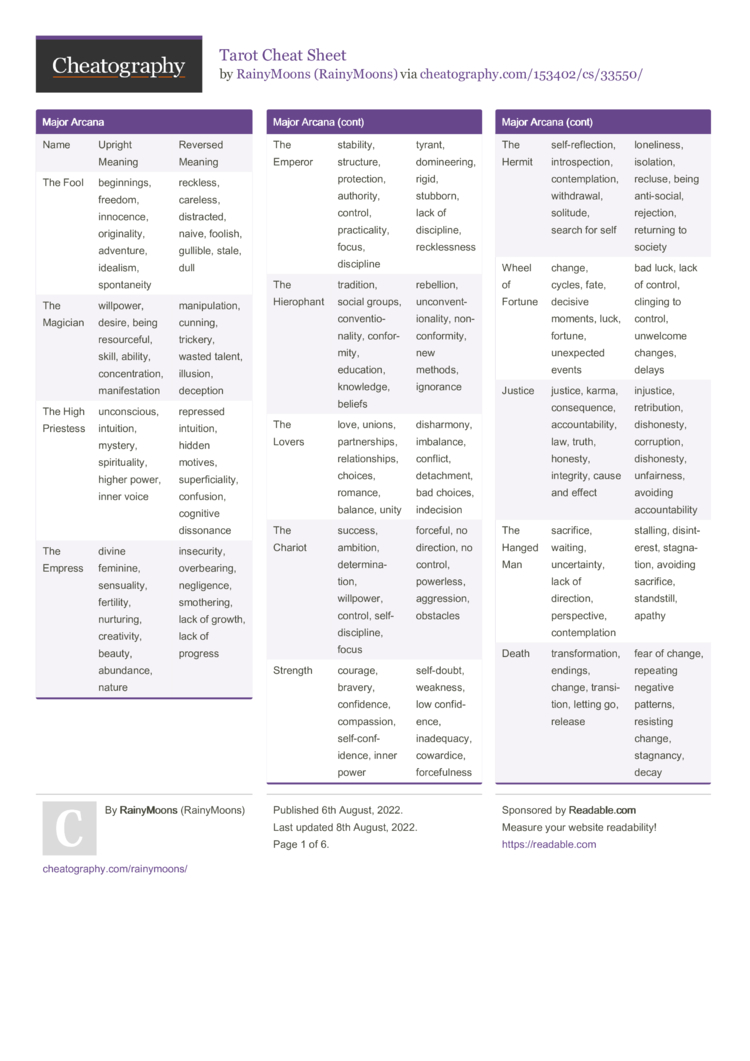
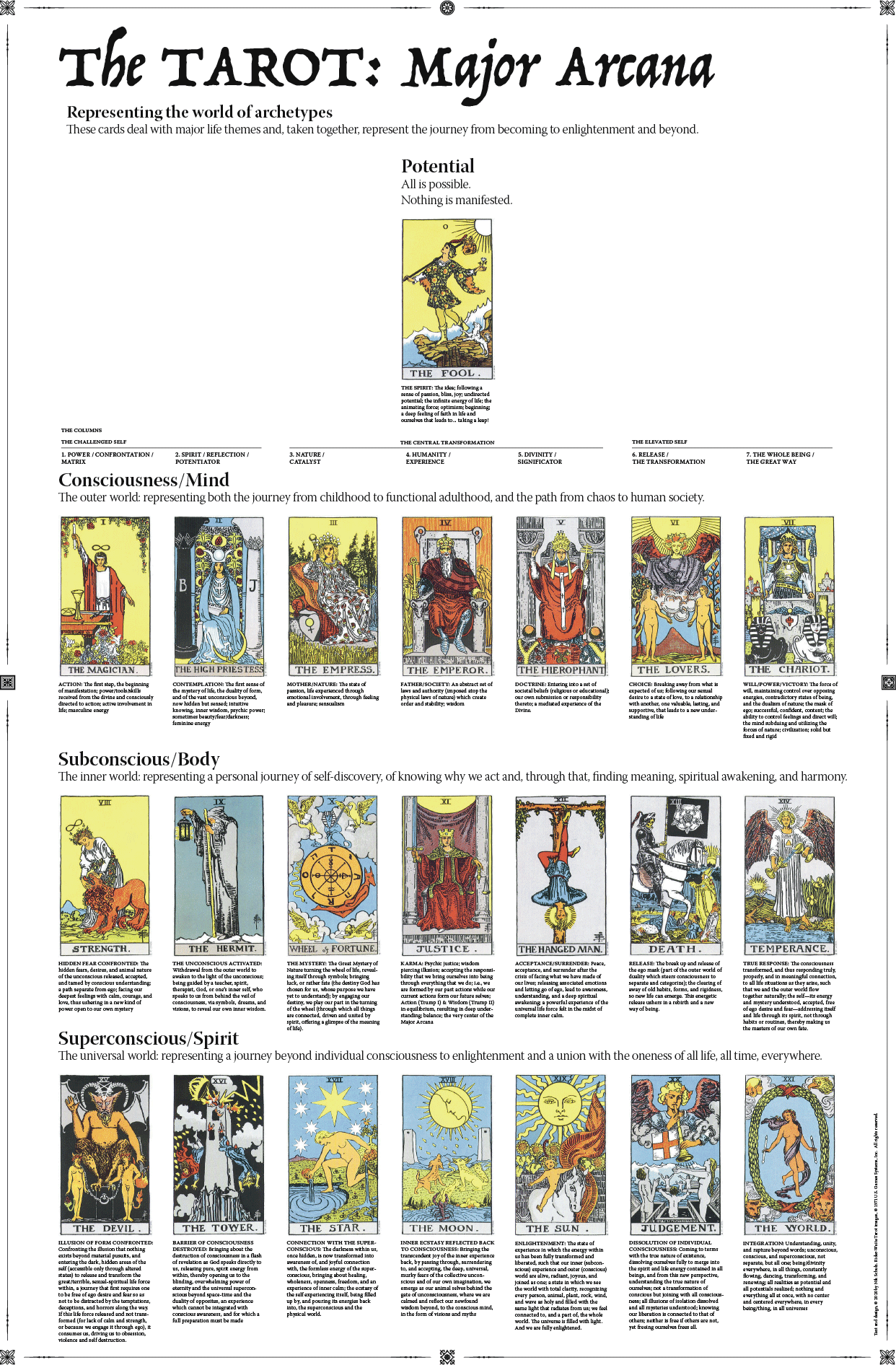
Before diving into interpretations, it’s essential to grasp the foundational elements of tarot. A standard deck consists of 78 cards divided into two main groups: the Major Arcana and the Minor Arcana. The Major Arcana (22 cards) represents significant life themes and spiritual lessons, such as The Fool, The Lovers, and Death. These cards often signify major turning points or deep transformations. The Minor Arcana (56 cards) mirrors a standard deck of playing cards and is divided into four suits—Wands, Cups, Swords, and Pentacles—each corresponding to different aspects of daily life. Wands relate to creativity and passion, Cups to emotions and relationships, Swords to intellect and conflict, and Pentacles to material wealth and practical matters.
Each suit in the Minor Arcana contains 14 cards: Ace through 10, plus four court cards (Page, Knight, Queen, King). The court cards often represent people or personality traits, while numbered cards reflect stages or energies. For example, the Three of Cups celebrates friendship and joy, while the Five of Swords may indicate conflict or tension. Understanding these basics provides a solid framework for interpreting any card you draw.
Major Arcana: The Big Picture
The Major Arcana cards are the heart of tarot, offering profound insights into life’s journey. Each card carries a unique message, often symbolizing archetypal energies that resonate universally. For instance, The Magician (Card I) embodies resourcefulness and manifestation, suggesting you have the tools to create your reality. The High Priestess (Card II) represents intuition and hidden knowledge, urging you to trust your inner wisdom. The Tower (Card XVI) signifies sudden change or upheaval, reminding you that disruption can lead to growth.
When a Major Arcana card appears in a reading, it often signals a significant event or a call to pay attention to a deeper life lesson. For example, pulling The Chariot (Card VII) may indicate determination and forward momentum, while The Hermit (Card IX) suggests a need for introspection and solitude. These cards can also appear in sequences, such as in a Celtic Cross spread, where their positions reveal the story of your current situation. Learning to recognize and interpret these cards will elevate your readings from simple fortune-telling to meaningful guidance.
Minor Arcana: Daily Life and Nuances
The Minor Arcana cards bring tarot into the realm of everyday experiences, offering detailed insights into specific situations. Each suit focuses on a different area of life, allowing you to pinpoint the energy surrounding your question. For example, if you’re seeking clarity about a career decision, the suit of Pentacles might reveal financial opportunities or practical challenges. A card like the Eight of Pentacles could suggest diligence and skill-building, while the Ten of Pentacles might indicate long-term stability or inheritance.
Emotional and relationship questions often involve the suit of Cups. The Ace of Cups represents new beginnings in love or creativity, while the Three of Cups celebrates joyful connections. The suit of Swords, ruled by intellect and communication, can highlight conflicts, decisions, or mental clarity. For instance, the Two of Swords may show indecision or a need to weigh options carefully, while the Queen of Swords embodies independence and sharp judgment. Wands, the suit of fire and passion, is ideal for exploring ambition, inspiration, and personal growth. The Six of Wands, for example, signals success and recognition, while the Knight of Wands suggests a burst of energy or adventure.
Understanding the Minor Arcana allows you to tailor your readings to specific areas of life, making your interpretations more precise and relevant. Pay attention to the card’s number, suit, and imagery to uncover its full meaning.
Court Cards: People and Personalities
Court cards—Page, Knight, Queen, and King—are among the most dynamic and often misunderstood cards in tarot. They can represent actual people in your life, personality traits you embody, or energies you need to channel. For example, the Queen of Cups might symbolize a nurturing, empathetic person or your own capacity for emotional depth. The Knight of Swords could indicate a fast-moving, assertive individual or a need to act decisively in a situation.
When interpreting court cards, consider their suit and rank. Pages are often messengers or students, bringing new ideas or opportunities. Knights represent action and movement, whether in pursuit of a goal or as a call to take charge. Queens embody mastery and nurturing energy, while Kings signify authority and leadership. A court card’s position in a spread can also shift its meaning. For instance, a Queen of Pentacles in the past position might reflect a stable, nurturing figure from your history, while the same card in the future could suggest a need to cultivate abundance and care in your life.
Don’t overlook court cards in your readings—they add depth and personalization, helping you see the human element in your tarot messages.
Reversed Cards: Shadow and Challenge
Reversed cards (or “upside-down” cards) add complexity to tarot readings by highlighting blocked energy, internal struggles, or the need for reflection. A reversed card doesn’t necessarily mean a negative outcome; instead, it often signals an area requiring attention or a lesson yet to be learned. For example, the reversed Three of Cups might indicate superficial relationships or a lack of genuine connection, while the reversed Five of Pentacles could suggest financial stress or feeling unsupported.
Interpreting reversed cards requires intuition and context. Ask yourself: What is the card trying to tell me about this situation? Is there an imbalance I need to address? For instance, the reversed The Lovers card might point to disharmony in a relationship or a need to make a difficult choice. The reversed Eight of Wands could indicate delays or miscommunication in communication. When a reversed card appears, consider its upright meaning and explore how its energy might be manifesting in a less obvious or blocked way.
Common Tarot Spreads for Instant Clarity
Tarot spreads are layouts that organize cards to provide focused insights into specific questions or areas of life. The simplest spread is the Single-Card Pull, ideal for daily guidance or quick answers. A Three-Card Spread (Past, Present, Future) offers a snapshot of a situation’s timeline, while the Celtic Cross provides a detailed, multi-layered view of challenges and opportunities. Other popular spreads include the Relationship Spread (for love questions), the Career Path Spread (for professional growth), and the Decision-Making Spread (to weigh options).
When using a spread, pay attention to the positions and how the cards interact. For example, in a Career Path Spread, the first card might reveal your current role, while the second shows obstacles, and the third offers advice. Look for patterns, such as repeated suits or numbers, which can highlight dominant themes. Don’t be afraid to experiment with different spreads to find what resonates with your style of reading.
Intuitive Tarot: Trusting Your Inner Voice
While traditional meanings provide a solid foundation, intuitive tarot encourages you to trust your gut feelings and personal connections to the cards. Start by shuffling your deck and noticing which cards catch your eye or feel heavy in your hands. These may hold special significance for your reading. Pay attention to your emotional reactions—does a card make you feel anxious, excited, or curious? These responses are clues to its message.
Combining intuition with traditional meanings creates a powerful synergy. For example, if the upright Six of Cups appears but feels heavy or sad to you, it might indicate nostalgia or unresolved past emotions rather than simple joy. Similarly, a reversed card that feels light or freeing could suggest liberation from a limiting situation. Keep a tarot journal to track your intuitive hits and compare them to guidebooks over time. The more you practice, the more your intuition will guide your interpretations.
Practical Tips for Decoding Any Reading
To decode tarot readings instantly, start by familiarizing yourself with the cards through daily practice. Pull one card each morning and reflect on its message for your day. Use guidebooks, apps, or online resources to deepen your knowledge, but don’t rely solely on memorization—let the cards speak to you. When performing a reading, clear your mind and set a clear intention. Ask open-ended questions like, “What do I need to know about my career right now?” rather than yes/no questions.
Pay attention to card combinations and their interactions. For example, the Three of Cups (joy) alongside the Five of Swords (conflict) might suggest a situation where celebration is overshadowed by tension. Look for elemental dignities—how the suits and their elements (fire, water, air, earth) interact. Fire (Wands) and air (Swords) often spark creativity, while water (Cups) and earth (Pentacles) ground emotions into reality. Finally, trust the process. Tarot is a tool for self-reflection, and every reading is a conversation between you, the cards, and your subconscious.
Conclusion
Tarot card meanings don’t have to be complicated. By breaking down the Major and Minor Arcana, understanding court cards, and embracing reversed meanings, you can decode any reading with confidence. Remember that tarot is a mirror—it reflects your inner world and offers guidance, not absolute predictions. Whether you’re seeking clarity on a relationship, career, or personal growth, the cards provide a language to explore your questions deeply.
Start with simple spreads, trust your intuition, and let the cards become a trusted companion on your journey. With practice, you’ll find that tarot becomes not just a tool for divination, but a pathway to self-discovery and empowerment. The more you engage with the cards, the more they will reveal their wisdom to you. Happy reading!
FAQ
What are the Major Arcana cards in tarot?
The Major Arcana consists of 22 cards that represent significant life themes and spiritual lessons, such as The Fool, The Lovers, and Death.
How do you read reversed tarot cards?
Reversed cards indicate blocked energy, internal struggles, or areas needing reflection, and can reveal lessons yet to be learned.
What is a tarot spread?
A tarot spread is a specific layout of cards used to answer questions or gain insights into particular areas of life.
Leave a Reply