Short Answer
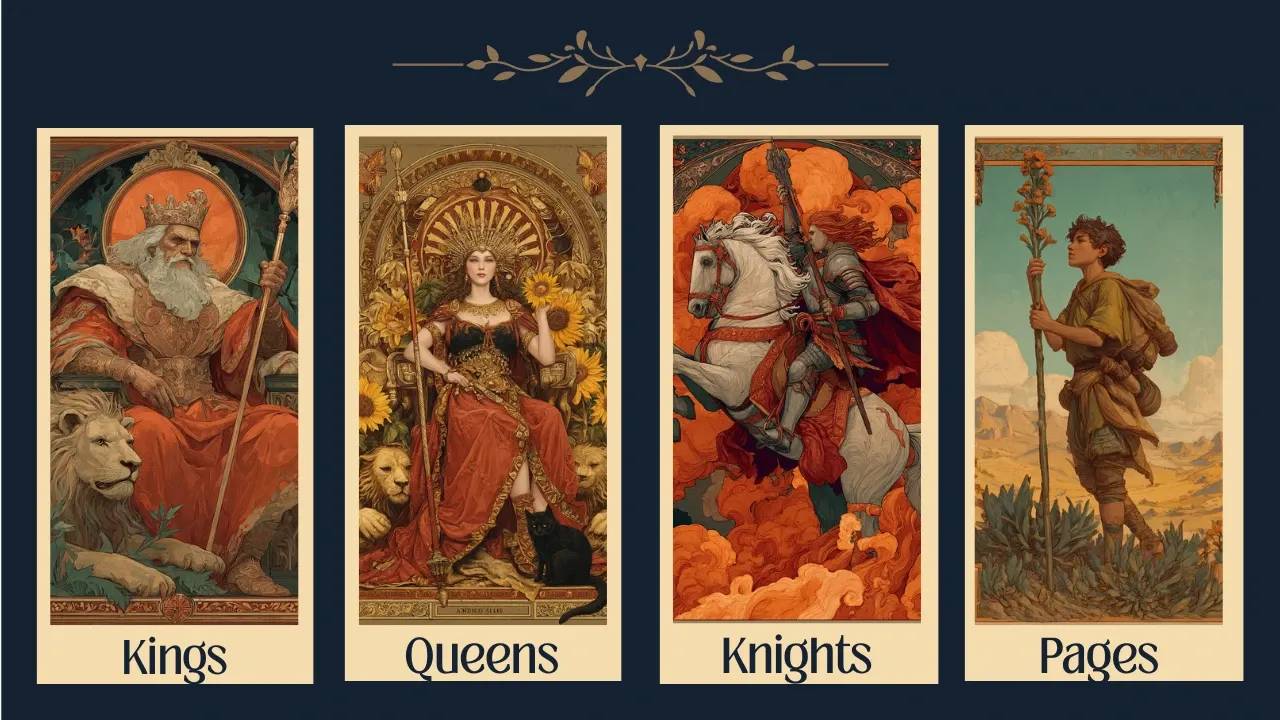
Have you ever met someone and instantly felt like you understood their core motivations, fears, or even their hidden talents—without them saying a word? That’s the power of the Tarot Court Cards. These 16 cards—four suits (Wands, Cups, Swords, Pentacles) each with a Page, Knight, Queen, and King—are more than just illustrations; they’re psychological mirrors. In this guide, you’ll learn how to decode personalities instantly using these archetypes, uncovering the deeper reasons why they resonate so deeply with us. Whether you’re a tarot enthusiast, a curious observer, or someone looking to improve your interpersonal skills, this framework will transform how you see people—and yourself.
The Psychology Behind Court Card Personalities
The fascination with Tarot Court Cards stems from their ability to distill complex human behaviors into relatable archetypes. Each card represents a spectrum of traits, from the fiery ambition of the Knight of Wands to the nurturing wisdom of the Queen of Cups. Psychologists like Carl Jung recognized that archetypes tap into universal human experiences, making these cards a tool for understanding motivations, communication styles, and emotional triggers. For instance, the Knight of Swords embodies impulsivity and directness, while the Page of Pentacles reflects curiosity and a practical approach to learning. By recognizing these patterns, you can anticipate how someone might react in different situations—whether in a workplace collaboration or a personal relationship.
How to Identify Court Card Personalities in Real Life
Start by observing patterns in speech, body language, and decision-making. A Queen of Wands, for example, might dominate conversations with charisma and confidence, while a Knight of Cups could express emotions openly and seek deep connections. Notice how people dress, their hobbies, and their reactions to challenges. The Page of Swords might dive into debates with a sharp mind, whereas the King of Pentacles exudes stability and leadership. Keep a journal to track these observations, noting which cards resonate most with the people around you. Over time, you’ll develop an intuitive sense of their core personality traits.

Using Court Cards for Instant Personality Insights
To decode someone’s personality quickly, focus on their dominant traits and communication style. For example, if someone is highly organized and values tradition, they might align with the Queen of Pentacles or the King of Pentacles. If they’re adventurous and thrive on spontaneity, the Knight of Wands could be their match. Pay attention to their suit preferences: Wands for passion and creativity, Cups for emotions and intuition, Swords for intellect and conflict, and Pentacles for practicality and material concerns. Combining these observations with the card’s rank (Page for curiosity, Knight for action, Queen for nurturing, King for mastery) gives you a nuanced understanding of their personality.
Common Misconceptions and Deeper Reasons for Fascination
One common misconception is that Court Cards are rigid stereotypes. In reality, they’re fluid archetypes that can manifest differently depending on context. A Knight of Cups might appear romantic in one setting but overly sensitive in another. The deeper reason these cards fascinate us is their ability to reveal the duality of human nature—how someone can be both nurturing and assertive, or logical yet impulsive. This duality makes the cards relatable, as we all embody these contradictions. Additionally, the Court Cards tap into our subconscious desire to categorize and understand the world, offering a sense of control in an unpredictable social landscape.
Practical Applications: Relationships, Work, and Self-Discovery
In relationships, Court Cards can help you navigate conflicts by identifying your partner’s emotional needs. For instance, a Queen of Swords might need intellectual stimulation, while a Knight of Pentacles values reliability. In the workplace, understanding these archetypes can improve teamwork—pairing a detail-oriented Page of Pentacles with a big-picture Knight of Wands can balance creativity and execution. For self-discovery, ask which Court Cards resonate with you when you’re at your best or struggling. This reflection can highlight areas for growth, such as developing the discipline of the King of Swords or the adaptability of the Page of Cups.
Advanced Techniques: Combining Court Cards with Other Tarot Tools
For deeper insights, combine Court Cards with Major Arcana cards to reveal life themes. For example, pairing the Knight of Cups with The Lovers might indicate a soulmate connection, while the Queen of Swords with Justice could highlight a need for fairness in a decision. You can also use elemental dignities to refine your interpretations—fire (Wands) and air (Swords) often create dynamic interactions, while earth (Pentacles) and water (Cups) bring stability and depth. Experiment with spreads like the “Personality Triangle,” where you place three Court Cards to represent past, present, and future traits of a person or situation.
Conclusion
The Tarot Court Cards are a gateway to understanding human nature in its rich complexity. By learning to recognize these archetypes in real life, you gain a powerful tool for instant personality decoding—whether you’re navigating a first date, leading a team, or exploring your own psyche. The key is to approach them with curiosity and flexibility, remembering that no one fits a card perfectly. As you deepen your practice, you’ll find that these cards not only illuminate the personalities around you but also reveal the universal patterns that connect us all. Start observing today, and watch how your interactions transform with this timeless wisdom.
FAQ
What are Tarot Court Cards?
Tarot Court Cards are 16 cards in the tarot deck—four suits (Wands, Cups, Swords, Pentacles) each with a Page, Knight, Queen, and King—that represent distinct personality traits and archetypes.
How can I use Tarot Court Cards in my daily life?
You can use Tarot Court Cards to decode personalities, improve interpersonal relationships, and enhance self-discovery by recognizing traits in yourself and others.
Leave a Reply