Short Answer
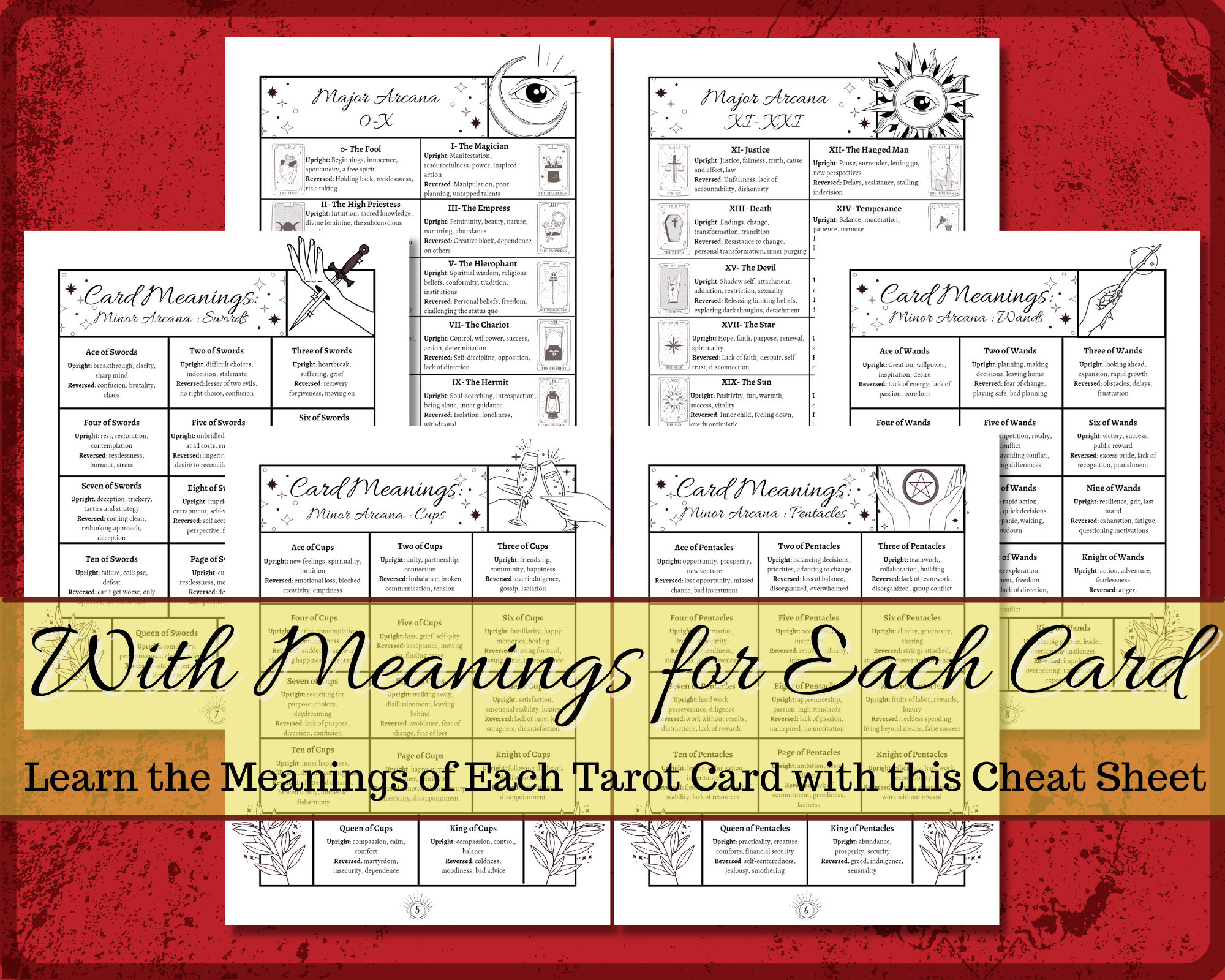
Welcome to your ultimate visual guide to tarot cards and their meanings! Whether you’re a beginner looking to understand the basics or an experienced reader seeking a quick reference, this cheat sheet will serve as your go-to resource. Here, you’ll find detailed explanations of major arcana and minor arcana cards, their symbolic meanings, and how they relate to different aspects of life. By the end, you’ll have a clearer understanding of how to interpret tarot spreads and use this ancient tool for guidance and self-reflection.
Understanding the Major Arcana
The Major Arcana consists of 22 cards that represent significant life events, spiritual lessons, and karmic influences. These cards often signify major turning points or deep insights. Each card has a unique number, name, and symbolic imagery that conveys its meaning. For example, The Fool (Card 0) represents new beginnings, spontaneity, and a leap of faith, while The Lovers (Card VI) symbolizes harmony, choices, and relationships. These cards often appear in readings when major decisions or life changes are on the horizon.
Visual representations of the Major Arcana typically include rich symbolism such as animals, celestial bodies, and human figures. For instance, The High Priestess (Card II) is often depicted sitting between two pillars, holding a scroll, which signifies intuition, mystery, and hidden knowledge. Understanding these symbols can deepen your interpretation of the cards and provide context for their messages.

Exploring the Minor Arcana
The Minor Arcana consists of 56 cards divided into four suits: Wands, Cups, Swords, and Pentacles. Each suit corresponds to an element and represents different aspects of daily life. Wands are associated with fire and creativity, Cups with water and emotions, Swords with air and intellect, and Pentacles with earth and material matters. The Minor Arcana cards often provide more practical insights into everyday situations.
Each suit contains 14 cards: Ace through 10, plus four court cards (Page, Knight, Queen, King). For example, the Three of Cups represents celebration, friendship, and joy, while the Five of Pentacles may indicate financial struggle or feeling left out. Court cards often represent people or personality traits; the Queen of Swords, for instance, embodies clarity, independence, and sharp intellect. Understanding the Minor Arcana helps you navigate the nuances of daily life with greater awareness.
Interpreting Court Cards
Court cards in the tarot deck can be some of the most challenging to interpret, as they often represent people, personality traits, or situations rather than fixed events. Each court card belongs to one of the four suits and ranks as Page, Knight, Queen, or King. For example, the Knight of Wands may signify a passionate, adventurous person or a burst of creative energy, while the Queen of Cups represents emotional depth, intuition, and compassion.
When a court card appears in a reading, consider its suit and rank. Pages often represent students, messengers, or new beginnings, while Knights can symbolize action, movement, or external influences. Queens embody maturity, nurturing energy, and wisdom, and Kings represent authority, mastery, and leadership. Context is key—look at the surrounding cards and the question asked to refine your interpretation.
Common Tarot Spreads for Beginners
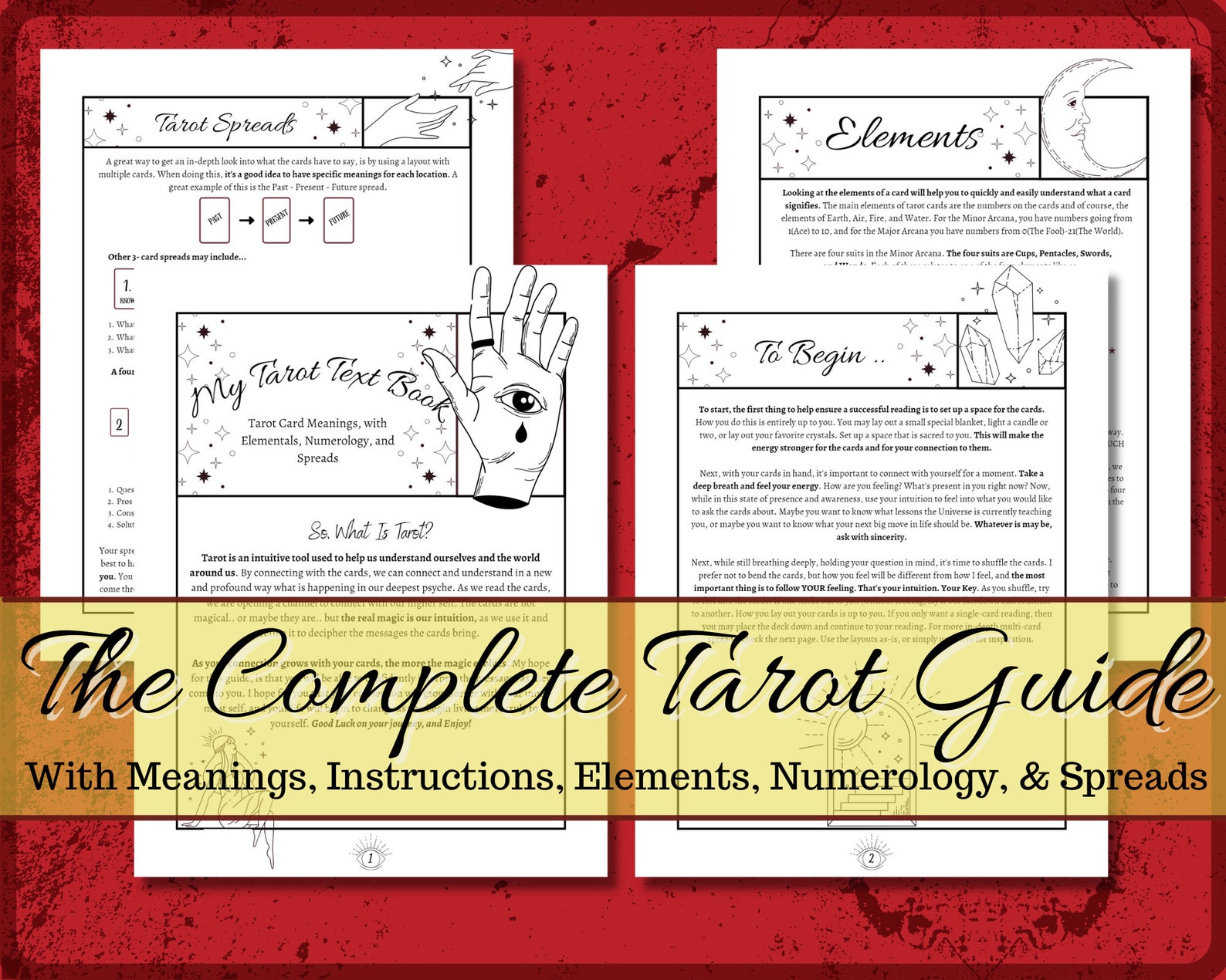
Tarot spreads are layouts that determine how cards are positioned and interpreted in a reading. For beginners, simple spreads like the Single-Card Pull or the Three-Card Spread are ideal. A single-card pull offers quick insight into a current situation or question, while a three-card spread typically represents past, present, and future, or mind, body, and spirit.
Another popular spread is the Celtic Cross, which consists of ten cards and provides a comprehensive overview of a situation, including challenges, influences, and potential outcomes. Each position in the spread has a specific meaning, allowing for deep and nuanced interpretations. Experimenting with different spreads helps you become more comfortable with the cards and enhances your intuitive abilities.
Using Tarot for Self-Reflection and Guidance
Tarot is a powerful tool for self-reflection, offering insights into your subconscious mind and helping you navigate life’s challenges. By drawing cards and reflecting on their meanings, you can gain clarity on decisions, uncover hidden emotions, and identify patterns in your life. For example, pulling The Tower might indicate sudden change or upheaval, prompting you to reassess your path, while The Star could signify hope and inspiration during difficult times.
To use tarot effectively, approach each reading with an open mind and a clear question. Avoid relying solely on guidebooks; instead, trust your intuition to interpret the cards’ messages. Journaling your readings can also help track recurring themes and track your personal growth over time. Whether you’re seeking guidance on relationships, career, or personal development, tarot can serve as a mirror to your inner wisdom.
Conclusion
Tarot cards are more than just a divination tool—they are a gateway to self-discovery, intuition, and deeper understanding. By familiarizing yourself with the Major and Minor Arcana, interpreting court cards, and practicing with different spreads, you can unlock the rich symbolism and wisdom these cards offer. Whether you use tarot for guidance, meditation, or creative inspiration, this visual cheat sheet serves as a valuable reference to enhance your practice.
Remember, the true power of tarot lies in your interpretation and connection to the cards. Allow yourself to explore their meanings intuitively, and let the imagery guide you on your journey of growth and enlightenment. With time and practice, you’ll develop a deeper relationship with the tarot and uncover insights that resonate uniquely with you.
FAQ
What are the Major Arcana cards in tarot?
The Major Arcana consists of 22 cards that represent significant life events and spiritual lessons, such as The Fool, The Lovers, and The Tower.
How do I interpret the Minor Arcana?
The Minor Arcana consists of 56 cards divided into four suits—Wands, Cups, Swords, and Pentacles—each offering insights into daily life.
What are tarot spreads?
Tarot spreads are layouts that determine how cards are positioned in a reading, with common examples including the Single-Card Pull and the Celtic Cross.
How can tarot help with self-reflection?
Tarot can provide insights into your subconscious, helping you navigate decisions and uncover hidden emotions through card interpretation.
Leave a Reply