Short Answer
Welcome to your comprehensive guide on Tarot Reversed Cards: When Meanings Flip Completely. In this article, you’ll discover how reversed tarot cards introduce a shift in perspective, challenge your assumptions, and deepen your understanding of the cards. Whether you’re a seasoned reader or just beginning your tarot journey, learning to interpret reversed cards will unlock new layers of insight and curiosity in your readings. By the end, you’ll see how these flipped meanings can reveal hidden truths, unresolved emotions, or alternative paths forward.
What Are Reversed Tarot Cards?
Tarot cards are typically read in an upright position, where their traditional meanings guide the interpretation. However, when a card appears upside down—or “reversed”—its energy and message are often inverted, offering a different perspective. Reversed cards don’t necessarily indicate negativity; instead, they highlight internal struggles, delays, or internalized aspects of the card’s energy.
For example, the upright Strength card represents inner courage and compassion, while its reversed counterpart may suggest self-doubt, repressed emotions, or a struggle to control impulses. This flip in meaning encourages you to look beneath the surface and explore what’s not immediately visible.
Reversed cards act as mirrors, reflecting back what’s hidden or unacknowledged. They prompt you to ask: What am I avoiding? Where am I holding back? By embracing this shift in perspective, you gain a more nuanced understanding of your situation.
Why Reversed Cards Matter in Readings
Reversed cards are powerful tools for uncovering subconscious patterns, blockages, or untapped potential. They serve as a reminder that tarot is not just about predicting the future but also about understanding the present moment more deeply. When a card flips, it often signals:
- Internal Resistance: You may be avoiding a necessary change or suppressing your true feelings.
- Delayed Timing: The universe is asking you to slow down or reconsider your approach.
- Hidden Opportunities: A reversed card can reveal a silver lining—an unexpected path or lesson.
- Self-Sabotage: You might be undermining your own progress without realizing it.
For instance, the reversed Three of Cups could indicate superficial relationships or a fear of commitment, while the upright version celebrates joyful connections. The reversal doesn’t negate the card’s energy; it refines it, showing where adjustments are needed.
Common Misconceptions About Reversed Cards
Many readers hesitate to incorporate reversed cards into their practice due to misunderstandings. One of the biggest myths is that reversed cards always signify bad news. In reality, they often highlight areas for growth or red flags that require attention. Another misconception is that reversals are less important than upright cards—they’re simply a different lens.
Some tarot practitioners choose to read only upright cards, believing reversals complicate the message. However, avoiding reversals can lead to incomplete readings. A card like the reversed Ten of Swords might seem ominous at first glance, but it can also signal an end to suffering or a necessary transformation. The key is to approach reversals with an open mind and a willingness to explore their deeper implications.
How to Interpret Reversed Cards Effectively
Interpreting reversed cards requires a blend of intuition and structure. Here’s a step-by-step approach to deepen your understanding:
- Study the Upright Meaning First: Before diving into the reversal, familiarize yourself with the card’s traditional interpretation. This foundation helps you recognize how the energy shifts.
- Look for Opposites or Shadows: Reversed cards often represent the polar opposite or a shadow aspect of the upright meaning. For example, the upright Chariot symbolizes determination, while reversed, it may indicate a lack of direction or inner conflict.
- Consider Blocked Energy: Ask yourself: What’s preventing this energy from flowing freely? A reversed Ace of Wands could suggest uninspired creativity or missed opportunities due to hesitation.
- Use Clarifying Cards: If a reversal feels unclear, pull a clarifier card to shed light on the situation. For example, the Five of Pentacles reversed might be clarified by the Six of Pentacles, indicating a shift toward generosity or recovery.
- Trust Your Intuition: While guidebooks offer valuable insights, your gut feeling about a reversal is equally important. Pay attention to emotions, symbols, or memories that arise when a card flips.
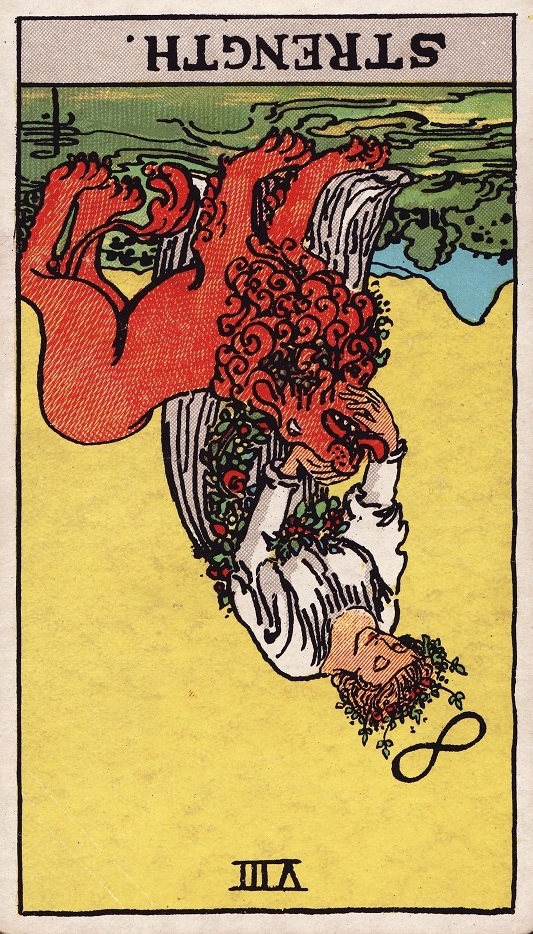
The reversed Strength card, for example, might evoke feelings of frustration or vulnerability. These emotional responses are clues to the card’s deeper message.
Reversed Cards as Catalysts for Personal Growth
Reversed cards are not just about obstacles—they’re invitations to evolve. When a card flips, it’s an opportunity to:
- Confront Fears: The reversed Moon card may reveal anxiety or illusions you’ve been avoiding.
- Embrace Change: The reversed Tower could indicate resistance to necessary upheaval, urging you to let go of what no longer serves you.
- Reflect on Patterns: Repeated reversals of the same card (e.g., multiple Four of Cups reversed) may point to a recurring theme in your life, like apathy or missed blessings.
- Strengthen Self-Awareness: A reversed Page of Swords might highlight impulsive decisions or a need to listen more carefully to your inner voice.
By viewing reversals as guides rather than warnings, you transform them into tools for self-discovery. They challenge you to ask tough questions and make conscious choices.
Practical Tips for Reading Reversed Cards
If you’re new to reversals, start with these practical tips to build confidence:
- Use a Single Card Pull: Draw one card daily and note whether it’s upright or reversed. Over time, you’ll notice patterns in how reversals show up in your life.
- Journal Your Interpretations: Write down your thoughts on reversed cards, including any symbols or emotions they evoke. Reviewing your notes will help you track your progress.
- Experiment with Different Spreads: Try a simple three-card spread (past, present, future) with reversals to see how they influence the narrative. Notice how a reversed card in the “future” position might suggest a detour rather than a dead end.
- Combine with Upright Cards: In a multi-card spread, compare upright and reversed cards to see how their energies interact. For example, an upright Lovers with a reversed Two of Cups could indicate a relationship that needs work.
- Practice with Reversals Only: Flip all cards in a spread upside down and interpret them as reversals. This exercise sharpens your ability to see the subtle shifts in meaning.
Conclusion
Tarot reversed cards are not just flipped images—they’re gateways to deeper understanding. By embracing their shifted meanings, you unlock a richer, more dynamic way to engage with the cards. Reversals invite you to pause, reflect, and explore the unseen layers of your life. They remind you that growth often comes from looking inward, confronting what’s uncomfortable, and trusting the journey—even when the path isn’t clear.
As you continue your tarot practice, remember that reversals are not obstacles but opportunities. They promise a shift in perspective, piquing your curiosity and guiding you toward greater self-awareness. Whether you’re navigating a major life decision or simply seeking clarity, reversed cards offer a nuanced lens to illuminate your path forward.
FAQ
What do reversed tarot cards mean?
Reversed tarot cards offer an inverted interpretation of their upright meanings, often revealing hidden aspects, internal struggles, or opportunities for growth.
Why should I use reversed cards in my readings?
Incorporating reversed cards can provide a more nuanced understanding of your situation, highlighting areas for personal development and self-awareness.
Leave a Reply