Short Answer
In this comprehensive guide, you’ll explore the significance of tarot card order and why sequence matters in readings. Whether you’re a beginner or an experienced reader, understanding how the arrangement of cards influences interpretation can deepen your insights and improve accuracy. You’ll learn about different types of tarot sequences, their purposes, and how to apply them effectively in your readings. By the end, you’ll have a clear grasp of how order shapes meaning and enhances your tarot practice.
The Importance of Tarot Card Order
Tarot sequences are not random; they follow specific patterns that create a narrative or reveal deeper layers of meaning. The order in which cards appear can influence the story they tell, much like chapters in a book. For instance, a spread where past, present, and future cards are arranged chronologically provides clarity on temporal progression, while a random spread might highlight unexpected connections or hidden influences.

Understanding sequence helps you interpret the relationships between cards more accurately. A card’s position can alter its meaning—whether it’s a foundation, a challenge, or a resolution. For example, the same card in the “past” position might indicate a resolved issue, while the same card in the “future” position could suggest an upcoming opportunity or obstacle. Mastering order allows you to craft more nuanced and insightful readings.
Types of Tarot Sequences
Tarot sequences vary depending on the spread and the reader’s intent. Here are some of the most common types:
Chronological Sequences
These spreads arrange cards to reflect time-based progressions, such as past, present, and future. The Celtic Cross, for example, uses a structured order to map out influences over time, relationships, and potential outcomes. Chronological sequences are ideal for understanding how events unfold and identifying patterns in a querent’s life.
Elemental Sequences
Tarot cards are associated with the four classical elements—fire, water, air, and earth—each representing different energies. An elemental sequence arranges cards based on these associations to highlight balance or imbalance in a situation. For instance, a spread might reveal an excess of fiery energy (action, passion) and a lack of earthy energy (stability, practicality), suggesting a need for grounding.
Thematic Sequences
These sequences group cards around a central theme, such as love, career, or personal growth. The order might reflect stages of development, such as foundation, challenge, and resolution. Thematic sequences are useful for focused readings where the querent seeks clarity on a specific area of their life.
Randomized Sequences
While less structured, randomized sequences can reveal unexpected insights by removing preconceived interpretations. Cards drawn in no particular order might highlight hidden influences or subconscious patterns that a structured spread could overlook. This approach is often used in intuitive or free-form readings.

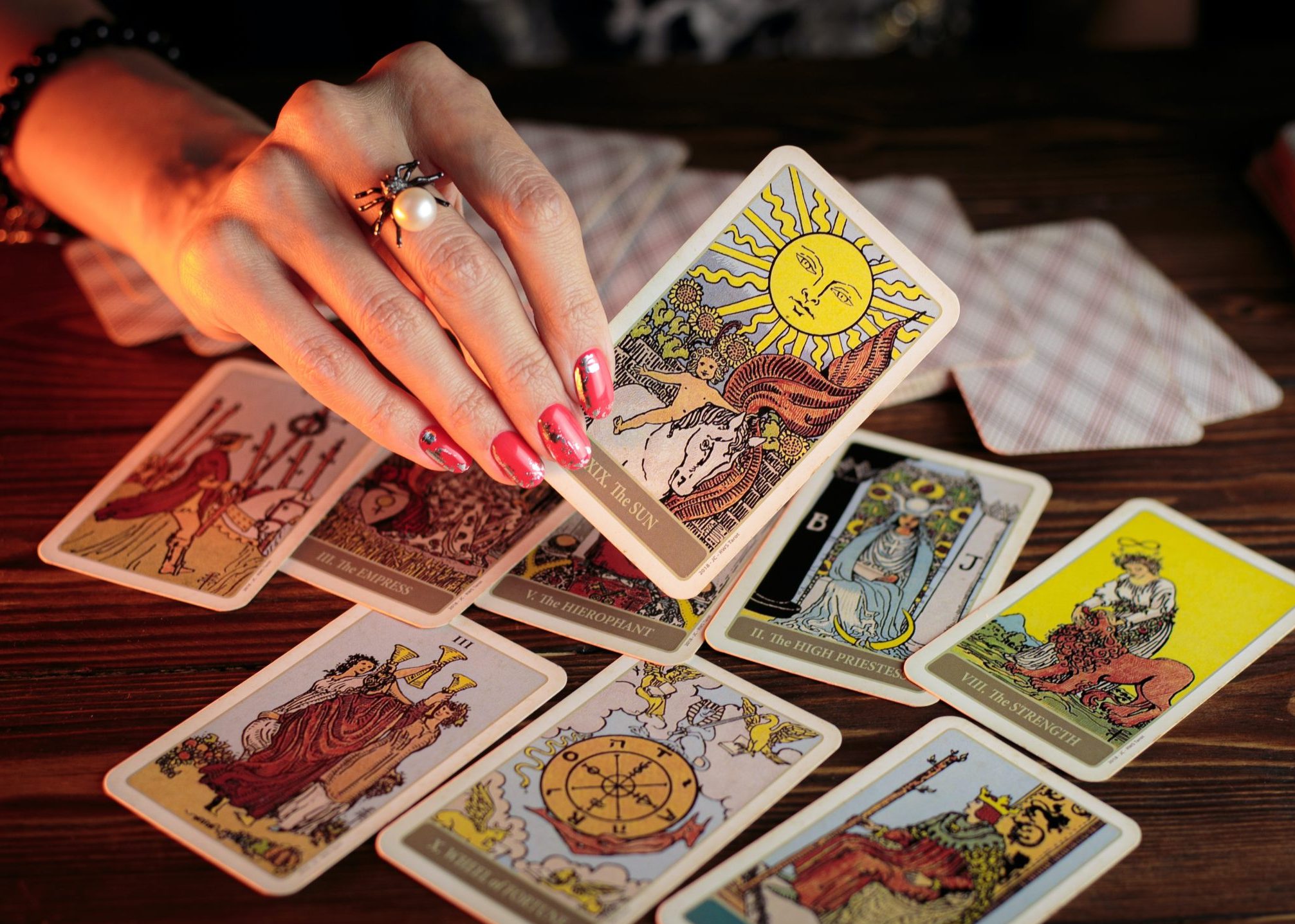
An example of a chronological tarot sequence, where cards are arranged to reflect the flow of time.
How to Use Sequences in Readings
Applying sequences in your readings requires both knowledge of card meanings and an understanding of how order shapes interpretation. Start by selecting a spread that aligns with your question or the querent’s needs. For example, if the querent is seeking guidance on a career decision, a thematic sequence focusing on challenges, opportunities, and outcomes would be appropriate.
As you lay out the cards, pay attention to their positions and how they interact. A card in the “past” position might explain the root of a current issue, while a card in the “future” position could offer a glimpse of potential resolutions. Use the sequence to build a narrative, connecting the cards like a story. This approach not only makes your readings more coherent but also helps the querent understand the bigger picture.
It’s also helpful to experiment with different sequences to see how they influence your interpretations. Try a chronological spread for one reading and a thematic spread for another, then compare the insights. Over time, you’ll develop a preference for certain sequences based on your style and the types of questions you’re addressing.
Common Mistakes to Avoid
Even experienced readers can fall into traps when working with sequences. One common mistake is ignoring the order entirely, treating each card as an isolated entity. This can lead to fragmented or confusing interpretations. Always consider the position of a card within the spread and how it relates to the others.
Another pitfall is overcomplicating the sequence. While it’s important to recognize patterns, don’t force connections that aren’t there. Let the cards guide you naturally, and avoid reading too much into minor details. Simplicity often leads to clearer and more accurate insights.
Finally, avoid relying solely on memorized meanings. While traditional interpretations are valuable, they should serve as a foundation rather than a rigid framework. Allow room for intuition and personal insight to enrich your understanding of the sequence.
Advanced Techniques for Working with Sequences
For those looking to deepen their practice, advanced techniques can add layers of complexity and precision to your readings. One such technique is the “layered sequence,” where you perform multiple spreads on the same question, each with a different focus. For example, you might start with a chronological spread to understand the timeline, followed by an elemental spread to assess energetic balance, and end with a thematic spread to explore emotional nuances.
Another advanced method is the “card reversal sequence,” where reversed cards are placed in specific positions to highlight blocked energy or internal struggles. This technique requires a strong grasp of both upright and reversed meanings, as well as an understanding of how reversal interacts with the sequence’s order.
You can also experiment with “dynamic sequences,” where the order of cards changes based on the querent’s responses during the reading. For instance, if a card in the “challenge” position resonates strongly with the querent, you might pull additional cards to explore that theme further. This approach makes the reading more interactive and tailored to the individual.
Practical Examples of Tarot Sequences
To illustrate how sequences work in practice, let’s explore a few examples:
Example 1: The Three-Card Spread
The three-card spread is one of the simplest yet most versatile sequences. Typically arranged as past, present, and future, it provides a clear narrative. For instance, if the cards drawn are The Tower (past), The High Priestess (present), and The Star (future), the sequence suggests a recent upheaval (The Tower) that has led to a period of introspection (The High Priestess), culminating in hope and renewal (The Star). The order here emphasizes transformation and growth.
Example 2: The Horseshoe Spread
The horseshoe spread uses seven positions to explore a situation in depth. The sequence often follows a structure like: present situation, challenge, subconscious influences, past influences, external influences, hopes/fears, and outcome. For example, if the cards reveal a blockage in the “challenge” position, the sequence might highlight an internal fear that needs to be addressed before progress can be made. The order helps pinpoint where the issue lies and how it can be resolved.
Example 3: The Celtic Cross
The Celtic Cross is a more complex spread with ten positions, each with a specific meaning. The sequence typically starts with the present situation, followed by the challenge, subconscious influences, past influences, and so on. The order creates a layered narrative, revealing not just what is happening but why and how it might unfold. For instance, if the “outcome” card is The Sun, the sequence might suggest that despite current difficulties, a positive resolution is likely if the querent stays the course.

A horseshoe spread laid out to explore a situation in depth, with each card’s position contributing to the overall narrative.
Conclusion
Tarot card order is a powerful tool that transforms a collection of individual cards into a cohesive and meaningful story. By understanding the different types of sequences—chronological, elemental, thematic, and randomized—you can tailor your readings to the querent’s needs and the questions they ask. Whether you’re using a simple three-card spread or a complex layout like the Celtic Cross, the order in which cards appear shapes their interpretation and the insights you provide.
As you continue to practice, experiment with different sequences to discover which ones resonate most with your style. Pay attention to how the order influences your readings, and don’t be afraid to adapt or combine techniques to suit your needs. With time and experience, you’ll develop a deeper appreciation for the art of tarot sequencing and the profound impact it can have on your readings.
FAQ
Why is the order of tarot cards important?
The order of tarot cards influences the narrative and interpretation, providing deeper insights into the reading.
What are the different types of tarot sequences?
Common types include chronological, elemental, thematic, and randomized sequences, each serving different purposes.
Leave a Reply