Short Answer
Embark on a journey into the mystical world of tarot with this comprehensive visual guide. You’ll discover the history, symbolism, and meanings behind the cards, along with practical tips for readings. Whether you’re a curious beginner or a seasoned enthusiast, this cheat sheet will deepen your connection to the tarot’s ancient wisdom and transformative power.
The Tarot: A Mirror to the Soul
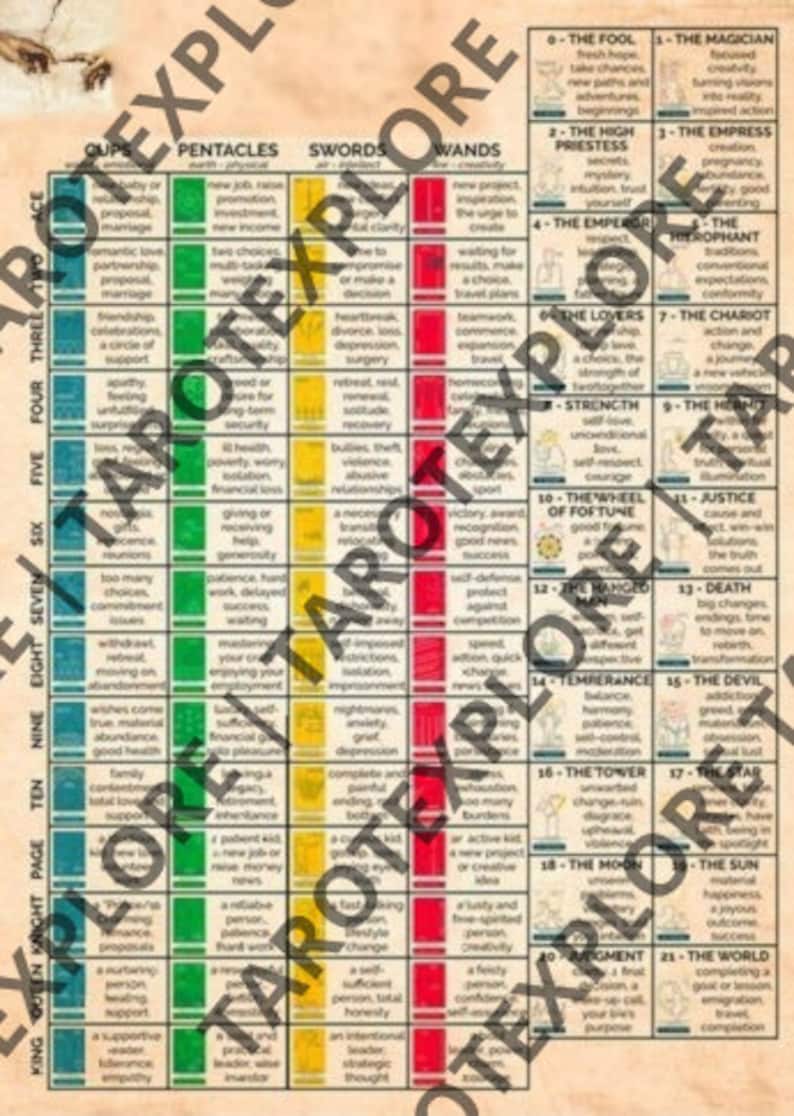
Tarot is more than a deck of cards—it’s a mirror reflecting the human experience in vivid symbols and archetypes. Originating in 15th-century Europe as playing cards, tarot evolved into a tool for divination and self-reflection. Each card carries layers of meaning, blending artistry with psychological insight. The deck consists of 78 cards divided into the Major Arcana (22 cards representing life’s grand themes) and the Minor Arcana (56 cards reflecting everyday experiences). Together, they form a language of intuition, offering guidance, clarity, and a deeper understanding of life’s journey.
Major Arcana: The Hero’s Journey Unfolded
The Major Arcana cards tell a story of transformation, from the innocent Fool’s leap into the unknown to the enlightened World’s completion of a cycle. These cards are the heart of tarot, embodying universal truths and spiritual lessons. For example, The Magician symbolizes manifestation and resourcefulness, while The High Priestess represents intuition and hidden knowledge. Each card is a chapter in a larger narrative, inviting you to explore your own path with curiosity and courage.

Minor Arcana: The Tapestry of Daily Life
The Minor Arcana brings tarot into the everyday, with four suits—Swords, Cups, Wands, and Pentacles—each tied to an element and aspect of life. Swords (Air) govern intellect and conflict, Cups (Water) flow with emotions and relationships, Wands (Fire) spark creativity and passion, and Pentacles (Earth) ground us in material reality. Cards like The Three of Cups celebrate joy and friendship, while The Ten of Swords marks an ending and the promise of renewal. These cards act as a lens, helping you navigate life’s ups and downs with wisdom.

Reading the Cards: Intuition Meets Structure
Tarot readings blend intuition with structure. Start by shuffling the deck while focusing on your question or intention. Draw cards one by one, trusting your first impressions. A single card can offer a quick insight, while a spread (like the Celtic Cross) provides deeper context. Pay attention to the imagery, colors, and symbols—each element holds clues. For example, a card with a stormy sky might reflect turmoil, while a blooming garden suggests growth. The key is to listen to your inner voice and let the cards speak to you.
Tarot as a Tool for Self-Discovery
Beyond divination, tarot is a powerful tool for self-discovery. It encourages introspection, helping you uncover hidden fears, desires, and patterns. Pull a card daily to reflect on its message, or use it as a journaling prompt. For instance, The Chariot might inspire you to take control of your direction, while The Hanged Man could remind you to pause and see things from a new perspective. Tarot becomes a dialogue with your subconscious, guiding you toward clarity and empowerment.
Common Misconceptions and How to Avoid Them
Tarot is often shrouded in mystery, but it’s not about predicting the future with absolute certainty. Instead, it’s a conversation with the universe, offering perspectives and possibilities. Avoid seeing the cards as fixed outcomes—interpret them as guidance, not absolutes. Another myth is that only “gifted” people can read tarot. In reality, anyone can learn with practice and an open mind. Start with simple spreads and gradually explore more complex ones as your confidence grows.
Creating Your Own Tarot Ritual
Make tarot a meaningful practice by creating a ritual around it. Choose a quiet space, light a candle, and set an intention for your reading. Use a cloth to lay out your cards, and consider cleansing your deck with sage or moonlight to clear its energy. Keep a journal to track your readings and insights over time. The more you engage with tarot, the more it will resonate with your personal journey. Whether you seek answers, inspiration, or simply a moment of reflection, tarot can be a trusted companion.
Conclusion
Tarot is a gateway to deeper self-awareness, creativity, and spiritual growth. By understanding its symbols, embracing its flexibility, and approaching it with an open heart, you unlock a tool that can illuminate your path in profound ways. Whether you’re drawn to the Major Arcana’s grand themes or the Minor Arcana’s everyday lessons, tarot offers a language to explore your inner world and the world around you. Let the cards be your guide—a visual cheat sheet to the mysteries of life, waiting to be discovered.
FAQ
What is tarot?
Tarot is a deck of cards used for divination and self-reflection, consisting of 78 cards that provide insights into various aspects of life.
How do I read tarot cards?
To read tarot cards, focus on your question while shuffling the deck, draw cards, and interpret their meanings based on imagery and intuition.
Leave a Reply