Short Answer
In this comprehensive guide, you’ll explore the Ten of Wands (also known as the Ten of Rods) in tarot, a card that often sparks curiosity due to its striking imagery and the weighty themes it represents. Whether you’re a seasoned tarot reader or a curious beginner, this article will unpack the symbolism, meanings, and practical applications of this card in readings. You’ll learn how the Ten of Wands reflects burdens, perseverance, and the final push toward a goal, as well as its potential pitfalls and deeper psychological insights. By the end, you’ll have a nuanced understanding of how this card interacts with others and what it might be signaling in your life.
The Symbolism of the Ten of Wands
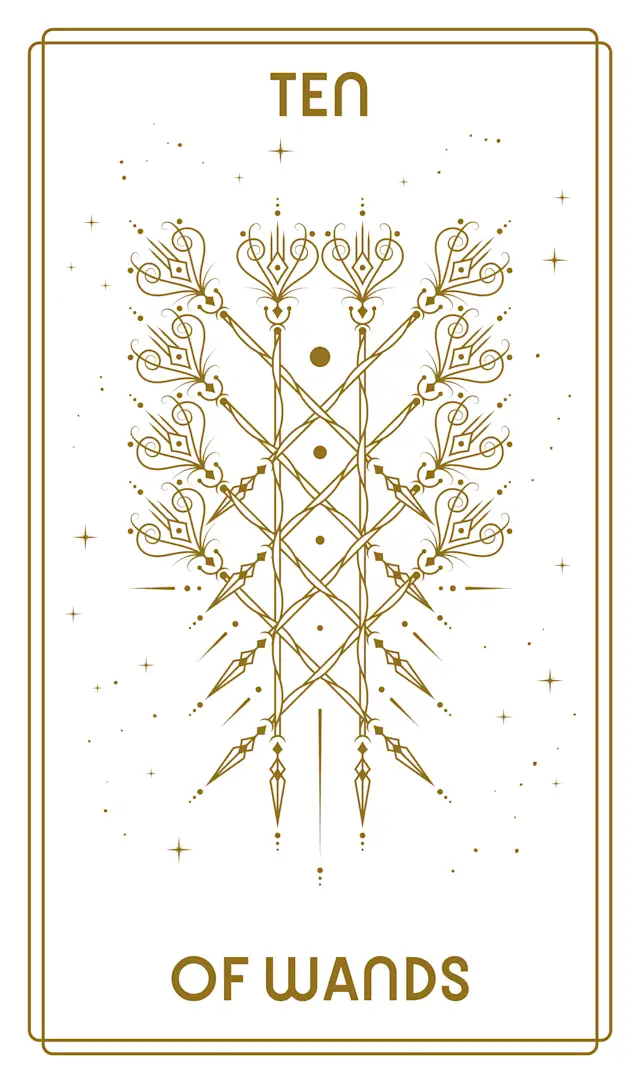
The Ten of Wands is rich with symbolism, often depicted as a figure struggling under the weight of ten heavy wands. This imagery immediately conveys a sense of burden, responsibility, or exhaustion. The wands themselves are typically wooden, suggesting a natural, earthy energy, but their sheer number and the figure’s strained posture highlight the toll of carrying too much. The background is often dark or muted, emphasizing the isolation and pressure the figure feels. This card doesn’t shy away from hardship; instead, it forces the viewer to confront the reality of what it means to push forward despite overwhelming odds.
The number ten in tarot is significant as it represents completion, the end of a cycle, or the culmination of effort. However, the Ten of Wands complicates this by suggesting that completion isn’t always peaceful or rewarding. The figure’s forward motion—despite the burden—implies that the goal is within reach, but the journey is grueling. This duality is key to understanding the card’s message: perseverance is necessary, but so is recognizing when to lighten the load.
In some decks, the figure’s face is obscured or turned away, which can symbolize denial, avoidance, or the inability to see the bigger picture. This adds a layer of psychological depth, hinting that the burden might not just be external but also internal—perhaps a refusal to delegate, a fear of failure, or an unwillingness to ask for help. The Ten of Wands invites you to examine not just what you’re carrying, but why you’re carrying it.
Upright Meaning: Perseverance and the Final Stretch
When the Ten of Wands appears upright in a reading, it’s a clear message that you’re in the final stretch of a challenging journey. This card often signals that you’ve been working hard toward a goal, and while the end is near, the pressure is mounting. It’s a testament to your resilience and determination, but it also serves as a warning: don’t burn out before you cross the finish line. The Ten of Wands encourages you to push through, but with the caveat that you must pace yourself. Ask yourself: Is this burden truly necessary, or am I holding onto it out of habit or pride?
In career or financial contexts, the Ten of Wands can indicate a project or responsibility that’s become overwhelming. It might be time to delegate tasks, set boundaries, or even reconsider whether the goal is worth the cost. In relationships, this card can suggest that one partner is carrying more than their fair share of emotional labor, leading to resentment or exhaustion. The Ten of Wands asks you to evaluate whether the sacrifices you’re making are sustainable or if it’s time to redistribute the weight.
On a deeper level, the upright Ten of Wands can reflect a spiritual or personal awakening that requires you to shed old burdens. It might be a call to release past grievances, toxic relationships, or self-imposed limitations. The card’s energy is about endurance, but it’s also about recognizing when to let go—even if it feels counterintuitive to keep pushing forward.
Reversed Meaning: Release and Reassessment
When the Ten of Wands appears reversed, it’s a powerful signal to pause and reassess your current situation. This card in reverse often points to burnout, avoidance, or an inability to see the light at the end of the tunnel. You might be clinging to responsibilities or goals out of fear, obligation, or sheer stubbornness, even when they no longer serve you. The reversed Ten of Wands asks you to ask yourself: Am I holding onto this because I want to, or because I feel I have to?
In practical terms, this card reversed can indicate that you’re spreading yourself too thin, taking on too many commitments, or refusing to ask for help when you need it. It’s a reminder that no one can carry ten wands indefinitely, and at some point, the structure will collapse under its own weight. This is a card of breaking points—whether that means quitting a job, ending a toxic relationship, or simply learning to say no. The reversed Ten of Wands is about reclaiming your energy and redirecting it toward what truly matters.
Emotionally, this card reversed can signify suppressed frustration or resentment. You might be bottling up feelings of being overworked or underappreciated, which could lead to outbursts or passive-aggressive behavior. The card encourages you to confront these emotions head-on rather than letting them fester. Spiritually, the reversed Ten of Wands can be a call to release old patterns, beliefs, or identities that no longer align with your growth. It’s about shedding what’s weighing you down so you can move forward with clarity and purpose.
Ten of Wands in Love and Relationships
In matters of the heart, the Ten of Wands can reveal a dynamic where one or both partners are carrying an unequal share of emotional labor. This card might appear when you or your partner feel overwhelmed by responsibilities, whether in the relationship itself or in external areas of life that spill over into your connection. It’s a sign to check in with each other about how you’re both feeling and to redistribute the load before resentment builds. The Ten of Wands asks: Are you both truly supported, or is one person doing most of the heavy lifting?
If you’re single, the Ten of Wands might indicate that you’re holding onto past relationships or patterns that no longer serve you. It could be time to release old baggage—whether that’s lingering bitterness, unrealistic expectations, or a fear of vulnerability. The card encourages you to enter new relationships with a lighter heart, free from the weight of what came before. Alternatively, it might suggest that you’re putting too much pressure on a new romance to “fix” something in your life, which can lead to disappointment.
The reversed Ten of Wands in love can signal burnout in a relationship, where one or both partners are emotionally drained and struggling to connect. It’s a call to prioritize self-care and to communicate openly about your needs. This card reversed might also indicate that you’re staying in a relationship out of obligation rather than genuine happiness, which can lead to stagnation. The key here is to ask yourself whether the relationship is bringing you joy or just adding to your burden.
Ten of Wands in Career and Finances
In career readings, the Ten of Wands often points to a workload that’s become unsustainable. You might be taking on too many projects, overcommitting, or struggling to delegate tasks effectively. While this card can reflect dedication and a strong work ethic, it also serves as a warning against burnout. The Ten of Wands asks you to evaluate whether your efforts are aligned with your long-term goals or if you’re simply keeping busy to avoid facing a bigger issue—like a lack of passion for your work or a toxic work environment.
Financially, this card can indicate that you’re overextending yourself, perhaps by taking on debt, working excessive hours, or ignoring financial red flags. It’s a reminder to reassess your spending habits, savings goals, and overall financial strategy. The Ten of Wands reversed in this context might suggest that you’re avoiding financial responsibilities or refusing to confront a looming crisis. It’s time to take a step back, create a plan, and lighten your load before it becomes unmanageable.
If you’re considering a career change or a new financial venture, the Ten of Wands can be a sign that you’re not yet ready to let go of your current path. It might be a call to finish what you’ve started before moving on, or it could indicate that you need to seek support—whether through mentorship, additional resources, or simply asking for help from colleagues. The card’s energy is about endurance, but it’s also about knowing when to pivot.
Ten of Wands in Combination with Other Cards
The Ten of Wands takes on different meanings depending on the cards it appears with. For example, when paired with the Three of Wands, it can suggest that your hard work is about to pay off, but you’ll need to stay the course. With the Five of Wands, it might indicate conflict or competition that’s adding to your burden, while with the Six of Wands, it could signal that recognition is on the horizon—if you can just make it through the final stretch.
In a negative combination, the Ten of Wands with the Tower can indicate a sudden collapse under pressure, while with the Eight of Swords, it might reflect feeling trapped by your own limitations. The key is to look at the surrounding cards for context. The Ten of Wands often amplifies the energy of the cards it’s paired with, so if it appears with a positive card, it might indicate that the reward is worth the struggle. If it appears with a challenging card, it could be a sign that you need to release something before it becomes unmanageable.
Common Misconceptions About the Ten of Wands
One of the most common misconceptions about the Ten of Wands is that it’s always a negative card. While it does highlight burdens and challenges, it’s also a card of perseverance and completion. The key is to recognize that the burden is temporary and that the goal is within reach. Another misconception is that the Ten of Wands always means you’re doing something wrong. In reality, it’s often a sign that you’re doing something right—but you might need to adjust your approach to avoid burnout.
Some people also interpret the Ten of Wands as a sign that they should never ask for help, but this couldn’t be further from the truth. The card is about recognizing your limits and knowing when to seek support. It’s not a badge of honor to carry everything alone; it’s a sign that you’re human and that it’s okay to lighten your load. The Ten of Wands is a reminder that even the strongest among us need rest and assistance sometimes.
Conclusion
The Ten of Wands is a card that demands attention—not just for the burdens it highlights, but for the deeper lessons it offers. It’s a reminder that perseverance is a virtue, but so is wisdom. Knowing when to push forward and when to let go is the key to navigating the challenges this card represents. Whether you’re in the final stretch of a long journey or feeling the weight of unresolved responsibilities, the Ten of Wands encourages you to reflect on what you’re carrying and why. It’s a call to balance effort with self-care, to recognize your limits, and to trust that the finish line is closer than you think.
Ultimately, the Ten of Wands is about transformation. It’s the card of the marathon runner who crosses the line, exhausted but triumphant, or the student who finally graduates after years of hard work. It’s a card of endurance, but it’s also a card of release—reminding you that some burdens are meant to be shed, not carried forever. By embracing its message, you can turn pressure into progress and exhaustion into empowerment.
Leave a Reply