Short Answer
Welcome to your guide on the Death Tarot card—one of the most misunderstood yet powerful cards in the deck. Whether you’re a seasoned reader or just beginning your journey, this card invites you to explore endings, transformation, and rebirth. By the end of this guide, you’ll understand its symbolism, how it interacts with other cards, and what it might be asking of you right now. Let’s dive in.
The Death Card: A Playful Question and a Challenge
Imagine the Death card as a cosmic prankster knocking on your door. It leans in with a sly grin and asks: “What if everything you think you know is about to change?” At first glance, it seems ominous—skeletons, falling towers, and a sweeping landscape of decay. But here’s the twist: this card isn’t about literal death. Instead, it’s about necessary endings. It challenges you to let go of what no longer serves you, even if it feels scary or uncomfortable. The real question isn’t “Will I die?” but “What part of my life is ready to transform?”
This card often appears when you’re clinging to a job, relationship, or belief that’s outgrown its purpose. It’s not cruel—it’s efficient. Think of it like autumn shedding its leaves so spring can flourish. The challenge? Trusting the process, even when you can’t see the new growth yet.
Symbolism: Decoding the Imagery
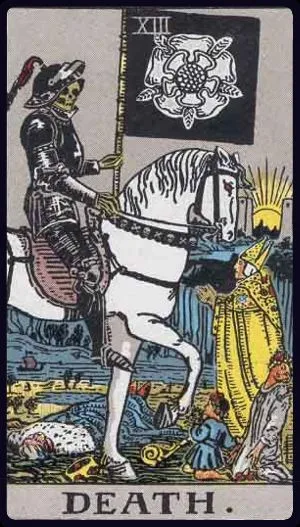
The Death card is rich with symbolism, each element offering clues about its message. At its center, a skeletal figure rides a white horse, symbolizing purity and inevitability. The horse’s movement is forward, unyielding—suggesting that change is coming, whether you’re ready or not. The rider holds a black flag adorned with a white rose, representing the balance of life and death, endings and beginnings.
In the background, a rising sun peeks over a distant hill, hinting at rebirth. A bishop or king lies fallen, reinforcing the idea that old structures must crumble to make way for new ones. The card’s muted colors—deep blues, blacks, and golds—create a somber yet regal atmosphere. Even the card’s number, XIII, carries weight; in numerology, 13 is often associated with transformation and upheaval.
Common Interpretations: What the Death Card Reveals
When the Death card appears in a reading, it rarely signifies physical death. Instead, it points to psychological or emotional endings. Here are some key interpretations:
- Career: A job or industry you’ve outgrown may be ending. This could mean a layoff, a shift in responsibilities, or a sudden urge to pursue something new. The card asks: Are you holding on out of fear or necessity?
- Relationships: A partnership—romantic or otherwise—might be reaching its natural conclusion. This isn’t about blame; it’s about recognizing when a chapter is closing. The Death card encourages you to honor the past while making space for what’s next.
- Personal Growth: You may be shedding old habits, beliefs, or identities that no longer align with who you’re becoming. This can feel like a loss, but it’s a sign of evolution.
- External Circumstances: Sudden changes—like moving, losing a loved one, or a major life upheaval—can trigger the Death card’s energy. It reminds you that endings are part of the human experience.
In reversed positions, the Death card can indicate resistance to change. You might be avoiding necessary endings, clinging to familiarity even when it’s toxic. Alternatively, it could signal a fear of transformation, where you’re aware change is coming but paralyzed by the unknown.
How the Death Card Interacts with Others
The Death card’s message shifts depending on the cards around it. Here’s how to read its combinations:
- Death + The Tower: A double dose of upheaval. Expect sudden, dramatic endings that force you to rebuild from scratch.
- Death + The Sun: A powerful sign of rebirth. After a period of darkness, joy and renewal are on the horizon.
- Death + Three of Swords: Heartbreak or betrayal may precede the ending. The pain is real, but it’s a catalyst for growth.
- Death + Five of Pentacles: Financial or emotional hardship could be the catalyst for change. The card asks you to seek support during this transition.
When paired with cards like The Star or Temperance, the Death card softens its blow, suggesting that endings are gentle and purposeful. But with cards like Ten of Swords or Eight of Cups, it can feel brutal—yet necessary.
Practical Steps: Navigating the Death Card’s Energy
So, how do you work with this card’s energy instead of fighting it? Start by asking yourself:
- What am I afraid to let go of? Be honest. Is it a relationship, a dream, or a version of yourself you’ve outgrown?
- What’s one small change I can make today? The Death card thrives on momentum. Start with tiny steps—a conversation, a decluttering session, or a new habit.
- How can I honor the past while embracing the future? Rituals like journaling, burning old letters, or creating a vision board can help bridge the gap between what was and what’s next.
- Who can support me during this transition? Reach out to friends, mentors, or even a therapist. You don’t have to go through this alone.
Remember, the Death card isn’t a punishment—it’s an invitation. It’s the universe’s way of clearing the path for something better, even if the clearing feels messy.

Conclusion: Embracing the Phoenix Within
The Death card is a reminder that endings are not the enemy—they’re the foundation of renewal. It’s the phoenix rising from ashes, the seed breaking through concrete, the quiet before the storm that births a new dawn. When this card appears, resist the urge to panic. Instead, ask yourself: “What is this ending preparing me for?”
Life isn’t linear, and neither are its lessons. The Death card teaches you that closure isn’t the end of the story—it’s the setup for the next act. So when change comes knocking, open the door with curiosity. You might just find that what’s on the other side is far more vibrant than what you left behind.
FAQ
What does the Death Tarot card mean?
The Death card symbolizes endings, transformation, and rebirth, urging you to let go of what no longer serves you.
Does the Death card signify physical death?
No, the Death card rarely indicates physical death; it typically represents emotional or psychological endings.
How can I work with the energy of the Death card?
Reflect on what you need to let go of, make small changes, and seek support from others during transitions.
Leave a Reply