Short Answer
Embark on a journey into the mystical realms of tarot as we explore the profound symbolism and intriguing metaphors of two of its most enigmatic cards: The Hierophant and The High Priestess. This guide will illuminate their unique appeal, contrasting their roles as pillars of spiritual wisdom and institutional tradition. By the end, you’ll gain a deeper understanding of how these archetypes shape our spiritual narratives and personal growth.
The Hierophant: The Bridge Between Heaven and Earth
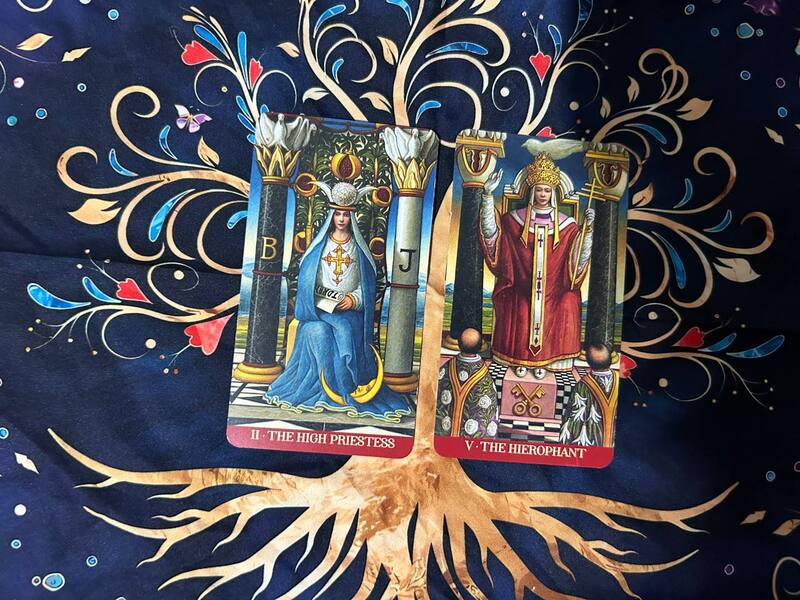
The Hierophant, often depicted as a wise teacher or spiritual leader, embodies the essence of tradition, doctrine, and structured spirituality. Clad in papal robes and seated between two pillars—one black, one white—he represents the union of opposites, the balance between the material and the divine. His raised right hand in benediction and the triple cross in his left symbolize his role as a mediator between the earthly and the sacred, guiding seekers through the labyrinth of religious and philosophical teachings.
The Hierophant is not merely a figure of authority but a living testament to the power of organized religion and institutional wisdom. His presence in a reading often signifies the importance of tradition, mentorship, or the need to seek guidance from established sources. Whether it’s a spiritual teacher, a mentor, or a long-held belief system, The Hierophant encourages us to honor the past while navigating our spiritual path with reverence and discipline.

The High Priestess: The Keeper of Hidden Wisdom
In stark contrast to The Hierophant, The High Priestess stands as the guardian of esoteric knowledge, intuition, and the unseen. Often depicted seated between two pillars—one black, one white—she mirrors The Hierophant’s duality but with a far more mysterious and intuitive energy. Her crescent moon at her feet and the scroll of wisdom in her hands symbolize her connection to the cycles of the moon, the tides of the subconscious, and the secrets of the universe. Unlike The Hierophant, who represents external guidance, The High Priestess embodies inner knowing, urging us to trust our instincts and delve into the depths of our psyche.
The High Priestess is a powerful metaphor for the feminine divine, the intuitive mind, and the mysteries that lie beyond logical understanding. She invites us to look inward, to meditate, and to embrace the unknown. In a reading, her appearance often signals a time to pause, reflect, and listen to the whispers of the soul. She is the voice of the unconscious, the dreamer, and the seeker of hidden truths.
Contrasting Roles: Tradition vs. Intuition
The interplay between The Hierophant and The High Priestess is a dance of opposites that highlights the duality of spiritual growth. The Hierophant represents the external world of structured belief, dogma, and tradition, while The High Priestess embodies the internal world of intuition, mystery, and personal revelation. Together, they form a dynamic balance—one that encourages seekers to honor both the wisdom of the past and the whispers of their inner voice.
Where The Hierophant teaches through doctrine and ritual, The High Priestess guides through dreams, symbols, and personal gnosis. The Hierophant may point to a religious path or a mentor, while The High Priestess might suggest meditation, journaling, or exploring the subconscious. Their juxtaposition in a reading can reveal the tension between conformity and individuality, between the known and the unknown.
Symbolism and Metaphor: Decoding the Cards
The Hierophant’s imagery is rich with symbolism. His throne, often flanked by two pillars, represents the duality of existence—light and dark, masculine and feminine, conscious and unconscious. The keys at his feet symbolize the unlocking of spiritual mysteries, while his triple crown signifies the three realms of existence: the physical, the mental, and the spiritual. His role as a bridge between heaven and earth is further emphasized by his position between the pillars, which can represent the gateway to enlightenment.
The High Priestess, on the other hand, is surrounded by symbols of lunar energy and hidden knowledge. Her crescent moon is a reminder of the cyclical nature of life, death, and rebirth, while the pomegranates on her veil hint at the mysteries of the underworld and the secrets of the soul. The scroll she holds is often partially unrolled, symbolizing the unveiling of wisdom that is never fully revealed—always leaving room for further exploration and discovery.
Practical Applications: How to Work with These Archetypes
Understanding The Hierophant and The High Priestess can provide profound insights into your spiritual journey. If The Hierophant appears in a reading, it may be time to seek guidance from a mentor, revisit your spiritual roots, or explore a structured path of learning. Pay attention to religious or philosophical teachings that resonate with you, and consider how tradition can serve as a foundation for your growth.
When The High Priestess graces your spread, it’s a call to trust your intuition. Engage in practices that deepen your connection to the unseen, such as meditation, dream work, or creative expression. Journaling can also be a powerful tool to uncover hidden truths and listen to the wisdom of your subconscious. The High Priestess encourages you to embrace the unknown and find strength in your inner voice.
Conclusion
The Hierophant and The High Priestess are more than just tarot cards—they are profound metaphors for the dualities we navigate in our spiritual lives. The Hierophant teaches us the value of tradition, mentorship, and structured wisdom, while The High Priestess invites us to trust our intuition, explore the unknown, and embrace the mysteries of the soul. Together, they form a dynamic balance that can guide us toward deeper self-awareness and spiritual growth.
Whether you’re drawn to the structured path of The Hierophant or the intuitive whispers of The High Priestess, both cards offer invaluable lessons. By understanding their symbolism and applying their wisdom to your life, you can cultivate a richer, more nuanced relationship with your spiritual journey. Let these archetypes inspire you to explore the depths of your soul and the heights of your potential.
FAQ
What does The Hierophant tarot card symbolize?
The Hierophant symbolizes tradition, structured spirituality, and guidance from established sources.
How does The High Priestess differ from The Hierophant?
The High Priestess embodies intuition and hidden wisdom, while The Hierophant represents external guidance and tradition.
Leave a Reply