Short Answer
This guide explores The Maiden Tarot card, specifically focusing on its connection to The Fool’s innocence and the symbolic journey of new beginnings. You’ll discover the historical roots of The Fool, its representation in tarot decks, and how its energy manifests in readings. We’ll also examine the psychological and spiritual interpretations of innocence, purity, and untainted potential. By the end, you’ll understand how to apply The Fool’s wisdom to personal growth, decision-making, and embracing life’s unknowns with curiosity rather than fear.
The Fool’s Journey: A Symbol of New Beginnings
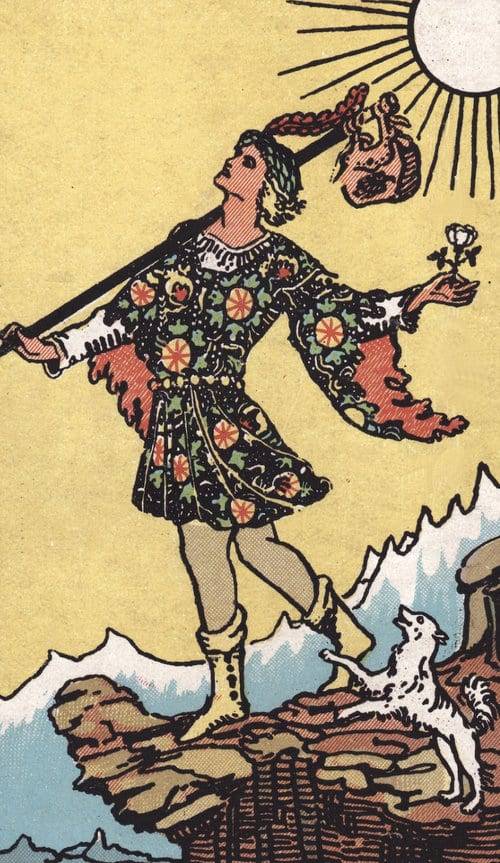
The Fool is often depicted as a young traveler standing at the edge of a cliff, one foot suspended in mid-air, with a small bag slung over their shoulder and a loyal canine companion by their side. This imagery is rich with symbolism, representing spontaneity, adventure, and the willingness to step into the unknown. Unlike other tarot cards that depict specific figures or scenes, The Fool is a blank slate—an archetype of pure potential. The cliff edge suggests a leap of faith, while the dog symbolizes instinct and guidance, reminding us that even in uncertainty, we are not alone.
In tarot, The Fool is typically numbered 0 or unnumbered, placing it outside the traditional Major Arcana sequence. This positioning underscores its role as the starting point of the tarot journey, a reminder that every great adventure begins with a single step—or in this case, a single leap. The Fool’s innocence is not naivety but rather an open-mindedness that allows for growth, learning, and transformation. It invites us to release preconceived notions and approach life with wonder, much like a child experiencing the world for the first time.
Historical and Cultural Roots of The Fool
The Fool’s presence in tarot decks traces back to medieval Europe, where it appeared in playing card games before evolving into a divination tool. The card’s origins are debated, with some scholars linking it to the Italian *Il Matto* (The Madman) and others to the French *Le Fol* (The Fool). In these early decks, The Fool was often portrayed as a jester or a court jester, a figure who existed on the fringes of society yet held a unique perspective. This duality—both marginalized and insightful—reflects the card’s deeper meaning: the outsider who sees the world differently and challenges conventional wisdom.
Beyond Europe, similar archetypes exist in other cultures. In the Tarot of Marseilles, one of the oldest tarot decks, The Fool is depicted as a carefree figure with a feather in their cap, often accompanied by a bird or an animal. This imagery reinforces the idea of freedom and unburdened spirit. In Jungian psychology, The Fool aligns with the “shadow” or the unconscious aspects of the self that are yet to be explored. It represents the part of us that is untainted by societal expectations, free to dream, imagine, and create without limits.
The Fool’s innocence is also echoed in mythological figures such as Hermes, the Greek messenger god known for his cunning and adaptability, and Loki, the Norse trickster who embodies both chaos and transformation. These parallels highlight The Fool’s role as a catalyst for change, a force that disrupts stagnation and invites renewal.
Interpreting The Fool in Tarot Readings
When The Fool appears in a tarot spread, it signals a time of fresh starts, spontaneity, and untapped potential. Its energy is one of curiosity and fearlessness, urging the querent to embrace the unknown rather than shy away from it. Depending on the surrounding cards, The Fool can indicate a new relationship, career path, creative project, or spiritual awakening. It may also suggest a need to release past mistakes and approach situations with a beginner’s mind—free from cynicism or over-analysis.
In a career reading, The Fool might point to a new job opportunity or the launch of a business venture, emphasizing the importance of taking risks. In matters of love, it could signify a whirlwind romance or the beginning of a relationship built on innocence and mutual discovery. Spiritually, The Fool often appears when the querent is being called to explore a new path, whether in meditation, energy work, or personal development. Its presence is a reminder that growth often requires stepping outside one’s comfort zone.
However, The Fool’s energy is not always literal. Sometimes, it serves as a warning against recklessness or naivety. If The Fool appears alongside cards like The Tower or Five of Swords, it may indicate impulsive decisions with negative consequences. In such cases, the card urges balance—channeling innocence without sacrificing wisdom. The key is to harness The Fool’s spontaneity while remaining grounded in reality.
The Psychological and Spiritual Dimensions of Innocence
Innocence, as represented by The Fool, is not about ignorance but about purity of intention. It is the state of being uncorrupted by cynicism, doubt, or past traumas. Psychologically, this innocence can be seen as the “beginner’s mind” described in Zen Buddhism—a mindset free from preconceptions, allowing for true learning and adaptation. When we approach life with this mindset, we open ourselves to new experiences, ideas, and connections that might otherwise be overlooked.
Spiritually, The Fool’s innocence is a call to reconnect with our inner child—the part of us that believes in magic, dreams, and the possibility of transformation. This inner child is not naive; it is wise in its own way, guided by intuition rather than logic. By nurturing this aspect of ourselves, we cultivate resilience, creativity, and a sense of wonder. The Fool teaches us that innocence is not a weakness but a strength—a source of clarity and authenticity in a world that often prioritizes cynicism over curiosity.
In tarot psychology, The Fool is also linked to the concept of “flow,” a state of complete immersion in an activity where time seems to disappear. This flow state is often associated with creativity, learning, and peak performance. By embodying The Fool’s energy, we can tap into this state more easily, allowing ourselves to engage fully with the present moment without overthinking or self-doubt.

Practical Ways to Embrace The Fool’s Energy
Incorporating The Fool’s wisdom into daily life can be both liberating and transformative. Start by identifying areas where you feel stuck or overly cautious. The Fool encourages you to take one small step toward change, even if it feels uncertain. This could be as simple as trying a new hobby, traveling to an unfamiliar place, or speaking up in a situation where you’d normally stay silent. The goal is not to act recklessly but to cultivate a willingness to explore without fear of failure.
Another way to channel The Fool’s energy is through creative expression. Whether it’s painting, writing, dancing, or playing music, creative activities allow us to tap into our inner child and approach the world with curiosity. Journaling can also be a powerful tool—write about a dream you’ve been too afraid to pursue or a fear you’d like to release. The act of putting these thoughts on paper can help you see them from a new perspective, much like The Fool sees the world with fresh eyes.
Meditation and mindfulness practices can further deepen your connection to The Fool’s innocence. Try a guided visualization where you imagine yourself as The Fool, standing at the edge of a cliff, ready to leap into the unknown. Visualize the wind at your back and the ground below you as a place of endless possibility. This exercise can help you cultivate trust in the universe and in your own ability to navigate life’s uncertainties.
Conclusion
The Fool’s innocence is a powerful reminder that life’s greatest adventures often begin with a single step—or a leap—into the unknown. By embracing The Fool’s energy, we open ourselves to new experiences, creative breakthroughs, and spiritual growth. Whether it appears in a tarot reading or as a guiding principle in daily life, The Fool challenges us to release fear, trust our instincts, and approach the world with wonder. Innocence, in this context, is not about ignorance but about the courage to see the world anew, free from the weight of past mistakes and societal expectations. As you move forward, let The Fool’s spirit inspire you to take risks, explore uncharted territories, and embrace the magic of the present moment. After all, every journey begins with a single step—and The Fool is there to remind you that you are ready to take it.
FAQ
What does The Fool represent in tarot?
The Fool represents new beginnings, innocence, spontaneity, and a leap of faith.
How can I apply The Fool's energy in my life?
You can embrace The Fool’s energy by taking small risks, exploring new hobbies, and approaching life with curiosity and an open mind.
Leave a Reply