Short Answer
Embark on a journey into the mystical world of tarot, where each card whispers secrets of the universe, the human psyche, and the hidden currents of fate. This guide is your gateway to understanding the profound meanings behind tarot cards, presented in a beautifully crafted PDF that you can download and explore at your leisure. Whether you’re a seasoned reader or a curious beginner, these pages will illuminate the symbolism, history, and practical applications of tarot, transforming your relationship with this ancient divination tool. Prepare to unlock the language of the cards and discover how they can guide, inspire, and reflect the deepest truths of your life.
The Essence of Tarot: A Mirror to the Soul
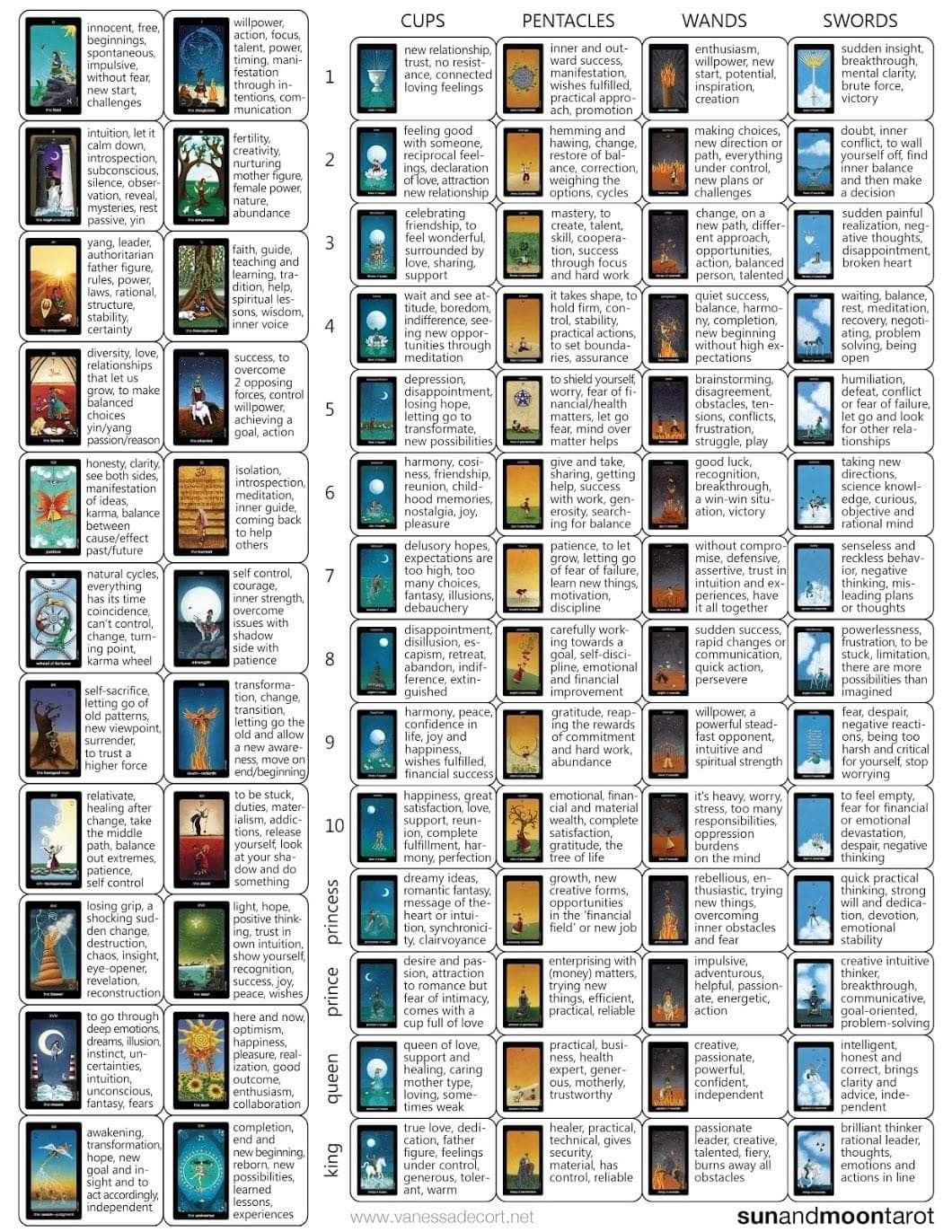
Tarot cards are more than mere illustrations—they are a mirror to the soul, reflecting our innermost thoughts, emotions, and life paths. Each card in the deck carries a unique vibration, a story waiting to be told. The Major Arcana, with its 22 cards, represents the grand themes of life—love, loss, transformation, and enlightenment—while the Minor Arcana, divided into four suits, delves into the everyday experiences that shape our journey. Together, they form a tapestry of human existence, offering insights that resonate on a deeply personal level.
Imagine holding a deck of tarot cards in your hands, feeling the weight of centuries of wisdom etched into their symbols. The Fool’s leap into the unknown, the Lovers’ union of opposites, the Tower’s sudden upheaval—each card is a chapter in a larger narrative, one that speaks to the universal human experience. By downloading a PDF guide to tarot card meanings, you gain access to this narrative in a format that is both portable and profound. It’s an invitation to explore the cards not just as tools for divination, but as companions on your path to self-discovery.
Major Arcana: The Soul’s Journey Unveiled
The Major Arcana is the heart of the tarot deck, a sequence of 22 cards that chart the journey of the Fool—a naive but courageous traveler stepping into the unknown. This sequence begins with The Magician, a card of power and manifestation, and culminates with The World, a symbol of completion and wholeness. Each card in between holds a lesson, a challenge, or a revelation, guiding the Fool (and by extension, the seeker) through the cycles of life.
For instance, The High Priestess represents intuition and hidden knowledge, urging you to trust your inner voice. The Chariot embodies determination and willpower, reminding you that success comes from focus and perseverance. Meanwhile, Death—often misunderstood—signals transformation and rebirth, not an end but a necessary evolution. A well-crafted PDF guide will not only explain these meanings but also provide context, showing how the cards interact with one another to form a cohesive story. It’s a roadmap to understanding the deeper currents of your life’s journey.

Minor Arcana: The Tapestry of Everyday Life
While the Major Arcana deals with the grand themes of existence, the Minor Arcana zooms in on the details—the daily choices, relationships, and challenges that shape our reality. Divided into four suits—Wands, Cups, Swords, and Pentacles—each suit corresponds to an element (fire, water, air, earth) and governs different aspects of life. Wands are about passion and creativity, Cups delve into emotions and relationships, Swords explore intellect and conflict, and Pentacles focus on material wealth and practicality.
A tarot guide in PDF format will break down these suits, offering interpretations for each card in its upright and reversed positions. For example, the Three of Cups celebrates friendship and joy, while the Ten of Swords warns of betrayal or a painful ending. The beauty of the Minor Arcana lies in its relatability—it reflects the ebb and flow of everyday life, making tarot a tool for both deep reflection and practical guidance. Whether you’re navigating a career decision or seeking clarity in a relationship, the Minor Arcana provides a language to articulate your experiences with precision and depth.
Reversed Cards: The Shadow Side of the Story
Tarot cards are not static; their meanings can shift depending on their orientation. When a card appears upside down, or “reversed,” it often signifies blocked energy, internal struggles, or a need for introspection. For example, the reversed Three of Cups might indicate loneliness or superficial connections, while the reversed Knight of Swords could suggest impulsiveness or a lack of direction. Reversed cards are not to be feared—they are opportunities to confront what lies beneath the surface.
A comprehensive PDF guide will help you decode these reversed meanings, offering nuanced interpretations that go beyond the surface level. It’s a reminder that tarot is not about predicting the future with certainty, but about exploring the layers of your subconscious and uncovering hidden truths. By embracing the reversed cards, you gain a more holistic understanding of your tarot readings, one that honors both the light and shadow aspects of your journey.
Tarot Spreads: Crafting Your Narrative
The true magic of tarot lies in its versatility. While single-card pulls offer quick insights, spreads—specific arrangements of cards—allow you to explore complex questions and scenarios. A classic spread like the Celtic Cross provides a detailed overview of a situation, while a simpler three-card spread (past, present, future) offers clarity on a specific issue. Other spreads, like the Relationship Spread or the Career Path Spread, delve into particular areas of life, helping you visualize your challenges and opportunities.
A PDF guide to tarot card meanings will often include step-by-step instructions for popular spreads, along with examples of how to interpret the cards in each position. It’s like having a personal tarot coach by your side, guiding you through the process of crafting a narrative that resonates with your intuition. Whether you’re seeking guidance on love, career, or personal growth, a well-designed spread can illuminate the path forward, revealing patterns and possibilities you might otherwise overlook.
Tarot as a Tool for Self-Discovery and Healing
Beyond divination, tarot is a powerful tool for self-discovery and healing. The cards act as a catalyst for introspection, helping you explore your desires, fears, and unresolved emotions. For example, pulling The Hermit might prompt you to reflect on your need for solitude and wisdom, while The Empress could encourage you to nurture your creative or nurturing side. Tarot doesn’t provide answers—it asks questions, inviting you to delve deeper into your psyche and uncover truths that may have been buried for years.
A PDF guide that emphasizes the therapeutic aspects of tarot will include prompts for journaling, meditation, and shadow work. It might suggest pulling a daily card to set intentions or using the cards to identify areas of your life that require healing. By integrating tarot into your self-care routine, you transform it from a mere oracle into a companion on your journey toward wholeness. The cards become a mirror, reflecting not just your external circumstances, but the inner landscape of your soul.
Conclusion: Your Journey with the Tarot Begins Now
Tarot is more than a deck of cards—it’s a living, breathing language that speaks to the heart of human experience. Whether you’re drawn to its mystical allure, its psychological depth, or its potential for guidance, the tarot offers a path to understanding yourself and the world around you. By downloading a PDF guide to tarot card meanings, you’re taking the first step on a journey of discovery, one that will unfold with each shuffle of the deck and each card you turn over.
Remember, the tarot is a tool, not a crutch. Its power lies in your willingness to engage with it honestly, to listen to its messages, and to weave its wisdom into the fabric of your life. So light a candle, shuffle the cards, and let the journey begin. The universe is waiting to speak to you—are you ready to listen?
FAQ
What is tarot?
Tarot is a deck of cards used for divination, self-reflection, and personal growth, featuring 78 cards divided into the Major and Minor Arcana.
How can tarot cards help with self-discovery?
Tarot cards can prompt introspection and provide insights into personal challenges, desires, and emotions, serving as a tool for self-discovery and healing.
What is the difference between Major and Minor Arcana?
The Major Arcana consists of 22 cards representing significant life themes, while the Minor Arcana consists of 56 cards that address everyday experiences.
Leave a Reply