Short Answer
Have you ever met someone so effortlessly kind, so naturally nurturing, that their warmth feels like a quiet embrace? The Queen of Cups embodies this essence—a figure of deep emotional intelligence, intuitive wisdom, and an almost supernatural ability to make others feel seen and cared for. But what happens when this boundless compassion becomes a double-edged sword? What if being “too nice” isn’t just a virtue but a subtle form of self-sacrifice? In this guide, we’ll explore the Queen of Cups not just as a symbol of emotional depth, but as a mirror reflecting the complexities of being overly accommodating. You’ll discover how her energy can inspire empathy and healing, while also learning to recognize when her kindness might be blurring the lines between generosity and self-erasure. By the end, you’ll walk away with a deeper understanding of emotional boundaries, the art of nurturing without neglecting yourself, and how to harness the Queen’s magic without losing yourself in the process.
The Queen of Cups: A Portrait of Emotional Abundance
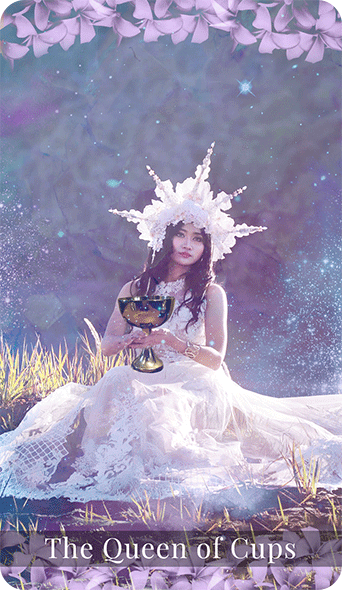
The Queen of Cups sits upon a throne adorned with cherubs and waves, her cup brimming with water—a symbol of her unshakable emotional depth. Unlike other court cards who may wield their power through action or intellect, she rules through feeling. Her gaze is soft yet piercing, suggesting an intuitive awareness that transcends logic. In her hands, the cup isn’t just a vessel; it’s a reflection of her soul—transparent, vulnerable, and overflowing with compassion.
This card often appears when emotional intelligence is at its peak. The Queen of Cups doesn’t just listen; she *feels* what you’re saying before you’ve even spoken. Her presence is like a sanctuary, a place where tears are met with understanding and joy is celebrated with genuine enthusiasm. Yet, this very gift can become a trap when her kindness is mistaken for weakness or when her emotional generosity is taken for granted.
Too Nice for Your Own Good: The Shadow Side of the Queen
There’s a fine line between kindness and self-abandonment, and the Queen of Cups often walks it without realizing. Her desire to soothe, to heal, and to nurture can lead her to suppress her own needs in favor of others’. This isn’t just about people-pleasing—it’s about a deep-seated belief that her worth is tied to how much she can give. When taken to an extreme, her “too nice” nature can manifest as:
- Emotional Drain: Constantly absorbing others’ pain without replenishing her own emotional reserves.
- Boundary Erosion: Saying “yes” when she means “no,” leading to resentment or burnout.
- Self-Sacrifice as Identity: Defining herself solely through her ability to care for others, leaving little room for personal desires.
Imagine a garden hose left running unattended. The water flows endlessly, nourishing the plants around it, but the hose itself begins to fray, crack, and eventually breaks. The Queen of Cups, in her quest to nourish everyone, risks becoming the hose—stretched thin, losing her essence, and unable to sustain her own growth.
The Art of Nurturing Without Neglecting Yourself
So how does one embody the Queen of Cups’ compassion without falling into the trap of self-sacrifice? The key lies in discernment. True nurturing isn’t about endless giving; it’s about giving with intention. Here’s how to strike that balance:
1. Fill Your Cup First: The Queen of Cups’ cup overflows because she’s constantly replenished. Practice self-care not as an afterthought, but as a non-negotiable ritual. Whether it’s meditation, journaling, or simply saying “no” to one extra commitment, prioritize your emotional well-being.
2. Set Emotional Boundaries: Not every emotional burden needs to be yours to carry. Learn to listen without absorbing. A simple phrase like, “I hear you, and I’m here for you, but I can’t take this on right now,” can be a powerful act of self-preservation.
3. Reframe Your Kindness: Instead of measuring your worth by how much you give, focus on the quality of your presence. A single, deeply attentive conversation can be more meaningful than hours of half-hearted support.
4. Embrace Vulnerability as Strength: The Queen of Cups’ power lies in her emotional honesty. Use this energy to express your needs openly, even if it feels uncomfortable. True connection thrives on authenticity, not perfection.
The Queen of Cups in Love and Relationships
In matters of the heart, the Queen of Cups shines as a beacon of unconditional love—but she must be cautious of becoming a doormat. Her relationships thrive when built on mutual respect, where her nurturing nature is met with appreciation, not exploitation. If you resonate with her energy, ask yourself:
- Am I staying in a relationship out of guilt rather than genuine love?
- Do I feel drained after giving emotional support, or do I feel fulfilled?
- Is my partner meeting me halfway, or am I carrying the emotional labor alone?
Her reversed energy might signal emotional manipulation, where her kindness is weaponized against her, or where she’s the one doing all the emotional heavy lifting without reciprocity. In such cases, it’s time to ask: Is this love, or is this a one-way street?
Career and Ambition: Where the Queen of Cups Meets the Real World
Professionally, the Queen of Cups excels in roles that require empathy, intuition, and emotional intelligence—think therapists, counselors, teachers, or creative fields like writing and art. However, her “too nice” tendency can lead her to undervalue her contributions or tolerate toxic work environments where her kindness is mistaken for a lack of ambition.
If you identify with her energy, consider:
- Negotiating your worth: Just because you’re kind doesn’t mean you should accept unfair treatment.
- Channeling her energy into leadership: Imagine a workplace where empathy is a strength, not a weakness.
- Finding your voice: The Queen of Cups has a quiet power—learn to wield it confidently.

The Reversed Queen of Cups: When Kindness Becomes a Cage
When the Queen of Cups appears reversed, her energy takes a darker turn. She may become overly dependent on others’ approval, losing herself in the process. Her emotions, once a source of strength, now feel like a storm she can’t control. She might:
- Suppress her true feelings to avoid conflict, leading to passive-aggressive behavior.
- Become manipulative, using guilt or emotional blackmail to get her way.
- Feel emotionally exhausted, unable to connect with her own desires.
This version of the Queen is a reminder that kindness without boundaries is not sustainable. It’s a call to reclaim your power—not by becoming cold or distant, but by learning to love yourself as fiercely as you love others.
Conclusion: The Queen’s Lesson—Love Yourself as You Love Others
The Queen of Cups is a paradox: a symbol of infinite compassion and a cautionary tale about the cost of self-sacrifice. Her energy teaches us that nurturing others is a beautiful gift, but only if we remember to nurture ourselves first. Being “too nice” isn’t a flaw—it’s an invitation to explore where your kindness ends and your needs begin.
So the next time you find yourself pouring from an empty cup, pause. Ask yourself: Am I giving from a place of love, or from a place of obligation? The Queen of Cups’ greatest magic isn’t in her ability to heal others—it’s in her power to remind us that we, too, deserve the same depth of care we so freely give.
Embrace her wisdom, but don’t let her become your undoing. After all, even the most nurturing queens need a throne to call their own.
FAQ
What does the Queen of Cups represent in tarot?
The Queen of Cups represents emotional intelligence, intuition, and nurturing qualities, but also warns against self-sacrifice.
How can I embody the Queen of Cups without losing myself?
Focus on self-care, set emotional boundaries, and ensure your kindness is reciprocated in relationships.
Leave a Reply