Short Answer
Welcome to a deep exploration of The Rider Tarot – The Classic Deck, one of the most iconic and influential tarot decks in history. In this guide, you’ll uncover the rich symbolism, historical significance, and enduring appeal of this legendary deck. Whether you’re a seasoned tarot reader or a curious newcomer, you’ll gain insights into its design, philosophy, and the profound metaphors that make it a timeless tool for divination and self-reflection.
The Origins and Legacy of the Rider Tarot
The Rider Tarot, often referred to as the Rider-Waite-Smith Tarot, traces its roots back to 1909 when it was first published by the Rider Company in London. Designed by artist Pamela Colman Smith under the guidance of mystic A.E. Waite, this deck revolutionized tarot by introducing vivid, narrative-driven imagery that departed from the traditional, more abstract designs of earlier decks. Its accessibility and depth made it a cornerstone for modern tarot practice, bridging esoteric traditions with accessible symbolism.
The deck’s name derives from its publisher, William Rider & Son, but its true legacy lies in its ability to translate complex spiritual and psychological concepts into visual metaphors. Unlike earlier decks that relied heavily on allegory, the Rider Tarot’s illustrations tell stories, inviting readers to engage with the cards on both an intellectual and emotional level. This innovation cemented its place as the most widely used tarot deck in the world, inspiring countless variations and adaptations.
Visual Language: Symbolism and Metaphor
At the heart of the Rider Tarot’s appeal is its masterful use of symbolism. Each card is a tapestry of imagery, where every element—from colors and objects to gestures and expressions—carries meaning. For example, The High Priestess card features a veiled figure seated between two pillars, symbolizing intuition, mystery, and the threshold between the conscious and subconscious. The crescent moon at her feet reinforces her connection to lunar cycles and feminine wisdom.
The Death card, often misunderstood, is a prime example of the deck’s metaphorical depth. Far from representing literal demise, it illustrates transformation, endings, and rebirth through the image of a skeletal figure riding a white horse, a motif drawn from medieval iconography. The falling figures in the background suggest the inevitability of change, while the rising sun in the distance hints at renewal. Such layers of meaning encourage readers to look beyond surface interpretations and explore the card’s deeper philosophical implications.
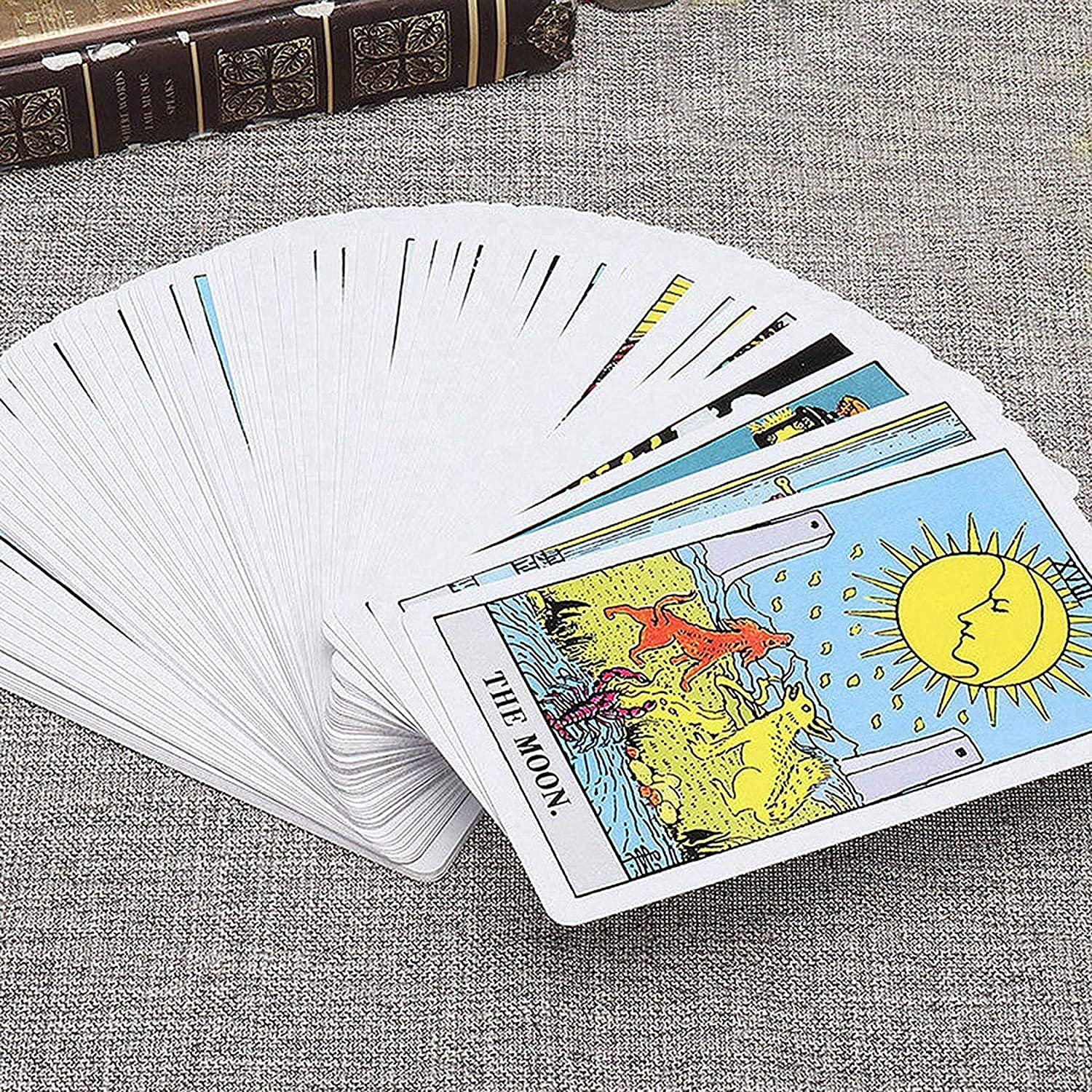
The Major Arcana: A Journey Through Archetypes
The Major Arcana consists of 22 cards, each representing a significant life lesson or spiritual milestone. These cards form a narrative arc, guiding the reader through a journey of self-discovery. For instance, The Fool begins the journey as an innocent, carefree figure stepping off a cliff, embodying spontaneity and new beginnings. By contrast, The World concludes the sequence with a dancing figure surrounded by a laurel wreath, symbolizing completion, wholeness, and the cyclical nature of existence.
Each Major Arcana card is rich with allegory. The Lovers card, often associated with romantic love, actually represents choices, harmony, and alignment with one’s higher self. The angel above the couple is Raphael, the archangel of healing, suggesting that true love is a union of souls rather than merely a physical connection. Similarly, The Tower depicts a crumbling structure struck by lightning, illustrating the sudden upheaval that forces us to confront uncomfortable truths. These cards serve as mirrors, reflecting the universal experiences of humanity.
The Minor Arcana: Everyday Mysticism
While the Major Arcana deals with grand themes, the Minor Arcana focuses on the nuances of daily life. Divided into four suits—Wands, Cups, Swords, and Pentacles—each suit corresponds to an element (fire, water, air, and earth, respectively) and governs different aspects of human experience. The Wands represent creativity and passion, Cups deal with emotions and relationships, Swords explore intellect and conflict, and Pentacles focus on material wealth and practicality.
The Minor Arcana’s strength lies in its ability to ground abstract concepts in tangible imagery. For example, the Three of Cups shows three women celebrating with raised glasses, symbolizing friendship, joy, and community. The Five of Pentacles depicts two figures in tattered clothing, walking past a stained-glass window, representing financial hardship or feeling excluded. These cards remind us that spirituality is not separate from our daily lives but woven into its fabric.

Why the Rider Tarot Endures: Universality and Adaptability
One of the Rider Tarot’s most compelling features is its adaptability. Despite being over a century old, its imagery resonates across cultures and generations. Artists, writers, and spiritual seekers continue to reinterpret its symbols, creating new decks that honor its original vision while infusing it with contemporary perspectives. The deck’s language is universal because it taps into archetypal themes—love, loss, ambition, and transformation—that are inherent to the human experience.
Moreover, the Rider Tarot’s accessibility makes it an ideal tool for both beginners and advanced practitioners. Its clear, story-like illustrations provide a foundation for learning, while its depth allows for endless exploration. Whether used for divination, meditation, or psychological insight, the deck serves as a bridge between the mundane and the mystical, inviting users to see the extraordinary in the ordinary.
Practical Uses: Beyond Divination
While the Rider Tarot is renowned for its divinatory powers, its applications extend far beyond fortune-telling. Many use it as a tool for journaling, where they explore a card’s meaning in relation to their personal experiences. Others employ it in meditation, focusing on a single card to uncover subconscious insights or creative inspiration. Therapists and coaches often integrate tarot into their practices, using the cards as prompts for self-reflection and problem-solving.
The deck’s versatility also makes it a favorite for artists and writers. The vivid imagery can spark ideas for stories, paintings, or even song lyrics. For instance, a writer might draw the Ten of Swords and craft a narrative around themes of betrayal and recovery, while an artist might use the Eight of Wands to explore the concept of speed and urgency in motion. The Rider Tarot becomes a wellspring of creativity, its symbols acting as a visual language for the imagination.
Conclusion
The Rider Tarot – The Classic Deck is more than a collection of illustrated cards; it is a gateway to deeper understanding, a mirror for the soul, and a testament to the power of symbolism. Its enduring appeal lies in its ability to distill complex ideas into accessible, evocative imagery that speaks to the human condition. Whether you’re drawn to its historical significance, its artistic brilliance, or its practical applications, the Rider Tarot offers a journey worth taking—one that invites you to explore the mysteries of life with curiosity and wonder.
FAQ
What is the Rider Tarot?
The Rider Tarot is a classic tarot deck designed by Pamela Colman Smith in 1909, known for its rich symbolism and narrative imagery.
How is the Rider Tarot used?
It is used for divination, meditation, and as a creative tool in various artistic practices.
What are the Major and Minor Arcana in the Rider Tarot?
The Major Arcana consists of 22 cards that represent significant life lessons, while the Minor Arcana consists of 56 cards that focus on everyday experiences.
Leave a Reply