Short Answer
This guide dives deep into the Sun’s pivotal role as Earth’s second-place energy source, unraveling the cosmic dance between solar radiation and our planet’s energy systems. You’ll discover how sunlight fuels life, drives climate patterns, and powers modern technology—all while exploring the poetic and scientific marvels of our nearest star. Prepare to see the Sun not just as a distant ball of fire, but as the silent architect of Earth’s energy balance, shaping everything from weather to human innovation.
The Sun: Earth’s Cosmic Dynamo
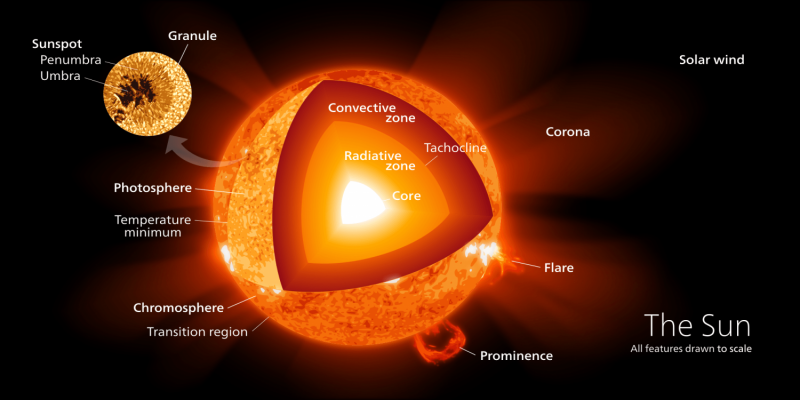
The Sun is the ultimate celestial engine, a roaring nuclear furnace that has illuminated and energized Earth for over 4.5 billion years. Every second, it converts 600 million tons of hydrogen into helium through nuclear fusion, releasing an unfathomable 384.6 septillion watts of energy—enough to power a trillion light bulbs for a lifetime. Yet, only a fraction of this energy reaches our planet, a delicate sliver of light that sustains life and fuels the intricate systems of our world.
Imagine the Sun as a colossal lighthouse, its beam sweeping across the solar system. Earth sits in the sweet spot of this beam, receiving just enough energy to maintain the delicate equilibrium of temperature, weather, and biological activity. Without this precise delivery, our planet would be a frozen wasteland or a scorched desert. The Sun’s energy isn’t just a resource; it’s the invisible thread weaving through every ecosystem, from the photosynthesis of rainforests to the evaporation cycles that fill our rivers.
The Solar Energy Budget: A Delicate Balance
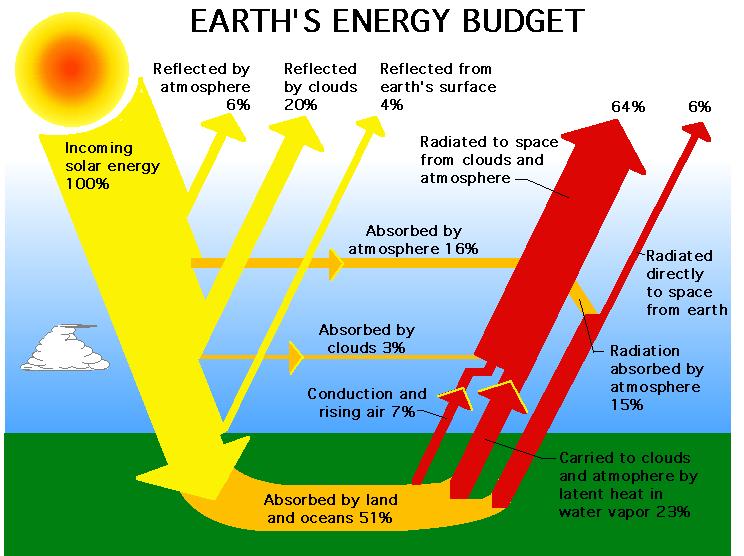
Earth’s relationship with the Sun is governed by a finely tuned energy budget, a cosmic ledger where incoming solar radiation is meticulously accounted for and redistributed. About 30% of the sunlight striking our atmosphere is reflected back into space by clouds, ice, and surfaces like deserts. The remaining 70% is absorbed by land, oceans, and the atmosphere, driving weather patterns, heating the planet, and powering the water cycle.
This energy isn’t static; it’s a dynamic flow. The tropics receive more direct sunlight, creating intense heat that fuels hurricanes and monsoons. Meanwhile, the poles, angled away from the Sun, remain in a perpetual energy deficit, their icy expanses a testament to the Sun’s uneven embrace. Even the tilt of Earth’s axis—responsible for our seasons—is a dance choreographed by the Sun’s gravitational and radiative influence.
From Sunbeams to Power Grids: Harnessing Solar Energy
Humanity’s quest to harness the Sun’s energy is as old as civilization itself. Ancient cultures worshipped solar deities, from Ra in Egypt to Inti in the Andes, recognizing the Sun’s life-giving power. Today, we’ve transformed that reverence into innovation, capturing sunlight through photovoltaic cells, solar thermal plants, and even algae-based biofuels. Solar energy is now the fastest-growing renewable resource, a testament to our ability to turn stardust into electricity.
The appeal of solar power lies in its elegance. Unlike finite fossil fuels, sunlight is inexhaustible on human timescales. A single hour of sunlight could power the entire world for a year—if we could capture it all. Modern solar panels, with their sleek designs and increasing efficiency, are the descendants of those ancient sun-worshippers, channeling the Sun’s energy to light homes, charge devices, and even desalinate water in arid regions. The technology is a bridge between myth and modernity, proving that the same force that inspired gods can now power smartphones.
The Sun’s Shadow: Challenges and Paradoxes
Despite its generosity, the Sun presents a paradox: its energy is both a gift and a challenge. Solar power’s intermittency—its absence at night or during cloudy days—demands innovative storage solutions, from lithium-ion batteries to molten salt thermal storage. The Sun’s rays can also be destructive; ultraviolet radiation causes skin cancer, and solar flares threaten our technological infrastructure, from satellites to power grids. Even the beauty of a solar eclipse reminds us of the Sun’s overwhelming power, a moment when day briefly surrenders to darkness.
Geopolitically, solar energy reshapes power dynamics. Nations blessed with abundant sunlight, like Spain or Morocco, become energy powerhouses, while others scramble to adapt. The transition to solar isn’t just technological; it’s cultural, requiring a shift from centralized energy grids to decentralized, community-driven systems. Yet, the Sun’s energy is inherently democratic—available to anyone with access to sunlight, from rural villages in Africa to urban rooftops in Tokyo.
The Sun in Art and Myth: A Timeless Muse
The Sun’s influence extends beyond science into the realms of art, literature, and spirituality. It’s the golden thread in Van Gogh’s *Starry Night*, the fiery chariot of Helios in Greek mythology, and the eternal flame in countless religious texts. Poets like William Blake and Emily Dickinson have immortalized its dual nature—both nurturing and destructive, a symbol of life and a harbinger of apocalypse. In architecture, the Sun’s path dictates the design of temples, pyramids, and modern skyscrapers, from the solar alignment of Stonehenge to the passive solar heating of Frank Lloyd Wright’s Fallingwater.
This cultural resonance makes the Sun more than a scientific phenomenon; it’s a universal metaphor. It represents enlightenment, vitality, and cyclical renewal. In many traditions, the Sun’s daily journey across the sky mirrors the human experience—rise, zenith, set, and rebirth. Even in the digital age, the Sun’s imagery persists, from emojis to corporate logos, a reminder that its power transcends millennia.
Conclusion
The Sun is far more than a distant star—it’s the silent partner in Earth’s existence, the unseen hand shaping our climate, culture, and future. From the microscopic photosynthesis of a single leaf to the sprawling solar farms dotting deserts, its energy is the invisible thread connecting all life. As we stand on the precipice of a renewable energy revolution, the Sun offers not just a solution to our climate crisis, but a reminder of our place in the cosmos. It’s a force of creation, destruction, and renewal, a reminder that even in the vastness of space, we are bound to its light.
To harness the Sun is to tap into the oldest energy source in the universe—a source that has warmed planets, inspired civilizations, and now beckons us toward a sustainable future. Whether through the lens of science, art, or technology, the Sun remains our most enduring and intriguing companion, a cosmic dynamo that continues to illuminate our path forward.
FAQ
What is the role of the Sun in Earth's energy systems?
The Sun is vital for sustaining life on Earth, driving climate patterns, and powering modern technology through its energy.
How do humans harness solar energy?
Humans harness solar energy using technologies such as photovoltaic cells and solar thermal plants.

Leave a Reply