Short Answer
This guide explores the most influential tarot decks—Rider-Waite, Thoth, and Marseille—unpacking their origins, visual language, and symbolic depth. Whether you’re a beginner drawn to the vivid imagery of the Rider-Waite or a seasoned reader intrigued by the esoteric layers of the Thoth, understanding these decks will deepen your connection to the cards. You’ll discover how each system reflects different philosophical and cultural perspectives, and why their popularity endures across centuries. By the end, you’ll have a clearer sense of which deck resonates with your personal journey.
The Rider-Waite Tarot: A Gateway to Symbolic Storytelling
The Rider-Waite tarot deck, first published in 1909, revolutionized modern tarot by introducing fully illustrated Minor Arcana cards. Created by A.E. Waite and artist Pamela Colman Smith, this deck transformed tarot from a simple card game into a profound tool for divination and self-reflection. Unlike earlier decks where only the Major Arcana featured images, Rider-Waite’s Minor Arcana—such as the Three of Cups or the Five of Pentacles—depict vivid scenes that tell stories, making the cards more accessible and emotionally resonant.
Central to the Rider-Waite system is its Christian and Kabbalistic symbolism, woven into the imagery of each card. For example, the High Priestess sits between two pillars labeled B and J, representing Boaz and Jachin from the Temple of Solomon, while the Magician’s table holds tools aligned with the four elements. This blend of mysticism and narrative makes the deck ideal for beginners, as the visual cues guide interpretation without requiring extensive prior knowledge. Many modern decks, including popular variations like the Radiant Rider-Waite, are based on this foundational structure, proving its lasting influence.
The Thoth Tarot: A Bridge Between Occult Philosophy and Modern Esotericism
Designed by Aleister Crowley and Lady Frieda Harris between 1938 and 1943, the Thoth tarot is a masterpiece of occult art and philosophy. Unlike the Rider-Waite’s narrative approach, the Thoth deck is densely packed with astrological, alchemical, and Thelemic symbolism, reflecting Crowley’s belief in tarot as a map of the human psyche and spiritual evolution. Each card is a microcosm of cosmic forces, with titles like “The Lord of Illusion” or “The Daughter of the Firmament” hinting at deeper layers of meaning.
A key feature of the Thoth deck is its use of the Tree of Life from Kabbalah, assigning each card to a path or sephirah. For instance, the Fool is linked to the path between Kether (Crown) and Chokmah (Wisdom), symbolizing the journey of consciousness. The artwork, rendered in bold, surreal colors and geometric patterns, invites contemplation rather than straightforward storytelling. This makes the Thoth deck less intuitive for beginners but invaluable for advanced readers seeking to explore tarot as a tool for spiritual transformation. Its complexity also explains why it appeals to those fascinated by occult history and the intersection of mysticism with psychology.
The Marseille Tarot: A Timeless Tradition Rooted in History
The Marseille tarot is one of the oldest surviving tarot decks, with roots tracing back to 15th-century Italy before evolving in France during the 17th and 18th centuries. Unlike the Rider-Waite and Thoth, the Marseille deck retains a more austere, symbolic style, with only the Major Arcana fully illustrated and the Minor Arcana featuring simple, numbered pips. This minimalist approach emphasizes the archetypal power of the cards rather than narrative detail, making it a favorite among purists and those drawn to traditional European esotericism.
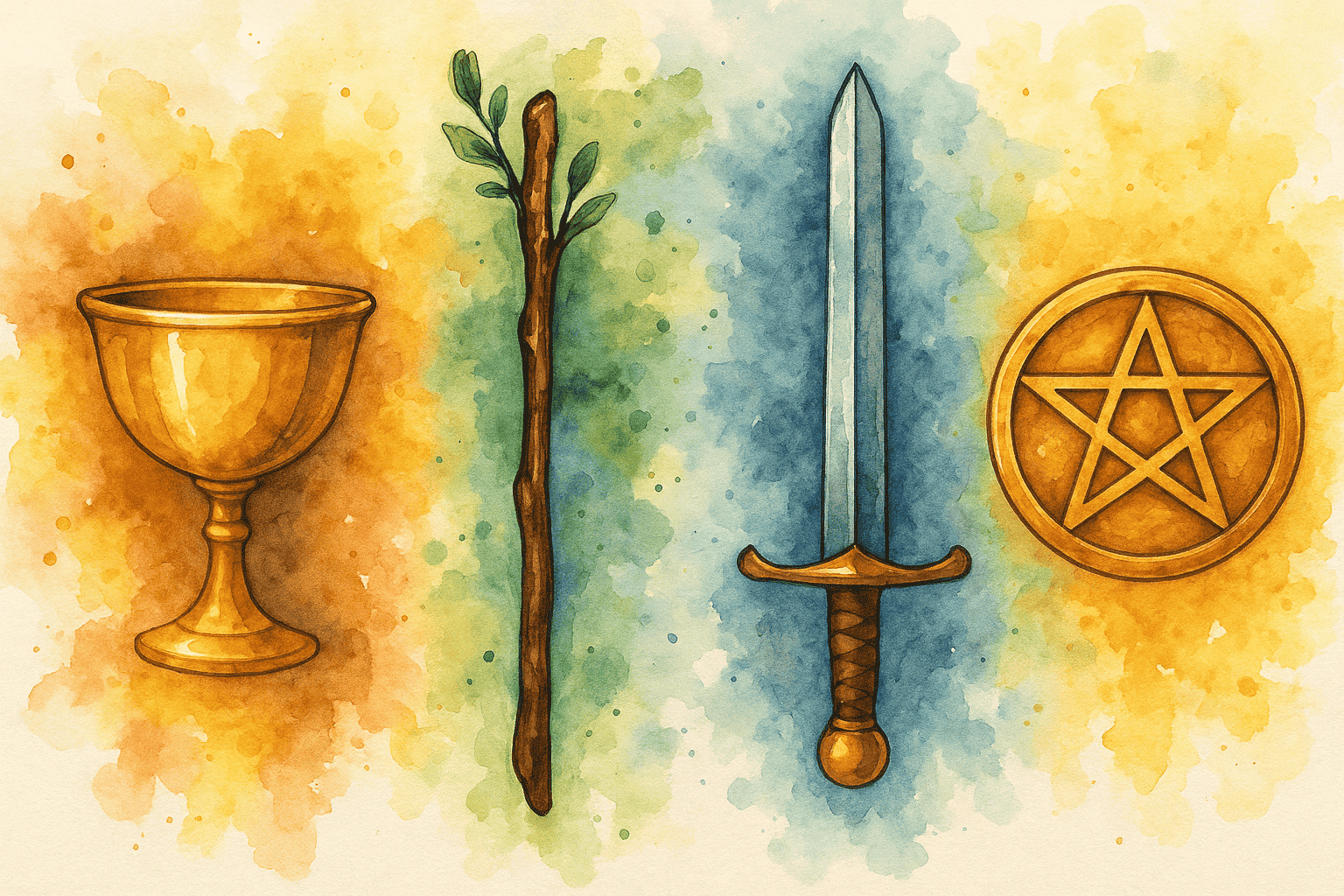
One of the most distinctive aspects of the Marseille tarot is its use of pips—suits represented by simple symbols like swords, cups, coins, and batons—without the elaborate scenes found in Rider-Waite. For example, the Two of Swords shows two crossed blades with a blindfolded woman, evoking themes of indecision and duality. The deck’s lack of overt imagery forces readers to rely on intuition and traditional meanings, which are often passed down through oral tradition or written guides. This has led to regional variations, such as the Jean Noblet or Nicolas Conver decks, each offering subtle differences in symbolism and style. The Marseille tarot’s enduring appeal lies in its connection to the deck’s historical roots, offering a bridge to the Renaissance and the early days of tarot as a divinatory tool.
Comparing the Decks: Which One Speaks to You?
Choosing between the Rider-Waite, Thoth, and Marseille tarot often comes down to personal preference and your goals as a reader. If you’re new to tarot, the Rider-Waite’s vivid imagery and clear symbolism make it an excellent starting point. Its structured approach to storytelling helps beginners memorize card meanings and build confidence in their interpretations. In contrast, the Thoth deck appeals to those drawn to occultism, astrology, and the deeper mysteries of the universe. Its complexity rewards patience and study, making it ideal for readers who view tarot as a spiritual practice rather than just a divination tool.
The Marseille tarot, with its minimalist aesthetic and historical pedigree, attracts readers who appreciate tradition and simplicity. Its lack of elaborate illustrations encourages a more intuitive, personal connection to the cards, where the reader’s interpretation takes precedence over predefined symbolism. Some readers even combine elements from all three decks, using the Rider-Waite for its accessibility, the Thoth for its depth, and the Marseille for its historical resonance. Ultimately, the best deck is the one that resonates with your intuition and aligns with your spiritual or philosophical journey.
Why These Decks Continue to Fascinate Us
The enduring popularity of the Rider-Waite, Thoth, and Marseille tarot decks speaks to something fundamental about human nature: our need for meaning, connection, and mystery. Each deck offers a different lens through which to view the world, whether it’s the Rider-Waite’s accessible storytelling, the Thoth’s esoteric depth, or the Marseille’s historical continuity. Their symbols—whether the High Priestess’s veil, Crowley’s intertwined serpents, or the Marseille’s crossed swords—tap into universal archetypes that transcend time and culture.
Moreover, these decks reflect the evolution of esoteric thought itself. The Rider-Waite emerged during the late Victorian era, a time when spiritualism and occult revival were in vogue. The Thoth, created in the early 20th century, embodies the radical individualism and syncretism of the modern occult movement. The Marseille, with its centuries-old roots, connects us to the Renaissance and the birth of tarot as we know it. By studying these decks, we’re not just learning to read cards—we’re engaging with the history of ideas, art, and spirituality. Their continued relevance reminds us that tarot is more than a tool; it’s a living tradition that adapts to each generation while retaining its ancient wisdom.
Conclusion
Whether you’re drawn to the storytelling clarity of the Rider-Waite, the occult depth of the Thoth, or the historical resonance of the Marseille, each tarot deck offers a unique path to self-discovery and divination. The Rider-Waite serves as a welcoming introduction, the Thoth as a challenge for the intellectually curious, and the Marseille as a bridge to the past. By understanding their differences and histories, you can choose the deck—or even a blend of them—that best aligns with your spiritual journey. Remember, the true power of tarot lies not in the cards themselves, but in the insights and connections you forge through them. As you explore these decks, let their symbols guide you toward deeper understanding, both of the cards and of yourself.
FAQ
What are the main differences between the Rider-Waite, Thoth, and Marseille tarot decks?
The Rider-Waite deck is known for its vivid imagery and narrative approach, making it great for beginners. The Thoth deck is packed with complex symbolism and is suited for advanced readers interested in occult philosophy. The Marseille deck features a minimalist design, emphasizing archetypes over storytelling.
Which tarot deck should I choose as a beginner?
The Rider-Waite tarot is highly recommended for beginners due to its accessible visuals and clear symbolism.
Leave a Reply