Short Answer
Welcome to this in-depth guide on the V Tarot card, also known as The Hierophant. Here, you’ll explore the symbolism, meanings, and challenges this Major Arcana card presents. Whether you’re a seasoned tarot reader or a curious beginner, this article will help you understand The Hierophant’s role in readings and how it interacts with other cards. By the end, you’ll be able to pose playful questions and recognize the potential challenges this card introduces in your tarot journey.
The Hierophant’s Roman Numeral: Understanding “V”
The Hierophant is the fifth card in the Major Arcana, represented by the Roman numeral “V.” In tarot, the number five often signifies conflict, change, or a crossroads—concepts that resonate deeply with The Hierophant’s themes. This number suggests a moment of decision, where tradition and innovation clash, or where established beliefs are questioned. The Hierophant, as the fifth card, acts as a bridge between the spiritual (cards 1-4) and the material (cards 6-10), embodying the tension between following rules and forging your own path.
When The Hierophant appears in a reading, it may indicate a need to evaluate your relationship with authority, tradition, or dogma. The Roman numeral “V” invites you to ask: Are you blindly following rules, or are you questioning them? This card challenges you to find a balance between structure and personal freedom.
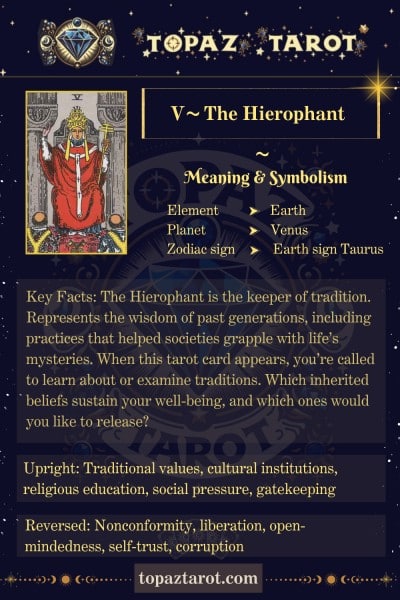
Symbolism and Imagery: Decoding The Hierophant’s Visual Language
The Hierophant is rich in symbolism, each element offering clues to its meaning. Traditionally, the card depicts a religious figure seated between two pillars, often in a church or temple setting. He wears a triple crown, symbolizing his role as a spiritual leader, and holds a scepter or staff, representing his authority. Two acolytes kneel before him, suggesting the transmission of knowledge or tradition.
The two pillars he sits between represent duality—light and dark, masculine and feminine, or the known and the unknown. This duality is central to The Hierophant’s message: How do you reconcile opposing forces in your life? The crossed keys at his feet symbolize hidden knowledge, inviting you to explore deeper truths beyond surface-level beliefs. The crossed keys also hint at a challenge: Are you holding onto secrets, or are you ready to unlock new understandings?
In modern tarot decks, The Hierophant’s imagery may vary, but the core themes remain. Some decks depict the figure in a less traditional setting, emphasizing personal interpretation over rigid dogma. This evolution reflects the card’s dual nature: it can represent both the comfort of tradition and the discomfort of questioning it.

Tradition vs. Innovation: The Hierophant’s Core Dilemma
At its heart, The Hierophant embodies the tension between tradition and innovation. This card asks you to examine your beliefs and values: Are you clinging to outdated traditions, or are you embracing change without reflection? The Hierophant doesn’t advocate for blind conformity, nor does it reject tradition outright. Instead, it encourages you to discern which aspects of tradition serve you and which may be holding you back.
In a reading, The Hierophant might appear when you’re facing a decision that involves authority figures, such as a mentor, boss, or religious leader. It could signal a need to seek guidance or, conversely, to question the advice you’re receiving. For example, if you’re considering a career change but feel pressured to follow a family expectation, The Hierophant highlights this internal conflict. The card challenges you to ask: Whose expectations am I fulfilling, and whose dreams am I ignoring?
This duality also extends to spirituality. The Hierophant may appear when you’re exploring new spiritual paths or questioning your current beliefs. It asks you to consider: Am I seeking truth, or am I seeking comfort in familiar dogma? The card doesn’t provide easy answers but instead invites you to explore your own relationship with spirituality and authority.
Posing a Playful Question: What If The Hierophant Were a Rebel?
To deepen your understanding of The Hierophant, try reframing it as a playful thought experiment: What if The Hierophant were a rebel instead of a traditionalist? Imagine the card’s figure breaking free from the confines of the temple, challenging the very institutions he represents. How would this change the card’s message?
This exercise encourages you to see The Hierophant not as a rigid authority figure but as a guide who encourages critical thinking. It’s a reminder that tradition is only valuable if it serves a purpose. For example, if you’re stuck in a job because “it’s what you’ve always done,” The Hierophant might ask: Is this tradition serving you, or are you serving it? By playing with this idea, you can uncover hidden layers of meaning in the card and apply them to your own life.
Another playful question to ask is: What would happen if The Hierophant and The Fool (card 0) had a conversation? The Fool represents spontaneity and new beginnings, while The Hierophant represents structure and tradition. Their interaction could symbolize the balance between taking risks and honoring wisdom. This thought experiment can help you navigate situations where you feel torn between following your heart and adhering to expectations.

Potential Challenges: When The Hierophant Becomes a Trap
While The Hierophant offers valuable insights, it can also present challenges if misinterpreted or overemphasized. One common pitfall is using The Hierophant as an excuse to avoid change. For example, if you’re in a toxic relationship but stay because “it’s tradition” or “it’s what’s expected,” The Hierophant’s energy can become a cage rather than a guide. The card’s message is not to blindly follow tradition but to question it thoughtfully.
Another challenge is the fear of authority. If The Hierophant appears in a reading about a situation involving a boss, parent, or mentor, you might feel overwhelmed by their influence. This card can amplify feelings of powerlessness, making it hard to assert your own needs. To counter this, ask yourself: What part of this dynamic is within my control? The Hierophant doesn’t have to represent an external authority—it can also symbolize your own internalized beliefs or fears.
The Hierophant can also highlight rigidity in your thinking. If you’re overly attached to a particular belief system or way of doing things, this card may appear to nudge you toward flexibility. For instance, if you’re resistant to new ideas in a creative project because “it’s not how it’s done,” The Hierophant challenges you to consider alternative approaches. The key is to find a middle ground between honoring tradition and embracing innovation.
Conclusion: Embracing The Hierophant’s Wisdom
The Hierophant is a card of deep reflection, tradition, and the delicate balance between structure and freedom. As the fifth card in the Major Arcana, it marks a pivotal moment where you must evaluate your beliefs, question authority, and decide whether to uphold tradition or forge your own path. By understanding its symbolism, posing playful questions, and recognizing its potential challenges, you can harness The Hierophant’s energy to make more informed decisions in your life.
Remember, The Hierophant isn’t here to dictate your choices but to guide you in exploring them. Whether it appears in a reading about career, relationships, or spirituality, its message is clear: Seek wisdom, question dogma, and find your own truth. By doing so, you’ll transform The Hierophant from a rigid authority figure into a compassionate mentor, helping you navigate life’s complexities with clarity and confidence.
FAQ
What does The Hierophant card represent in tarot?
The Hierophant card represents tradition, authority, and the quest for spiritual guidance, often highlighting the balance between following established beliefs and embracing personal freedom.
How does The Hierophant interact with other tarot cards?
The Hierophant can signify a need to evaluate relationships with authority figures and may encourage questioning of established norms when it appears alongside other cards.
Leave a Reply