Short Answer
Welcome to a deep exploration of the VIII Tarot card—Strength. In this guide, you’ll uncover the rich symbolism, historical roots, and transformative power behind this Major Arcana card. From its vivid imagery to its profound life lessons, Strength offers a gateway to understanding inner resilience, compassion, and mastery over raw emotions. Whether you’re a seasoned tarot reader or a curious seeker, this article will illuminate the unique appeal of Strength and how it can inspire personal growth. Prepare to discover why this card stands out as a beacon of courage and emotional intelligence.
The Essence of Strength: A Fusion of Power and Compassion
The Strength card, numbered VIII in the Major Arcana, is often misunderstood as a card of brute force. However, its true essence lies in the mastery of inner power through gentleness and empathy. The card’s central imagery—a woman gently closing the jaws of a lion—symbolizes the triumph of compassion over aggression, patience over impulsiveness, and love over fear. This metaphor extends beyond the literal, teaching us that true strength is not about domination but about harnessing our emotions with wisdom and restraint.
The infinity symbol hovering above the woman’s head represents infinite potential and the eternal flow of energy. It suggests that Strength is not a finite resource but a continuous practice—one that requires balance and self-awareness. The lemniscate (infinity symbol) also hints at the cyclical nature of challenges and the importance of perseverance. By embracing this card’s energy, you learn to navigate life’s obstacles with grace rather than force, transforming obstacles into opportunities for growth.

Historical and Mythological Roots of Strength
The Strength card’s origins trace back to ancient myths and archetypal symbols. In Greek mythology, the hero Heracles (Hercules) is often associated with raw power, but it is his twelfth labor—capturing Cerberus, the three-headed guardian of the Underworld—where the theme of taming wild forces with wisdom emerges. Similarly, the biblical story of Daniel in the lions’ den underscores the power of faith and calm resolve in the face of danger. These narratives mirror the Strength card’s message: that courage is not about fighting but about inner mastery.
In tarot’s historical evolution, Strength was originally titled Fortitude in early decks like the Rider-Waite-Smith. This name emphasizes the card’s connection to moral and emotional fortitude rather than physical might. The card’s imagery has evolved over centuries, but its core theme remains consistent: the lion, often representing primal instincts or untamed emotions, is subdued not through violence but through a calm, steady hand. This evolution reflects humanity’s shifting understanding of power—from external conquest to internal harmony.
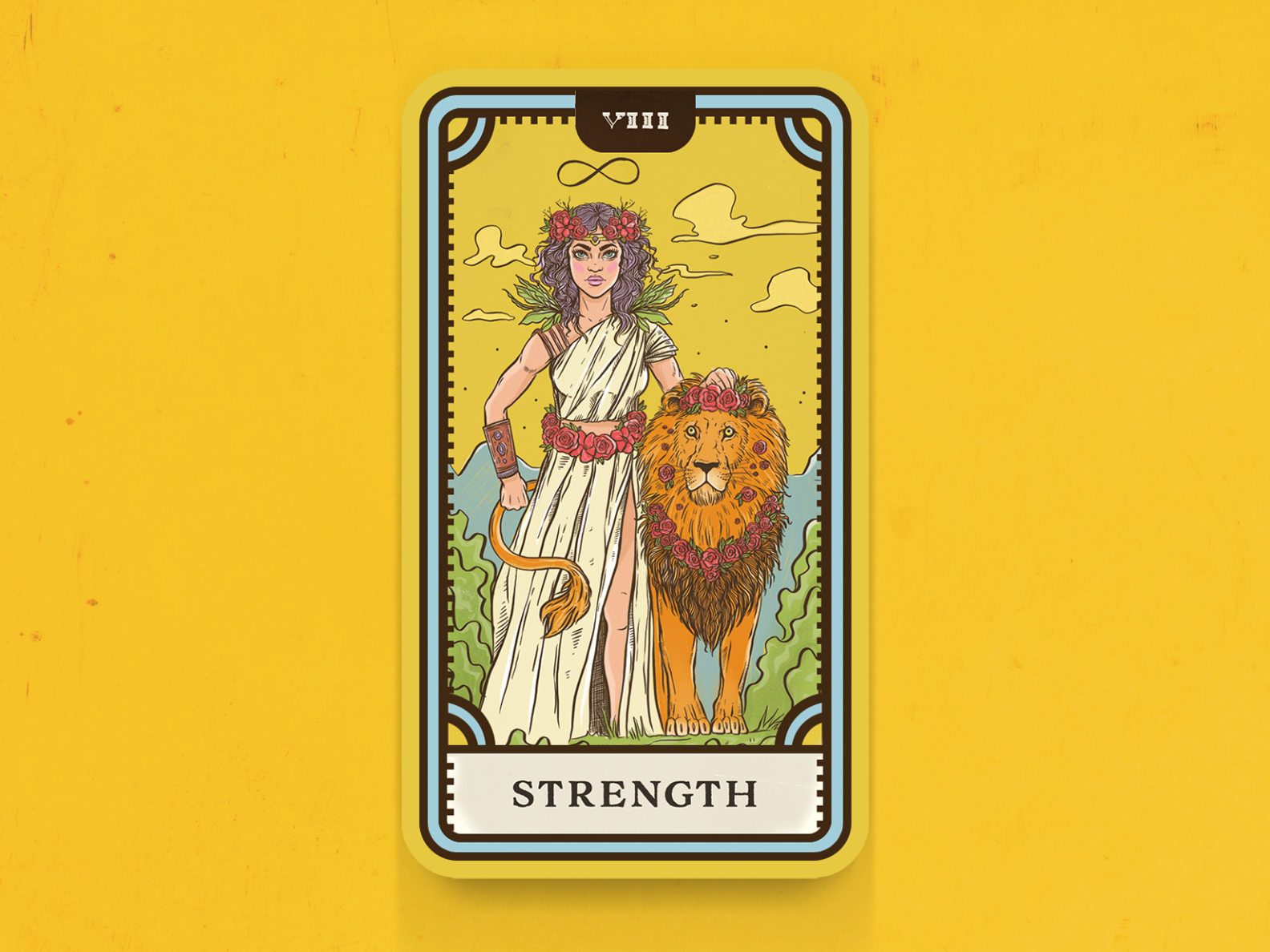
The Lion as a Symbol: Taming the Beast Within
The lion in the Strength card is far more than a mere animal—it is a metaphor for the untamed aspects of our psyche. This could be anger, fear, desire, or any raw emotion that threatens to overwhelm us. The card teaches that these emotions are not enemies to be destroyed but forces to be understood and guided. By approaching them with patience and empathy, we can transform chaos into clarity. The woman’s serene expression and gentle grip on the lion’s jaws symbolize the power of softness in achieving what force cannot.
This symbolism is particularly relevant in modern life, where stress and emotional triggers are common. The Strength card encourages us to pause and reflect before reacting. It asks: Can you meet your challenges with the same tenderness you’d offer a frightened child? The answer lies in recognizing that our “lions” are not threats but teachers, guiding us toward greater self-awareness. By mastering our inner beasts, we unlock a reservoir of resilience and creativity that brute force could never achieve.

Strength in Upright and Reversed Positions: A Dual Perspective
In a tarot reading, the position of the Strength card—upright or reversed—offers distinct insights. When upright, Strength radiates a message of courage, self-control, and emotional intelligence. It suggests that you are in a phase of life where patience and empathy are your greatest allies. This could manifest as overcoming a personal challenge with grace, mending a strained relationship through understanding, or simply finding the inner peace to navigate a difficult situation. The upright Strength card is a reminder that true power lies in restraint and compassion.
When reversed, Strength takes on a different hue, warning against the misuse of power or the suppression of emotions. It may indicate a tendency to overcontrol situations or people, leading to frustration or burnout. Alternatively, it could signal a lack of confidence in your ability to handle challenges, causing you to avoid necessary confrontations. The reversed Strength card invites introspection: Are you being too harsh with yourself or others? Are you ignoring your emotions until they erupt uncontrollably? This position calls for a reevaluation of how you wield your inner strength, urging you to find balance between assertion and surrender.
Practical Applications: How to Embrace Strength’s Energy
Incorporating the lessons of Strength into daily life can be transformative. Start by practicing mindfulness—observe your emotions without judgment, and notice how they influence your actions. When faced with a difficult situation, ask yourself: How can I respond with kindness rather than force? This might mean setting boundaries with gentleness, approaching conflicts with empathy, or simply taking a moment to breathe before reacting.
Strength also encourages self-compassion. Acknowledge that you are human, with flaws and vulnerabilities, and that growth comes from embracing these aspects of yourself. Journaling can be a powerful tool here; reflect on moments when you’ve successfully tamed your inner “lion” and celebrate those victories. Additionally, consider creative outlets like art or music, which allow you to channel raw emotions into something beautiful and meaningful.
In relationships, Strength teaches the power of active listening and patience. Whether it’s a disagreement with a partner, a misunderstanding with a friend, or a conflict at work, approaching the situation with an open heart can dissolve tension and foster deeper connections. Remember, the goal is not to “win” but to understand and grow together.
Conclusion: The Timeless Appeal of Strength
The Strength card is a timeless reminder that power is not found in domination but in harmony. Its imagery—a woman and a lion in a dance of mutual respect—captures the essence of what it means to be truly strong: the ability to face life’s challenges with courage, compassion, and an unshakable inner calm. Whether upright or reversed, Strength offers a mirror to our souls, reflecting both our potential for greatness and the areas where we can grow.
As you integrate the lessons of Strength into your life, you’ll find that the card’s energy is not just about overcoming obstacles but about transforming them. It teaches that the most formidable battles are often the ones we wage within ourselves—and that the greatest victories come from mastering our own minds and hearts. Embrace the Strength card’s wisdom, and you’ll discover a wellspring of resilience, creativity, and inner peace that will guide you through life’s journey.
FAQ
What does the Strength card symbolize?
The Strength card symbolizes inner resilience, compassion, and mastery over raw emotions.
How do the upright and reversed positions of Strength differ?
Upright, Strength signifies courage and emotional intelligence; reversed, it warns against misuse of power and emotional suppression.
Leave a Reply