Short Answer
Have you ever wondered why we use the word “Jumper” for both a piece of clothing and a celestial giant? Or why Jupiter, the largest planet in our solar system, shares its name with the king of the Roman gods? These terms might seem unrelated at first glance, but they reveal fascinating connections between language, mythology, and even fashion. In this guide, we’ll explore the dual meanings of “Jumper” and “Jupiter,” uncovering their historical roots, cultural significance, and unexpected parallels. By the end, you’ll see how these words bridge the gap between everyday life and the cosmos.
What Is a Jumper? The Clothing vs. The Spacecraft
A “Jumper” can mean two very different things depending on the context. In everyday language, a jumper refers to a sleeveless dress worn over a blouse or shirt, often associated with school uniforms or casual fashion. It’s a versatile piece that can be dressed up or down, making it a wardrobe staple for many. The term likely originates from the idea of “jumping” into the garment, as it’s typically pulled over the head.
But in the realm of space exploration, a “Jumper” takes on a completely different identity. NASA’s Juno spacecraft, launched in 2011, is a robotic explorer sent to study Jupiter. Named after the Roman goddess Juno (wife of Jupiter), the mission aims to unravel the mysteries of the gas giant’s atmosphere, magnetic field, and composition. The spacecraft’s name is a playful nod to mythology, as Juno was said to peer through clouds to uncover Jupiter’s secrets—a mission not unlike the spacecraft’s scientific goals.
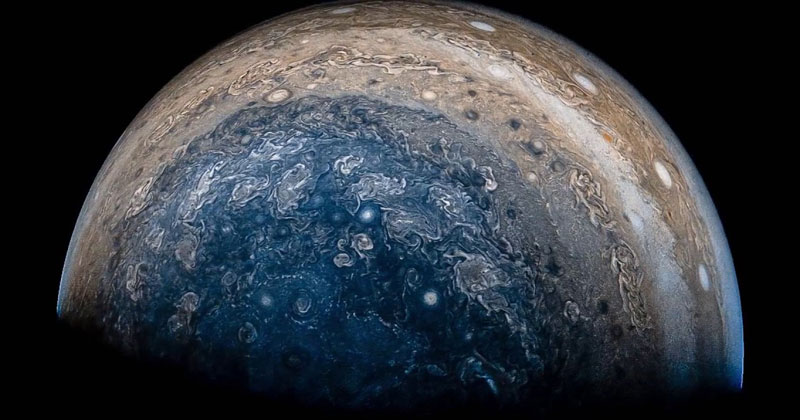
The Mythological Jupiter: King of the Gods
Jupiter, in Roman mythology, is the supreme god, equivalent to the Greek god Zeus. He ruled over the sky, thunder, and lightning, wielding a thunderbolt as his weapon. The planet Jupiter, named after this deity, is the largest in our solar system—a fitting tribute to a god of grandeur. The connection between the planet and the mythological figure is rooted in ancient astronomers’ practice of naming celestial bodies after deities, reflecting their awe and curiosity about the cosmos.
The symbol for Jupiter, ♃, is a stylized representation of the god’s lightning bolt. This symbol also appears in alchemy and astrology, where Jupiter is associated with expansion, growth, and abundance. In astrology, Jupiter is often called the “Great Benefic,” believed to bring luck, wisdom, and prosperity. Its influence is thought to expand opportunities and broaden horizons, much like the planet’s massive size compared to others in our solar system.

Jumper vs. Jupiter: A Linguistic Puzzle
The overlap between “Jumper” and “Jupiter” isn’t just a coincidence—it’s a linguistic puzzle that highlights how language evolves over time. The word “Jumper” for clothing likely comes from the verb “jump,” referring to the action of putting on the garment. Meanwhile, “Jupiter” stems from the Latin *Iuppiter*, combining *Iovis* (genitive of Jupiter) and *pater* (father), meaning “father Jove.” The shared spelling is purely coincidental, but it creates an amusing mental image: a cosmic jumper leaping across the sky!
This linguistic quirk invites a playful challenge: Can you think of other words that have entirely different meanings but share a spelling or sound? For example, “bark” can refer to a tree’s outer layer or the sound a dog makes. Similarly, “Jumper” and “Jupiter” serve as a reminder that language is full of surprises, where context is everything.
The Symbolism of Jupiter in Modern Culture
Beyond mythology and astronomy, Jupiter’s symbolism permeates modern culture. In literature, Jupiter often represents power, authority, and the unknown. For instance, in science fiction, the planet is a frequent setting for stories about exploration, colonization, or encounters with extraterrestrial life. Its massive size and stormy atmosphere—like the Great Red Spot—make it a compelling symbol of nature’s raw power.
In astrology, Jupiter’s influence is tied to personal growth and optimism. People born under its sign are often described as adventurous, philosophical, and open-minded. The planet’s energy is said to encourage risk-taking and learning, aligning with its mythological association with wisdom. Whether you’re a believer in astrology or not, Jupiter’s cultural footprint is undeniable.

Why Does This Matter? Connecting the Dots
Understanding the dual meanings of “Jumper” and “Jupiter” isn’t just an academic exercise—it’s a way to appreciate the interconnectedness of human knowledge. Language, mythology, and science often overlap in unexpected ways, revealing how our ancestors viewed the world. The jumper you wear might not have much in common with the Juno spacecraft, but both share a name that bridges the mundane and the cosmic.
This exploration also highlights the importance of curiosity. By asking questions about seemingly unrelated terms, we uncover layers of meaning that enrich our understanding of culture, history, and even the universe. So next time you see a jumper or gaze at Jupiter in the night sky, take a moment to ponder the stories and symbols behind these words.
Conclusion
The journey through the meanings of “Jumper” and “Jupiter” is a testament to the richness of language and the human imagination. From a sleeveless dress to a groundbreaking spacecraft, and from a Roman god to a colossal planet, these terms demonstrate how words evolve and adapt to new contexts. They also remind us that even the most ordinary words can hide extraordinary stories.
So, the next time you encounter a jumper or think about Jupiter, remember: there’s always more beneath the surface. Whether it’s the mythology of the gods, the science of space, or the quirks of language, these connections make our world—and the universe—a more fascinating place.
FAQ
What is a jumper?
A jumper is a sleeveless dress worn over a blouse or shirt, often associated with casual fashion.
What does Jupiter represent in mythology?
In Roman mythology, Jupiter is the supreme god, equivalent to the Greek god Zeus, associated with sky and thunder.
How are jumper and Jupiter connected?
While the terms are linguistically unrelated, they both demonstrate the richness of language and its evolution.

Leave a Reply