Short Answer
Welcome to your comprehensive guide on the King of Swords tarot card. Whether you’re a seasoned tarot reader or just beginning your journey, this guide will help you understand the depth and significance of this powerful card. You’ll explore its core meanings, symbolism, interpretations in different contexts, and practical advice on how to apply its wisdom to your life. By the end, you’ll have a clear and nuanced understanding of how the King of Swords embodies clarity, intellect, and decisive action.
The Essence of the King of Swords
The King of Swords is a court card in the Minor Arcana of the tarot deck, representing mastery over the suit of Swords. This suit is associated with the element of air—intellect, communication, truth, and conflict. As a figure of authority, the King of Swords embodies the pinnacle of these qualities: sharp intellect, unwavering logic, and the ability to cut through confusion with precision. Unlike emotional or intuitive cards, this king operates from a place of cold, calculated reasoning. He is not swayed by sentiment; instead, he values facts, evidence, and objective analysis. When this card appears in a reading, it signals a time to approach situations with a clear mind and disciplined thinking.
Symbolism and Imagery
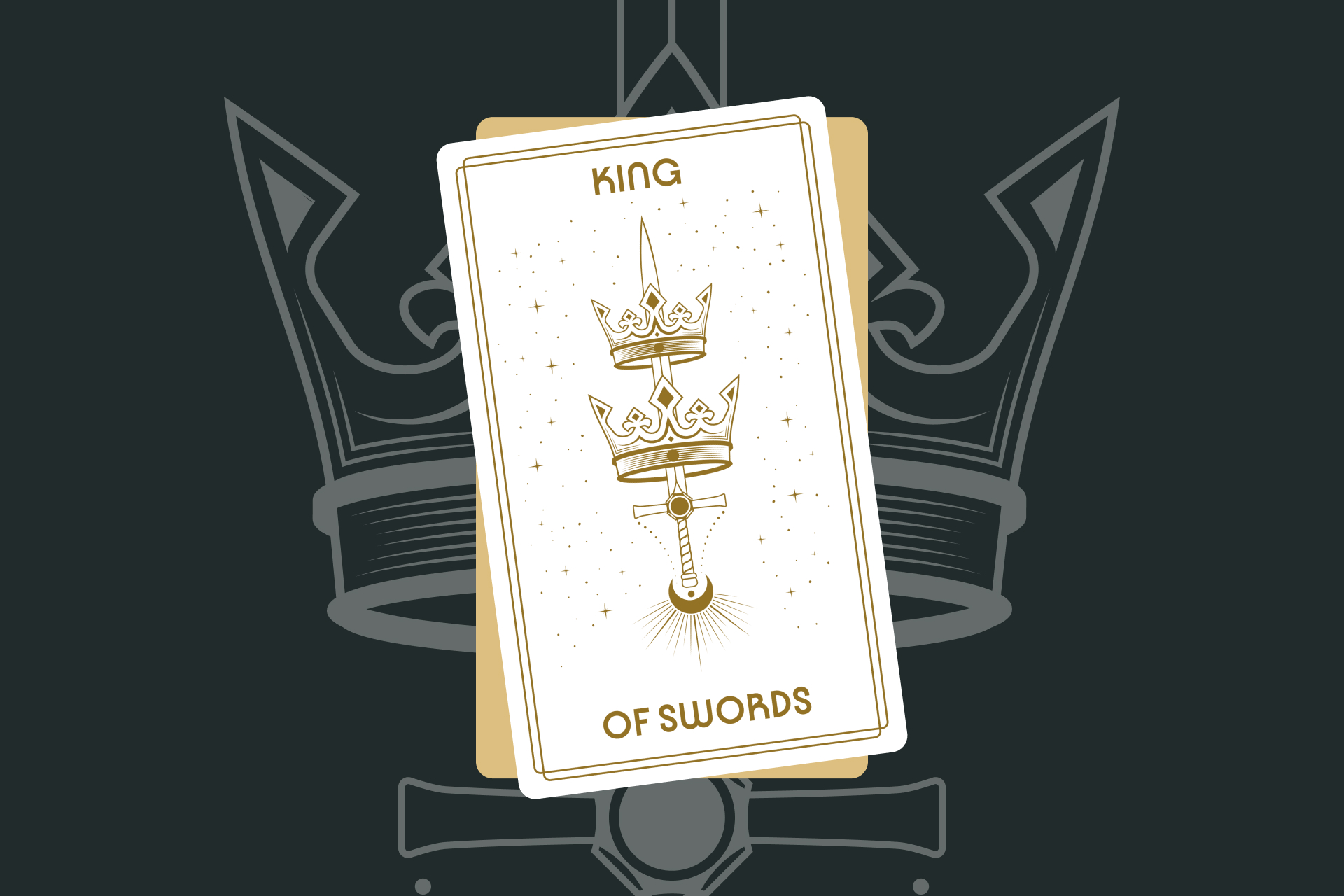
The imagery of the King of Swords is rich with meaning. He is often depicted as a mature man with a stern expression, wearing a crown adorned with butterflies or birds—symbols of the mind’s ability to rise above base instincts. In one hand, he holds a double-edged sword, pointing upward, representing the power of truth and the ability to discern right from wrong. The sword’s double edge also reminds us that intellect can be used for both creation and destruction. Behind him, a clear sky or a backdrop of clouds often appears, emphasizing clarity and the elevation of thought. His throne, sometimes decorated with butterflies or birds, reinforces the theme of mental agility and transcendence. These visual elements collectively highlight the card’s focus on mental clarity, authority, and the pursuit of truth.
Upright Meaning: Embracing Logic and Authority
When the King of Swords appears upright in a reading, it is a powerful affirmation of intellectual strength and leadership. This card suggests that you are being called to take charge of a situation with confidence and sound judgment. You may need to make a difficult decision, mediate a conflict, or communicate your thoughts with precision. The King of Swords encourages you to trust your reasoning and not be influenced by emotions or external pressures. It can also indicate the presence of a wise, authoritative figure in your life—someone who offers clear guidance and expects high standards. In matters of communication, this card favors honesty and directness. It’s a reminder that sometimes, the truth, though uncomfortable, is necessary for growth and resolution.
Reversed Meaning: Overthinking and Misuse of Power
In its reversed position, the King of Swords can signal the misuse of intellect or an over-reliance on logic at the expense of empathy and intuition. This might manifest as coldness, rigidity, or even cruelty in decision-making. You may be overanalyzing a situation to the point of paralysis, unable to act due to fear of making the wrong choice. Alternatively, this card reversed can point to manipulation—using words or information to control others rather than seeking truth. It may also reflect a lack of mental clarity, confusion, or being misled by someone who appears authoritative but lacks wisdom. The reversed King of Swords serves as a warning to balance reason with compassion and to question whether your decisions are truly just or simply self-serving.
King of Swords in Love and Relationships
In romantic contexts, the King of Swords suggests a relationship built on mutual respect, honesty, and intellectual connection. If you’re single, this card may indicate that you need to approach dating with a clear mind—avoiding idealization and seeking someone who values communication and authenticity. If you’re in a relationship, it could point to the need for open, honest conversations or the presence of a partner who embodies these traits. However, be cautious of emotional detachment. The King of Swords reminds us that while logic is important, love also requires vulnerability and warmth. If the card appears reversed, it may signal emotional distance, manipulation, or a partner who is overly critical or judgmental.
Career and Professional Insights
Professionally, the King of Swords is a strong indicator of leadership, expertise, and strategic thinking. This card often appears when you are being recognized for your intelligence, problem-solving skills, or ability to lead a team. It may suggest a promotion, a new project requiring analytical skills, or the need to take a more assertive role in your workplace. In business readings, the King of Swords can represent a mentor or advisor who provides clear, unbiased guidance. If you’re considering a career change, this card encourages you to pursue roles that value intellect, communication, and decision-making. Reversed, it may warn against office politics, unethical behavior, or a work environment where manipulation and cold-hearted decisions prevail.
Personal Growth and Spirituality
On a personal level, the King of Swords invites you to cultivate mental discipline and integrity. This card encourages you to develop your critical thinking skills, set boundaries, and speak your truth with confidence. It’s a call to rise above petty emotions and base impulses, choosing instead to act from a place of wisdom and principle. Spiritually, the King of Swords represents the balance between the mind and the higher self. While intuition is important, this card reminds us that enlightenment also comes through study, reflection, and the pursuit of knowledge. Meditating on this card can help you strengthen your mental clarity and commitment to truth, both within yourself and in your interactions with others.
Advice from the King of Swords
When seeking guidance, the King of Swords advises you to approach your challenges with a clear head and a strong sense of justice. Ask yourself: Are my decisions based on facts or fears? Am I communicating honestly, or am I hiding behind words? This card encourages you to take responsibility for your thoughts and actions, to lead by example, and to stand firm in your convictions. It also reminds you to be discerning—questioning information, seeking truth, and not blindly following authority. In times of doubt, channel the energy of the King of Swords: remain objective, but not unfeeling; assertive, but not domineering.
Conclusion
The King of Swords is a card of mastery—over the mind, over communication, and over the challenges that require clear thinking and decisive action. Whether it appears upright or reversed, this card challenges you to examine how you use your intellect and authority. It celebrates the power of logic and truth but also warns against the pitfalls of emotional detachment and manipulation. By embracing the lessons of the King of Swords, you can navigate life’s complexities with wisdom, integrity, and confidence. Remember, the sword cuts both ways—use it wisely, and it will serve as a tool for justice and clarity in all areas of your life.
FAQ
What does the King of Swords represent in tarot?
The King of Swords represents authority, clarity, and intellectual power, emphasizing the importance of logic and decisive action.
How does the King of Swords influence love readings?
In love readings, the King of Swords suggests relationships built on honesty and intellectual connection, but warns against emotional detachment.
What does the King of Swords indicate in a career context?
In career contexts, the King of Swords signifies leadership, strategic thinking, and recognition for problem-solving abilities.
Leave a Reply