Short Answer
The Five of Swords tarot card is a stark reminder that victory isn’t always sweet. In this guide, you’ll uncover the deeper meanings behind this card—what it reveals about conflict, ego, and the hidden costs of winning. You’ll explore its symbolism, upright and reversed interpretations, and how to apply its wisdom to real-life situations. By the end, you’ll see why this card isn’t just about battles won, but about the relationships and integrity left behind in the process.
The Five of Swords: A Victory Without Triumph
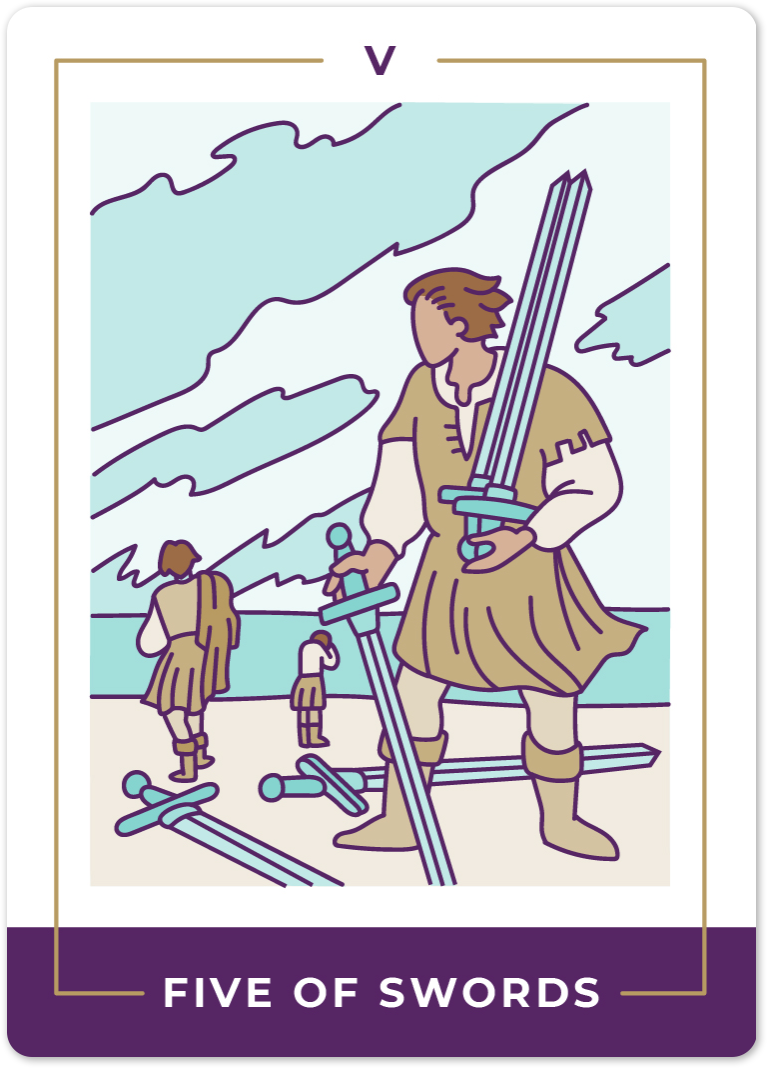
The Five of Swords depicts a scene of aftermath—a lone figure stands victorious, holding three swords, while two others walk away in defeat. The stormy sky and barren landscape amplify the tension, suggesting that this “win” comes at a price. Unlike other tarot cards that celebrate triumph, this one forces you to question: What did you sacrifice to claim the victory?
At its core, the Five of Swords is about conflict, competition, and the ego’s need to dominate. It’s not just about physical battles; it can represent verbal sparring, office politics, or even internal struggles where you prioritize being right over being kind. The card’s energy is sharp and divisive, leaving little room for reconciliation. If this card appears in a reading, it’s a sign to pause and reflect on whether the battle was truly worth fighting.

Upright Meaning: The Cost of Winning
When the Five of Swords appears upright, it signals a situation where you’ve emerged from a conflict—but at a significant cost. This could be a workplace rivalry where you outmaneuvered a colleague, a personal disagreement where you had to “win” the argument, or even a moment where you prioritized your desires over someone else’s feelings. The card warns that while you may have achieved your goal, the victory feels hollow.
Key themes of the upright Five of Swords include:
- Ego Over Empathy: You may have acted out of pride rather than principle, leaving others feeling bruised or betrayed.
- Short-Term Gain, Long-Term Loss: The relationship damage from this conflict could linger, affecting trust and collaboration in the future.
- Isolation: Victory can feel lonely when it comes at the expense of others. You might find yourself surrounded by “yes-men” who fear challenging you.
This card often appears when you’re in a competitive environment—whether in love, career, or personal growth—and you’re tempted to “play dirty” to get ahead. The upright Five of Swords asks you to consider: Is the prize worth the isolation?
Reversed Meaning: Reconciliation and Humility
When the Five of Swords appears reversed, it’s a call to rethink your approach to conflict. Instead of forcing a win, this card encourages you to seek compromise, apologize, or step back from unnecessary battles. It’s a sign that your competitive instincts may be harming your relationships or self-worth.
In the reversed position, the Five of Swords highlights:
- Learning from Defeat: You might realize that “winning” wasn’t as important as maintaining peace or integrity.
- Releasing Grudges: Holding onto past conflicts only drains your energy. This card urges you to let go of old wounds.
- Choosing Your Battles: Not every disagreement needs to be a war. Sometimes, walking away is the stronger choice.
This card reversed can also indicate that you’re the one walking away from a toxic situation—finally recognizing that some victories aren’t worth the emotional toll. It’s a reminder that true strength lies in knowing when to fight and when to surrender.
Five of Swords in Love and Relationships
In matters of the heart, the Five of Swords is a red flag. It suggests a relationship built on power struggles rather than mutual respect. If you’re single, it could warn against entering a new romance where competition overshadows connection. For those in a relationship, it may indicate unresolved conflicts where one partner feels they’re constantly “keeping score.”
This card asks you to reflect: Are you with someone who lifts you up, or someone you’re constantly trying to outdo? If the Five of Swords appears, it’s time to address the underlying tension before resentment takes root. Healthy relationships thrive on collaboration, not conquest.
Five of Swords in Career and Ambition
In a professional context, the Five of Swords is a warning against cutthroat behavior. It can appear when you’re tempted to sabotage a colleague, take credit for someone else’s work, or engage in office politics that harm team morale. While ambition is important, this card reminds you that burning bridges for short-term gains can backfire in the long run.
If you’re job hunting, the Five of Swords might suggest that you’re in a toxic work environment where “winning” means compromising your values. Alternatively, it could be a sign to reassess your career goals—are you chasing success at the expense of your well-being?
Five of Swords as a Person: The Competitive Spirit
As a personality trait, the Five of Swords represents someone who thrives on competition, often to the detriment of others. This person may be highly ambitious but struggles with empathy, viewing relationships as transactions rather than connections. They might enjoy debates not for the sake of truth, but to assert dominance.
If this card reflects someone in your life, it’s a reminder to set boundaries. Their need to “win” can be exhausting, and you may need to decide whether this dynamic is sustainable for you.
How to Overcome the Five of Swords Energy
If the Five of Swords keeps appearing in your readings, it’s a sign to shift your mindset. Here’s how to break free from its divisive energy:
- Practice Active Listening: Before responding in a conflict, ask yourself: Am I listening to understand, or just to respond?
- Let Go of the Need to Be Right: Sometimes, agreeing to disagree is healthier than forcing a “win.”
- Focus on Collaboration: Look for win-win solutions instead of zero-sum outcomes.
- Apologize When Necessary: If you’ve acted out of ego, a sincere apology can heal fractured relationships.
Remember, the Five of Swords isn’t about avoiding conflict entirely—it’s about choosing your battles wisely. Not every disagreement needs to be a battle, and not every victory requires a loser.
Conclusion: The Hollow Victory and the Path Forward
The Five of Swords is a tarot card that doesn’t glorify victory—it exposes its cost. Whether upright or reversed, it challenges you to examine the true price of your wins. In a world that often celebrates dominance, this card is a rare voice asking: What’s left when the battle is over?
If you find yourself drawn to this card, take it as an invitation to reflect. Are you chasing success at the expense of your integrity? Are your relationships built on mutual respect or silent resentment? The Five of Swords doesn’t just warn against toxic competition—it offers a path to something deeper: a victory that doesn’t leave you (or others) broken.
Ultimately, the card’s lesson is simple: True strength isn’t in winning alone—it’s in winning with honor.
FAQ
What does the Five of Swords tarot card represent?
The Five of Swords represents conflict, hollow victories, and the consequences of winning at the expense of others' feelings and relationships.
What is the meaning of the Five of Swords when upright?
When upright, it signals a victory that may come at a high cost, including damaged relationships, isolation, and ego-driven conflict.
What does the Five of Swords reversed mean?
Reversed, it suggests reconciliation, humility, learning from defeat, and the importance of choosing battles wisely.
How does the Five of Swords relate to love and relationships?
It indicates power struggles, competition, and unresolved conflicts that can harm mutual respect and connection in relationships.
What career advice is associated with the Five of Swords?
It warns against cutthroat behavior and encourages reassessing ambitions to avoid toxic work environments and damaged professional relationships.

Leave a Reply