Short Answer
If you’ve pulled the reversed Empress in a tarot reading, you may be feeling the weight of burnout, creative block, or emotional exhaustion. This guide explores the deeper meanings behind the reversed Empress, helping you recognize signs of depletion, understand its impact on relationships and self-care, and discover pathways to reclaim your energy and purpose. Whether you’re navigating career pressures, personal challenges, or spiritual stagnation, this article offers insights to guide your journey toward renewal.
The Reversed Empress as a Sign of Burnout
The reversed Empress often signals burnout in its most subtle or overt forms. Unlike the upright Empress, who embodies nurturing energy, abundance, and creative flow, her reversed counterpart may reflect a state where giving has become unsustainable. You might feel emotionally drained, physically exhausted, or mentally overwhelmed by responsibilities. This card can appear when you’ve been prioritizing others’ needs over your own, leading to resentment or a sense of emptiness. Burnout isn’t always dramatic—sometimes it’s the quiet erosion of joy, the slow fade of passion, or the inability to find time for self-reflection. The reversed Empress asks you to pause and ask: Where am I giving without receiving?
Physically, burnout may manifest as fatigue, frequent illness, or neglect of basic self-care. Emotionally, it can show up as irritability, detachment, or a lack of empathy. Creatively, you might struggle to find inspiration or feel blocked in expressing yourself. The reversed Empress doesn’t judge these feelings; it simply highlights that your current pace is unsustainable. Recognizing this is the first step toward reclaiming your vitality.
Emotional Exhaustion and the Reversed Empress
Emotional exhaustion is a hallmark of the reversed Empress. This card often appears when you’ve been the “caregiver” in a relationship, whether in your family, workplace, or community, and have reached your limit. You may feel like you’re running on empty, unable to muster the energy to listen, support, or nurture others—let alone yourself. This isn’t selfishness; it’s a necessary boundary. The reversed Empress warns that continuing to pour from an empty cup will only deepen your exhaustion.
On a deeper level, emotional burnout can stem from unresolved grief, unmet needs, or a lack of fulfillment in your personal life. You might feel like you’re performing roles—partner, parent, friend, employee—without receiving the love, appreciation, or reciprocity you deserve. The reversed Empress encourages you to examine these dynamics. Are you staying in situations out of guilt or obligation? Are you suppressing your own emotions to keep the peace? Acknowledging these patterns is crucial for healing.
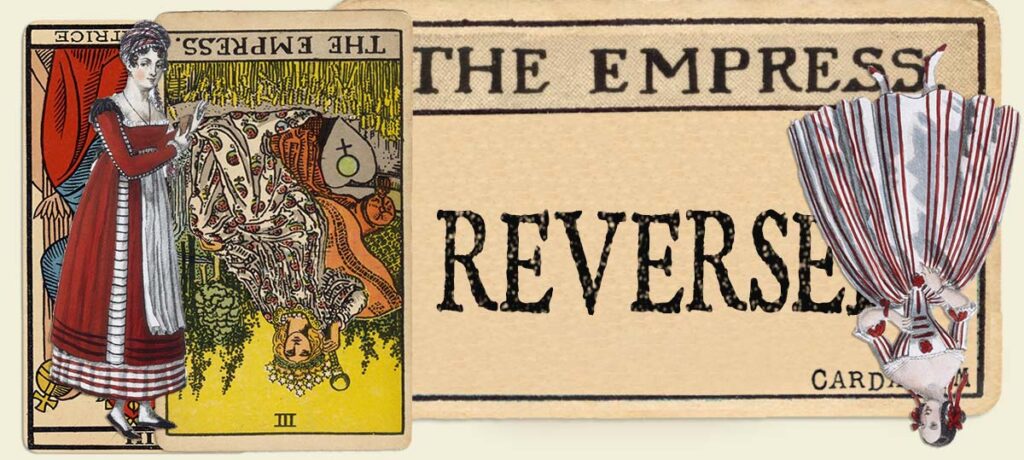
Creative Block and the Reversed Empress
Creativity thrives in a state of flow, but the reversed Empress can signal a blockage in this area. You might feel uninspired, stuck in a rut, or unable to express yourself authentically. This isn’t just about artistic pursuits—it could apply to problem-solving, decision-making, or even daydreaming. The reversed Empress suggests that your creative energy is being sapped by external pressures, self-doubt, or a lack of nourishment. Without space to explore, experiment, and play, your inner world feels stifled.
To reignite your creativity, consider what truly excites you. Is it writing, painting, cooking, or simply daydreaming? The reversed Empress asks you to carve out time for activities that bring you joy without a goal or outcome. It’s not about productivity; it’s about reconnecting with the parts of yourself that feel alive. Try small, low-pressure acts of creation—sketching, journaling, or even rearranging your space. These acts can signal to your subconscious that it’s safe to explore again.
Reversed Empress in Relationships: When Caregiving Becomes Unsustainable
In relationships, the reversed Empress can indicate an imbalance of care. You might be the one always initiating conversations, planning, or offering emotional support, while your partner, friend, or family member takes without reciprocating. This dynamic can lead to resentment, exhaustion, and a sense of being unappreciated. The reversed Empress doesn’t condemn you for caring—it simply asks you to evaluate whether your efforts are being met with equal effort and respect.
If you’re in a romantic relationship, the reversed Empress might highlight a lack of intimacy or emotional connection. You may feel like you’re carrying the emotional labor of the partnership, leaving little room for your own needs. In friendships, it could mean one-sided support or feeling drained after interactions. The key here is to communicate your needs clearly. Boundaries aren’t walls; they’re the framework that allows healthy relationships to thrive. Practice saying no, delegating tasks, or asking for what you need without guilt.
Self-Care vs. Self-Sacrifice: The Reversed Empress’ Lesson
The reversed Empress forces a confrontation with the difference between self-care and self-sacrifice. Self-care isn’t a luxury; it’s a necessity for sustainability. Yet, many of us confuse the two, believing that putting ourselves first is selfish. The reversed Empress dismantles this myth. It teaches that true nurturing begins with yourself. You cannot pour from an empty cup, and you cannot give what you don’t have.
Start by identifying one small act of self-care you can commit to daily. It might be a five-minute meditation, a walk in nature, or saying no to an extra commitment. Notice how this small act shifts your energy. Over time, these moments of self-nurturing will rebuild your resilience, allowing you to show up more fully for others—and for yourself. The reversed Empress isn’t a punishment; it’s an invitation to realign with your needs and priorities.
Pathways to Renewal: Healing from the Reversed Empress
Healing from the reversed Empress begins with self-awareness. Start by journaling about where you feel drained. Is it in your work, relationships, or personal goals? Identify the sources of your burnout and examine whether they’re within your control to change. Next, practice setting boundaries. This might mean saying no to extra projects, delegating tasks, or asking for help. Remember, asking for support isn’t a sign of weakness; it’s a sign of wisdom.
Reconnect with your passions and interests outside of your obligations. What did you love doing before life got so busy? Reintroduce these activities into your routine, even if it’s just for a few minutes a day. Additionally, prioritize rest. Sleep, relaxation, and downtime aren’t indulgences; they’re essential for your well-being. Finally, consider therapy or coaching if burnout feels overwhelming. Sometimes, an outside perspective can help you see patterns and solutions you’ve overlooked.
Conclusion
The reversed Empress is a powerful messenger, urging you to slow down, reassess, and prioritize your well-being. Burnout isn’t a badge of honor; it’s a signal that something needs to change. By recognizing the signs of emotional exhaustion, creative block, and unsustainable caregiving, you can begin to reclaim your energy and purpose. Healing isn’t linear, and setbacks are normal—but with each small step toward self-care and boundaries, you’re moving closer to a more balanced, fulfilling life. The Empress reversed isn’t the end of your story; it’s the beginning of a chapter where you learn to nurture yourself as deeply as you’ve nurtured others.
FAQ
What does the reversed Empress tarot card mean?
The reversed Empress indicates a state of burnout, emotional exhaustion, and the need to reassess self-care practices.
How can the reversed Empress influence relationships?
It often highlights an imbalance in caregiving roles, prompting a need for better communication and boundary-setting.
Leave a Reply