Short Answer
Dive into the fiery, chaotic world of the Five of Wands—a tarot card that thrives on conflict, competition, and the raw energy of disagreement. Whether you’re facing a heated debate, a clash of egos, or simply the buzz of creative tension, this card serves as both a warning and a catalyst for growth. In this guide, you’ll uncover the deeper meanings behind the Five of Wands, explore its symbolism, and learn how to harness its chaotic energy for personal and spiritual evolution. By the end, you’ll see this card not as a harbinger of doom, but as a dynamic force that pushes you toward clarity and resilience.
The Essence of the Five of Wands: A Storm of Conflict
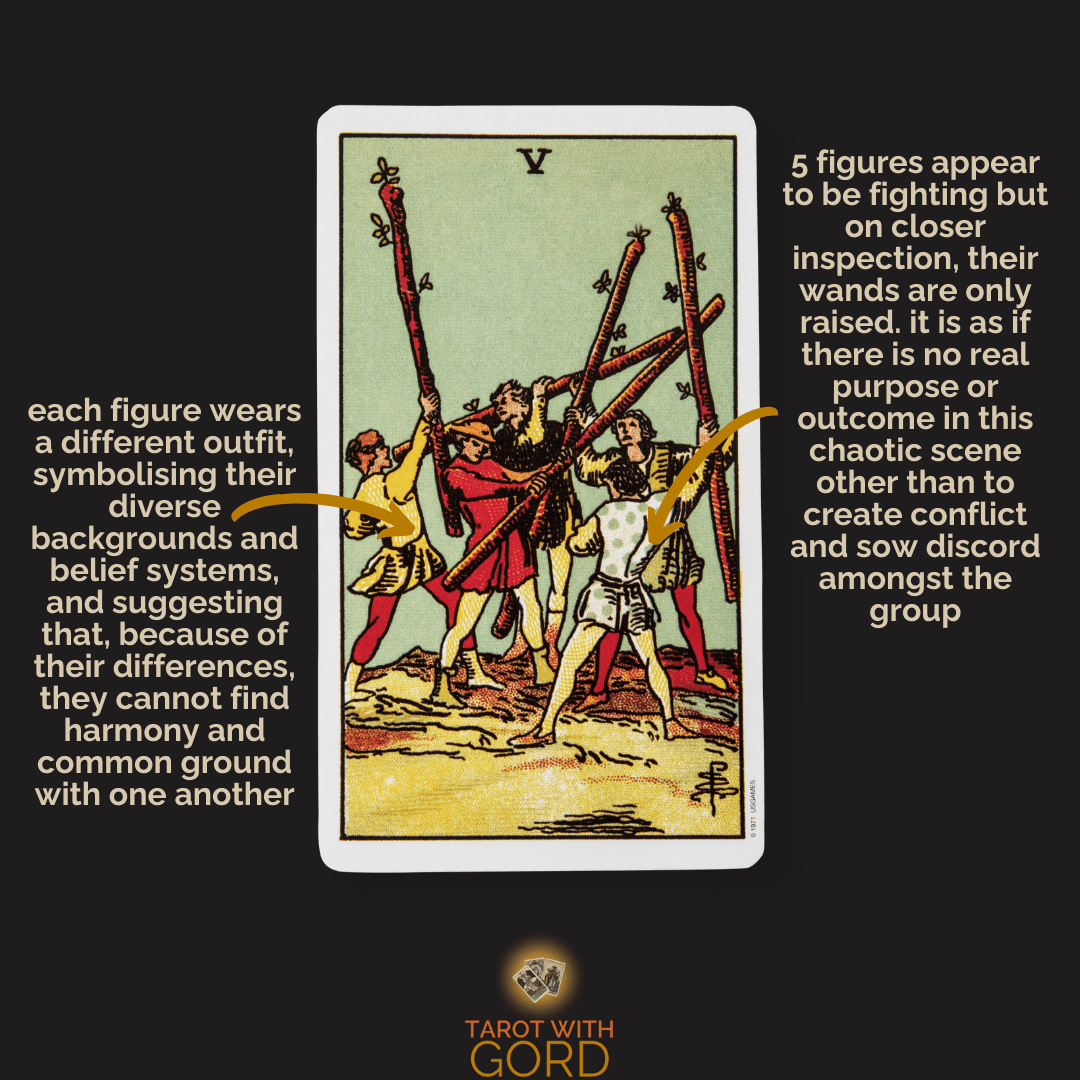
The Five of Wands is a card of discord, where multiple forces collide in a whirlwind of clashing opinions, competitive spirits, and unresolved tensions. Picture a group of people energetically waving wands at each other, their faces a mix of passion and frustration. This card doesn’t depict physical violence but rather the mental and emotional battles that arise when ideas, goals, or personalities clash. It’s the sound of arguments in a meeting room, the clamor of differing viewpoints in a creative project, or the internal tug-of-war between your desires and obligations.
At its core, the Five of Wands is about unresolved conflict. It highlights situations where communication breaks down, where egos take center stage, and where progress feels stifled by endless debate. Yet, this chaos isn’t without purpose. It’s a sign that something needs to change—whether it’s a shift in perspective, a compromise, or a bold decision to move forward despite the noise. The card asks you to ask yourself: Is this conflict serving a greater goal, or is it draining my energy?

Symbolism and Imagery: Decoding the Chaos
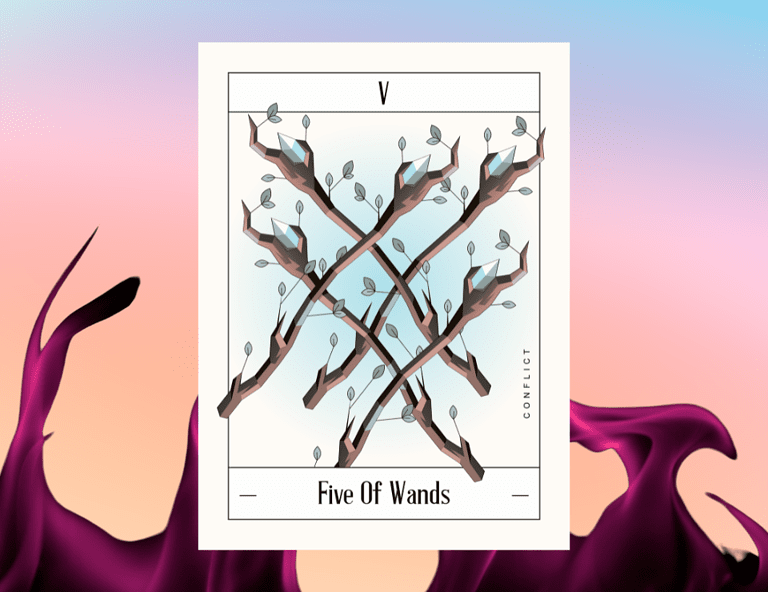
The imagery of the Five of Wands is rich with symbolism, each element offering clues to its deeper meaning. The five wands, held aloft by five figures, represent the multiplicity of voices and forces at play. Their dynamic postures suggest movement, urgency, and even aggression, but they’re not actually striking each other—just as conflict in life isn’t always about destruction, but about the friction that sparks growth.
The background is often neutral or slightly blurred, drawing focus to the central drama. This can symbolize how conflict can overshadow other aspects of your life, making it hard to see beyond the immediate turmoil. The wands themselves are straight and sturdy, yet their clash creates a sense of instability. This duality reflects the card’s theme: structure within chaos. While the situation feels out of control, the wands remind you that order can emerge from the struggle if you channel the energy wisely.
Colors play a role too. Warm hues like red and orange dominate, evoking passion, anger, and intensity. These colors can signal that emotions are running high, but they also hint at the potential for transformation. After all, fire isn’t just destructive—it’s also the force that forges steel and fuels innovation.
Upright Meaning: When Conflict Fuels Progress
When the Five of Wands appears upright in a reading, it’s a call to embrace the chaos rather than shy away from it. This card often signifies a period of healthy competition, where differing opinions challenge you to refine your ideas and strengthen your resolve. It’s the spark that ignites creativity, the push that forces you to defend your boundaries, or the reality check that reveals where you need to stand your ground.
In career readings, the Five of Wands might indicate a workplace where team dynamics are tense, but these tensions could be pushing the group toward innovation. In love, it could suggest a relationship where both partners are asserting their needs, leading to growth if handled with maturity. The key is to recognize that conflict isn’t the enemy—it’s the crucible in which stronger versions of yourself and your relationships are forged.
Ask yourself: What is this conflict teaching me? How can I use this energy to clarify my goals or improve my approach? The upright Five of Wands encourages you to lean into the discomfort, knowing that clarity often follows the storm.
Reversed Meaning: The Paralysis of Endless Strife
When the Five of Wands appears reversed, the energy shifts from productive tension to stagnation and frustration. Instead of a dynamic clash that leads to growth, you might find yourself stuck in a cycle of petty arguments, unresolved issues, or a refusal to compromise. This card reversed warns against letting conflict consume you to the point of exhaustion or inaction. It’s the friend who keeps stirring the pot without ever offering a solution, or the project that never moves forward because everyone is too busy defending their own ideas.
In relationships, the reversed Five of Wands can signal passive-aggressive behavior, avoidance of tough conversations, or a power struggle that’s gone on too long. In career contexts, it might point to a toxic work environment where gossip and competition overshadow collaboration. The message here is clear: It’s time to break the cycle. This could mean setting boundaries, seeking mediation, or simply walking away from situations that drain you without reward.
Five of Wands in Love and Relationships: Love’s Fiery Trials
In matters of the heart, the Five of Wands is a card of passionate clashes and emotional growth. If you’re single, it might indicate a time where dating feels like a battlefield—where first dates turn into debates or where you’re comparing potential partners against impossible standards. For those in relationships, it could highlight power struggles, jealousy, or a need to assert individuality within the partnership.
The key here is to differentiate between healthy and toxic conflict. A relationship that survives the Five of Wands is one where both parties feel safe expressing their needs and are willing to work through disagreements. If the card appears reversed, however, it may signal a relationship that’s more about control than connection, where arguments become a way of life rather than a path to understanding.
Ask yourself: Are these conflicts bringing us closer, or are they eroding trust? The Five of Wands in love reminds you that even the most passionate relationships require compromise and mutual respect to thrive.
Career and Finances: Navigating the Workplace Storm
In career spreads, the Five of Wands is a double-edged sword. On one hand, it can indicate a highly competitive environment where standing out is essential—think of industries like sales, marketing, or creative fields where innovation is rewarded. On the other, it might reveal a workplace rife with office politics, where collaboration feels impossible and every decision turns into a debate.
Financially, this card suggests that your money matters might be in flux. You could be weighing multiple investment opportunities, negotiating a raise, or dealing with unexpected expenses that force you to defend your financial boundaries. The Five of Wands here advises you to stay adaptable. Don’t cling to a single plan if the data suggests otherwise, and be willing to pivot when necessary. Rigidity in the face of change will only lead to more frustration.
If the card is reversed, it’s a sign to reassess your approach. Are you fighting for the wrong reasons? Is your competitive spirit turning into self-sabotage? Sometimes, the greatest victory is knowing when to walk away from a battle that’s not worth winning.
Spiritual Growth: The Alchemy of Conflict
Spiritually, the Five of Wands is about the alchemy of conflict—the process of turning chaos into wisdom. Every disagreement, every challenge to your beliefs, is an opportunity to refine your understanding of yourself and the world. This card encourages you to ask: What is this conflict revealing about my deepest fears or desires?
Meditation or journaling can help you navigate the storm. Try writing down the source of your frustration and then reframing it as a lesson. For example, if you’re arguing with a colleague, ask yourself: What can I learn from their perspective? How can this tension make me a better communicator? The Five of Wands teaches that spiritual growth often comes not from peace, but from the fire of adversity.
How to Harness the Energy of the Five of Wands
So, how do you work with the Five of Wands instead of being overwhelmed by it? Here are some practical steps:
- Reframe the conflict: Instead of seeing disagreement as a threat, view it as a chance to strengthen your arguments or broaden your perspective.
- Set boundaries: Not all battles are worth fighting. Know when to disengage and protect your energy.
- Seek common ground: Even in the midst of chaos, look for shared goals or values that can unite opposing sides.
- Channel the energy: Use the adrenaline of conflict to fuel creativity, productivity, or assertiveness in other areas of your life.
- Practice active listening: Sometimes, the root of conflict is a misunderstanding. Clarify intentions before assuming the worst.
The Five of Wands isn’t about avoiding conflict—it’s about mastering it. By understanding its messages, you can transform chaos into clarity and use its energy to propel yourself forward.
Conclusion: Embracing the Fire Within
The Five of Wands is a card that demands attention—not because it’s inherently negative, but because it refuses to be ignored. It’s the sound of a door slamming, the echo of raised voices, the push and pull of life’s most challenging moments. Yet, within that chaos lies immense potential. Every conflict, every disagreement, every moment of tension is an opportunity to grow stronger, wiser, and more resilient.
So the next time you find yourself in the midst of a storm, remember: the Five of Wands isn’t here to destroy you. It’s here to forge you. Whether you’re facing a heated debate, a creative block, or a personal crisis, this card reminds you that clarity often comes from the fire. Stand your ground, but stay open to change. Fight for what matters, but know when to let go. And above all, trust that even in the messiest moments, you have the power to shape the outcome.
Chaos isn’t the enemy—it’s the crucible. And you? You’re the alchemist.
FAQ
What does the Five of Wands tarot card symbolize?
The Five of Wands symbolizes conflict, competition, and the energetic clash of ideas or personalities that can lead to growth and transformation.
What is the meaning of the Five of Wands in an upright position?
Upright, the Five of Wands represents healthy competition, creative tension, and challenges that push you to improve and clarify your goals.
What does the reversed Five of Wands indicate?
A reversed Five of Wands suggests stagnation, unresolved conflict, passive-aggressive behavior, or toxic competition that hinders progress.
How does the Five of Wands relate to love and relationships?
In love, the Five of Wands highlights passionate conflicts and power struggles that, if managed well, can lead to emotional growth and stronger relationships.
What is the significance of the Five of Wands in career readings?
In career contexts, the card indicates competitive environments and workplace tensions that may foster innovation or signal toxic dynamics depending on the situation.
Leave a Reply