Short Answer
Welcome to a deep exploration of the Hermit Tarot card in its reversed position—a journey that peels back the layers of isolation to reveal the shadowy terrain of self-harm. In this guide, you’ll uncover what it truly means when the Hermit appears upside down in a reading, how it manifests in daily life, and why its message is both haunting and transformative. By the end, you’ll recognize the signs, understand the emotional undercurrents, and learn how to navigate this difficult terrain with wisdom and compassion.
The Hermit Reversed: A Mirror to Inner Darkness
The Hermit, when upright, symbolizes introspection, wisdom, and the pursuit of inner truth through solitude. But when reversed, this card becomes a stark reflection of isolation that has curdled into something far more dangerous. Instead of a healing retreat into oneself, the reversed Hermit represents a prison of loneliness where the soul begins to feed on its own pain. It’s not just about being alone—it’s about the slow erosion of self-worth that comes when isolation becomes a habit rather than a choice.
Imagine a lighthouse keeper who, instead of guiding ships to safety, has locked himself inside the tower, refusing to light the beacon. The reversed Hermit is that keeper—trapped in the glow of his own dimming light, believing that solitude is the only truth, while the world outside fades into irrelevance. This card warns that prolonged isolation can distort perception, turning healthy introspection into a cycle of self-sabotage.
From Solitude to Self-Harm: The Dangerous Descent
The reversed Hermit doesn’t just represent loneliness—it embodies the dangerous slide from solitude to self-harm, whether emotional, psychological, or even physical. This card often appears when someone has withdrawn so deeply into themselves that they begin to lose touch with reality. The once-nurturing solitude of the Hermit has curdled into a toxic environment where negative self-talk, avoidance, and self-destructive behaviors thrive.
Think of it like a garden left untended. At first, the quiet is peaceful. But over time, weeds choke the flowers, pests invade, and the soil grows barren. The reversed Hermit is that neglected garden—a place where once-vibrant parts of the self wither under the weight of neglect. It’s a call to action, a warning that isolation, when unchecked, can become a slow poison.
This card may also signal a refusal to seek help or lean on others, even when it’s desperately needed. The Hermit reversed can manifest as pride in “going it alone,” masking deep-seated fears of vulnerability or rejection. Yet, this stubbornness only deepens the spiral, turning a temporary retreat into a permanent exile from connection.
Recognizing the Signs: How the Reversed Hermit Shows Up
The reversed Hermit doesn’t announce itself with fanfare—it creeps in quietly, disguised as routine or even strength. Here are the key ways it might appear in your life or the life of someone you care about:
- Emotional Withdrawal: Avoiding conversations, canceling plans, and retreating into a shell where no one is allowed in. Even close relationships feel like invasions rather than comforts.
- Self-Sabotage: Engaging in behaviors that harm progress, such as procrastination, self-medication, or neglecting responsibilities under the guise of “needing time alone.”
- Negative Self-Talk: A relentless inner critic that amplifies flaws and dismisses achievements, convincing the person they are unworthy of love or success.
- Physical Neglect: Ignoring basic needs like eating, sleeping, or hygiene, as if the body is no longer a priority.
- Spiritual Despair: Losing faith in oneself, others, or even the universe, believing that no path forward exists.
The Devil’s Shadow: When the Hermit Reversed Meets the Devil Card
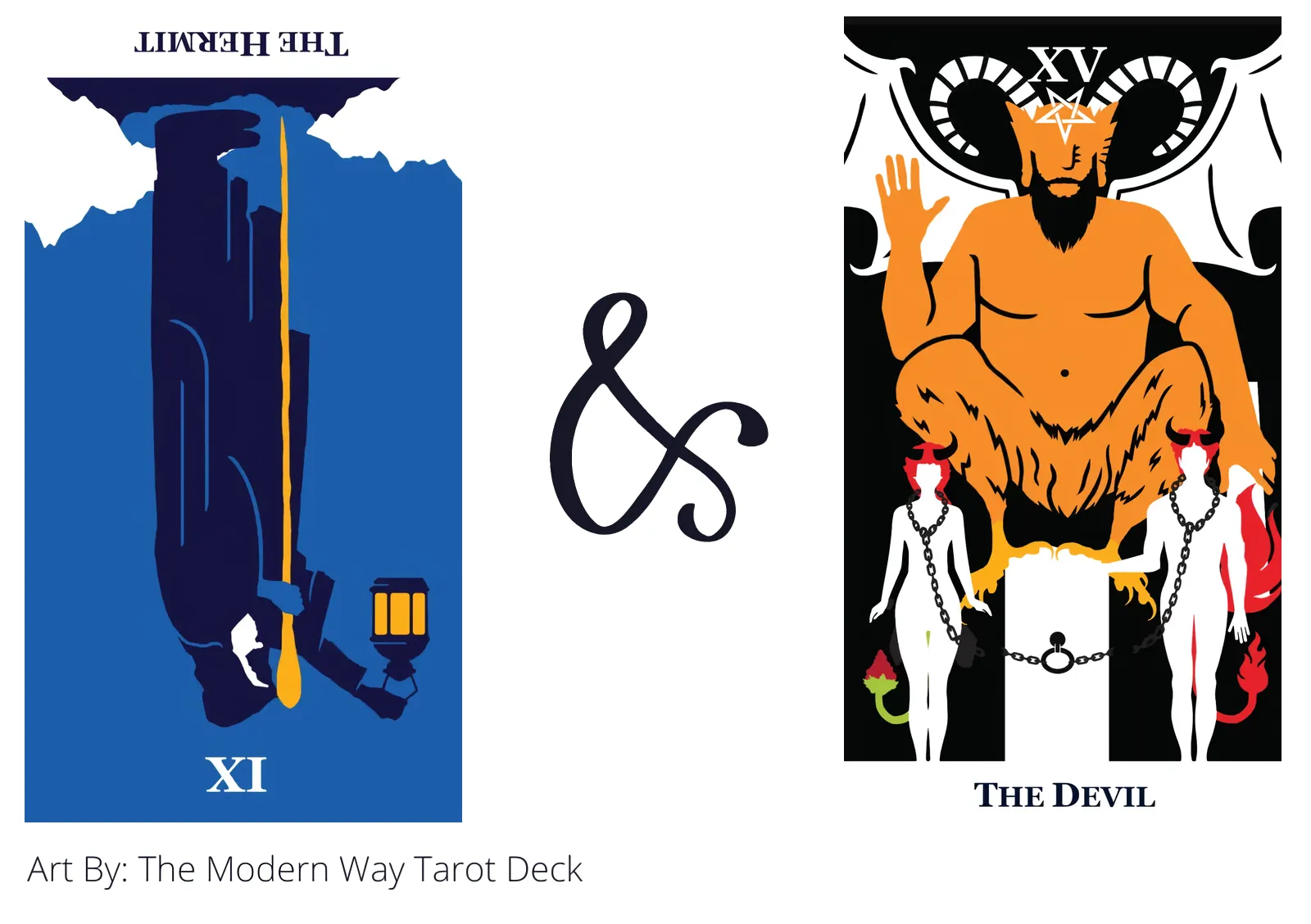
In some readings, the reversed Hermit appears alongside The Devil card—a pairing that intensifies the card’s darker themes. The Devil represents bondage to unhealthy habits, toxic relationships, or self-destructive patterns. When these two cards appear together, it’s a sign that isolation has become a cage, and the person is not just alone but trapped in a cycle of pain they can’t escape alone.
This combination can indicate:
- Addiction to loneliness, where the idea of connection feels more threatening than the pain of solitude.
- Self-imposed exile from joy, convinced that happiness is unattainable or undeserved.
- A refusal to acknowledge the harm being done, masking pain with defiance or denial.
The Devil and reversed Hermit together are a wake-up call—a demand to break free from the illusion that suffering alone is strength. It’s a reminder that even the deepest wounds can heal, but only when exposed to light.
Breaking the Cycle: Paths to Healing
If the reversed Hermit resonates with your current experience, know that the path back to light is not about forcing connection but about gently reclaiming agency. Here’s how to begin the journey:
- Small Steps Outward: Isolation thrives in silence. Start with tiny acts of reaching out—a text to a friend, a walk in a public space, or sharing a thought with someone you trust. These are not grand gestures but seeds of reconnection.
- Challenge Negative Narratives: Write down the harsh things you tell yourself and ask: Would I say this to a loved one? Replace cruelty with kindness, even if it feels unnatural at first.
- Seek Professional Support: Therapy, counseling, or support groups can provide a lifeline when the weight of solitude feels unbearable. There’s no shame in asking for help—it’s a sign of strength, not weakness.
- Reconnect with the Body: The reversed Hermit often disconnects people from their physical selves. Gentle movement, nourishing meals, or even a warm bath can be acts of rebellion against self-neglect.
- Embrace Imperfection: Healing isn’t linear. Some days will feel like setbacks, and that’s okay. Progress isn’t about perfection—it’s about showing up, even when it’s hard.
Conclusion: The Hermit’s Lesson in Reverse
The reversed Hermit is not a condemnation but a compass pointing toward a truth we often avoid: isolation, when unchecked, can become a form of self-harm. It’s a card that asks us to confront the ways we abandon ourselves in the name of strength, to recognize when solitude has become a prison rather than a sanctuary. Yet, within its darkness lies a profound opportunity—for growth, for healing, and for the rediscovery of light.
If this card has appeared in your reading, take it as a sign to pause and reflect. Ask yourself: Am I isolating out of choice or out of fear? Is my solitude nourishing or eroding me? The Hermit reversed doesn’t demand immediate action, but it does insist on awareness. And from awareness, transformation begins.
Remember, even the deepest night gives way to dawn. The Hermit’s lantern, though dimmed, still holds a flame. It’s time to light the way back.
FAQ
What does the reversed Hermit Tarot card signify?
The reversed Hermit indicates a descent from solitude into harmful isolation, often leading to self-neglect and emotional turmoil.
How can one break free from the negative effects of the reversed Hermit?
Engaging in small acts of connection, challenging negative self-talk, and seeking professional help are essential steps towards healing.
Leave a Reply