Short Answer
The Joker in tarot is a card that dances between chaos and revelation, embodying the raw, untamed energy of the Fool’s shadow. Often overlooked or misunderstood, this card carries profound symbolism that can illuminate hidden truths about spontaneity, unpredictability, and the uncharted territories of the subconscious. In this guide, we’ll explore the multifaceted meanings of the Joker card, its connection to The Fool, and how its presence in a reading can signal a call to embrace the unknown with courage and curiosity. Whether you’re a seasoned tarot reader or a curious beginner, understanding the Joker’s role will deepen your appreciation for tarot’s ability to mirror life’s most enigmatic moments.
The Joker as The Fool’s Shadow: A Dance of Light and Dark
The Joker is often referred to as the shadow of The Fool, the 0th card in the Major Arcana. While The Fool represents new beginnings, innocence, and boundless potential, the Joker embodies the darker, more chaotic counterpart—where spontaneity tips into recklessness, and freedom becomes unpredictability. This duality is central to tarot’s wisdom: growth often requires confronting the aspects of ourselves we’d rather ignore. The Joker doesn’t just appear as a trickster; it’s a mirror reflecting the raw, unfiltered parts of our psyche that demand attention.
In psychological terms, the Joker can symbolize the shadow self—a concept popularized by Carl Jung—where repressed desires, fears, and instincts reside. When the Joker appears in a spread, it may be urging you to acknowledge these hidden facets rather than suppress them. For example, if you’ve been playing it safe in your career, the Joker might be a sign that it’s time to take a leap, even if it feels risky. The card doesn’t guarantee success, but it promises that stagnation is the true danger.
Symbolism and Imagery: Decoding the Joker’s Visual Language
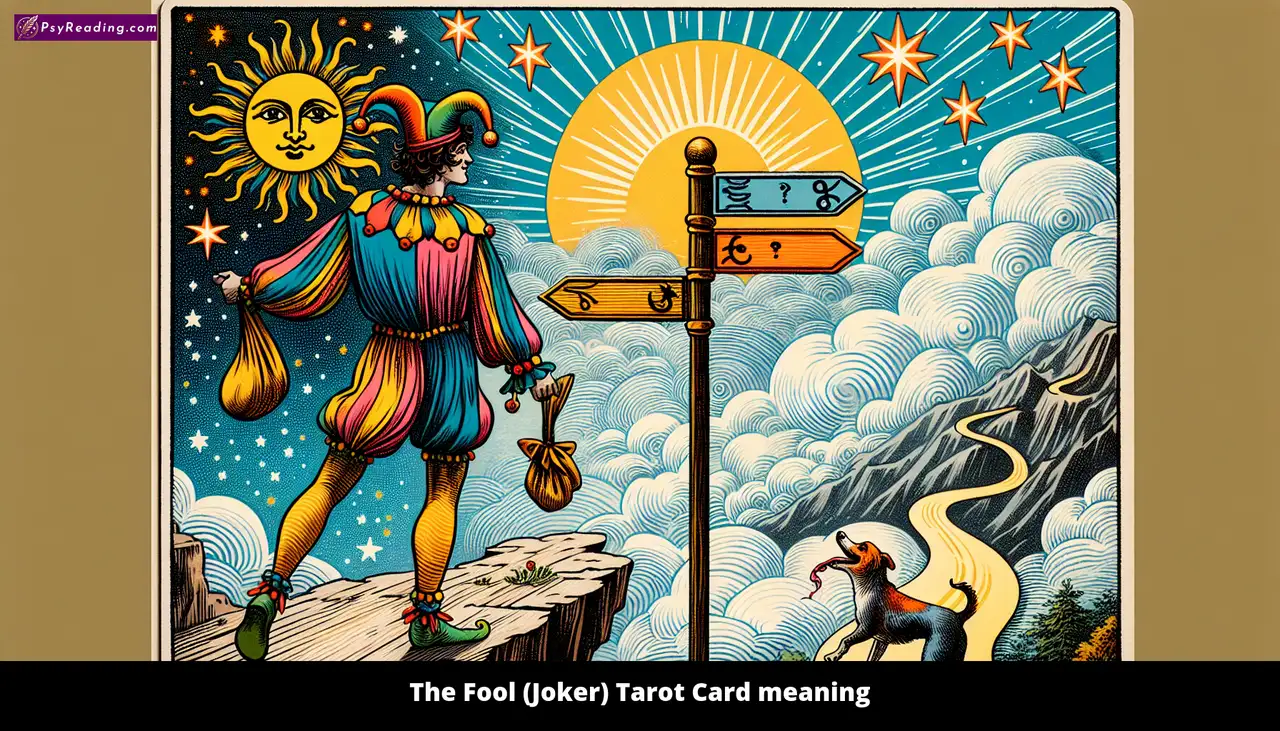
The Joker’s visual symbolism is rich with contradictions, making it one of the most visually compelling cards in the tarot deck. Unlike traditional Fool cards, which often depict a carefree traveler with a small bag, the Joker is frequently shown as a wild card—sometimes a jester, a clown, or a figure suspended in mid-air, defying gravity. This imagery underscores the card’s themes of unpredictability and the suspension of conventional rules.
Key symbols to note include:
- The Joker’s Face: Often exaggerated or distorted, the face can represent the masks we wear or the personas we adopt to navigate social expectations. It may also hint at the duality of truth and deception.
- Playing Cards: The Joker is, after all, a playing card—a wildcard that can change the outcome of a game. In tarot, this translates to the card’s ability to disrupt stagnant situations or introduce unexpected opportunities.
- Movement: Many depictions of the Joker show motion—dancing, falling, or balancing precariously. This reflects the card’s association with change, flux, and the need to adapt quickly.
- Colors: Bright, clashing colors (reds, yellows, purples) often dominate Joker imagery, symbolizing passion, creativity, and the intensity of emotions that come with taking risks.
When interpreting the Joker, pay attention to the emotions it evokes. Does it feel thrilling or terrifying? That reaction itself can be a clue to how the card is guiding you—toward growth or toward caution.
Upright vs. Reversed: The Joker’s Dual Nature
The Joker’s meaning shifts dramatically depending on its orientation in a spread. In the upright position, it’s a call to embrace spontaneity, trust your instincts, and step outside your comfort zone. It’s the card of the gambler who knows the odds aren’t always in their favor but plays anyway because the thrill of the unknown is worth it. This version of the Joker encourages you to see life as a game where rules are flexible, and creativity is your greatest asset.
In the reversed position, the Joker takes on a more ominous tone. Here, it may indicate chaos without purpose, recklessness, or a refusal to take responsibility for your actions. It can warn against impulsive decisions that lead to regret, or it might highlight a situation where you’re avoiding the consequences of your choices. For example, if you’ve been procrastinating on an important project, the reversed Joker could be a nudge to stop playing games with your time and take action.
Archetypes and the Joker: The Trickster, The Gambler, and The Fool’s Shadow
The Joker is deeply rooted in archetypal psychology, embodying several powerful figures that appear across myths, folklore, and literature. Understanding these archetypes can deepen your interpretation of the card:
- The Trickster: Found in cultures worldwide (think Loki in Norse mythology or Anansi in African folklore), the Trickster disrupts the status quo, challenges authority, and forces others to see the absurdity in rigid systems. In tarot, the Joker as the Trickster might appear when you’re being called to question societal norms or your own limiting beliefs.
- The Gambler: This archetype thrives on risk, chance, and the adrenaline of uncertainty. The Joker as the Gambler can represent a phase in your life where you’re weighing the odds—whether in love, career, or personal growth—and deciding whether to take the bet or fold. It’s a reminder that life is inherently uncertain, and sometimes, the best outcomes come from embracing that uncertainty.
- The Shadow: As mentioned earlier, the Joker is The Fool’s shadow—a reminder that every light has a dark counterpart. This archetype pushes you to integrate the parts of yourself you’ve disowned, whether it’s your rebellious side, your fears, or your unexpressed desires. Ignoring the shadow can lead to self-sabotage, while acknowledging it can unlock profound transformation.
When the Joker appears in a reading, ask yourself: Which archetype resonates most with my current situation? Are you being called to play the Trickster in your life, or is the Gambler within you urging you to take a leap of faith?
Practical Applications: How to Work with the Joker in Readings
The Joker’s energy is best harnessed when you’re willing to engage with its unpredictability. Here are some practical ways to work with this card in your tarot practice or daily life:
- Embrace Playfulness: The Joker thrives in environments where creativity and humor are valued. If the card appears, consider how you can inject more play into your routine—whether through art, games, or spontaneous adventures.
- Take Calculated Risks: The Joker isn’t about recklessness; it’s about calculated risks. If you’ve been hesitating on a decision, use the card’s energy to weigh the pros and cons, then trust your gut.
- Confront Your Shadows: Journal about the aspects of yourself you’ve been avoiding. The Joker’s appearance might be an invitation to explore these hidden parts with curiosity rather than judgment.
- Use It as a Wildcard: In spreads, the Joker can act as a wildcard, representing an unpredictable factor or a hidden opportunity. Don’t shy away from its ambiguity—instead, let it guide you toward unconventional solutions.
- Create a Joker Ritual: If the card feels particularly relevant, try a simple ritual to channel its energy. Light a candle, shuffle your deck while focusing on a question, and pull a single card for insight. Let the Joker’s presence guide your intuition.
Common Misconceptions and How to Avoid Them
The Joker is one of the most misunderstood cards in tarot, often dismissed as merely a card of bad luck or chaos. However, reducing it to these simplistic interpretations robs it of its depth. Here are some common misconceptions and how to reframe them:
- Misconception: The Joker always means bad news.
Reality: While the Joker can indicate chaos, it’s not inherently negative. It’s a card of transformation, and transformation often requires disruption. The key is to look at the surrounding cards for context. - Misconception: The Joker is just a trickster card with no deeper meaning.
Reality: The Joker’s trickster energy is a tool for growth. It challenges you to see the world differently, to question assumptions, and to find humor in life’s absurdities. - Misconception: The Joker is irrelevant in serious readings.
Reality: The Joker’s presence in a spread—especially in positions like “Challenge” or “Obstacle”—can highlight areas where you’re avoiding the truth or clinging to control. It’s a wake-up call disguised as a wildcard.
Conclusion: The Joker’s Gift of Unpredictability
The Joker is more than just a card of chance; it’s a profound symbol of life’s inherent unpredictability and the power of embracing it. Whether it appears upright or reversed, in a love reading or a career spread, the Joker reminds you that growth often lies beyond the boundaries of what you know. It challenges you to dance with chaos, to laugh in the face of uncertainty, and to trust that even the wildest cards in the deck can lead to something beautiful.
So the next time the Joker appears in your reading, don’t shy away from its wild energy. Instead, ask yourself: What part of my life is asking for spontaneity? Where am I playing it too safe? And most importantly, how can I find the humor and courage to navigate the unknown? The Joker doesn’t promise easy answers, but it does promise that the journey—no matter how unpredictable—is worth taking.
FAQ
What does the Joker card symbolize in tarot?
The Joker card symbolizes chaos, unpredictability, spontaneity, and the shadow aspect of The Fool, representing repressed desires and the uncharted subconscious.
How is the Joker related to The Fool in tarot?
The Joker is considered the shadow counterpart to The Fool, embodying the darker, chaotic side of spontaneity and freedom that challenges the innocence and potential of The Fool.
What is the difference between the upright and reversed Joker card meanings?
Upright, the Joker encourages embracing risk, creativity, and spontaneity. Reversed, it warns of recklessness, chaos without purpose, and avoiding responsibility.
How can I use the Joker card in tarot readings?
You can use the Joker as a wildcard representing unpredictability or hidden opportunities, embrace its energy through creativity and playfulness, and use it to confront shadow aspects of the self.
Is the Joker card always a bad omen in tarot?
No, the Joker is often misunderstood as bad luck, but it actually represents transformation and the potential for growth through embracing uncertainty and shadow aspects.
Leave a Reply