Short Answer
Discover how your everyday poker deck can unlock the secrets of tarot with this comprehensive guide to cartomancy. Whether you’re a seasoned tarot reader looking for a new tool or a curious beginner exploring divination methods, this article will reveal how playing cards can serve as a powerful and accessible alternative to traditional tarot decks. You’ll learn the symbolic meanings behind each suit, the significance of face cards, and practical techniques for reading with a standard deck. By the end, you’ll see how the familiar faces of your poker cards can become a gateway to deeper insights and intuitive guidance.
Understanding the Basics: How Playing Cards Relate to Tarot
At first glance, a standard deck of playing cards and a tarot deck seem worlds apart. However, both systems share deep roots in symbolism and divination. The 52-card deck can be mapped to the 78-card tarot structure, with suits corresponding to the Minor Arcana and face cards aligning with the Major Arcana. This connection allows you to interpret playing cards using tarot principles, making cartomancy an intuitive practice for those already familiar with tarot spreads.
The four suits in a playing card deck—hearts, diamonds, clubs, and spades—mirror the four suits of the tarot’s Minor Arcana: Cups, Pentacles, Wands, and Swords, respectively. Each suit carries its own elemental association and meaning. Hearts represent emotions and relationships (Cups), diamonds symbolize material wealth and practical matters (Pentacles), clubs reflect creativity and action (Wands), and spades indicate challenges or intellectual pursuits (Swords). Understanding these parallels is the first step in translating playing cards into meaningful tarot-like readings.
The Minor Arcana: Suits and Their Tarot Equivalents
In cartomancy, the numbered cards from 2 to 10 in each suit correspond to the numbered cards of the tarot’s Minor Arcana. For example, the Ace of Hearts in playing cards aligns with the Ace of Cups in tarot, representing new emotional beginnings or love. The 2 of Diamonds mirrors the 2 of Pentacles, suggesting balance or adaptability in financial matters. As you progress through the numbered cards, their meanings grow more complex, much like in tarot. The 7 of Clubs, for instance, could signify perseverance or a period of hard work, similar to the 7 of Wands in tarot.
Each suit’s elemental energy also plays a crucial role in interpretation. Hearts (Cups) are tied to water, emphasizing intuition and feelings. Diamonds (Pentacles) connect to earth, grounding your readings in practicality and material concerns. Clubs (Wands) resonate with fire, fueling ambition and passion, while spades (Swords) align with air, highlighting intellect and communication. By recognizing these elemental influences, you can deepen your understanding of how playing cards function within a tarot framework.
Face Cards as Tarot’s Major Arcana
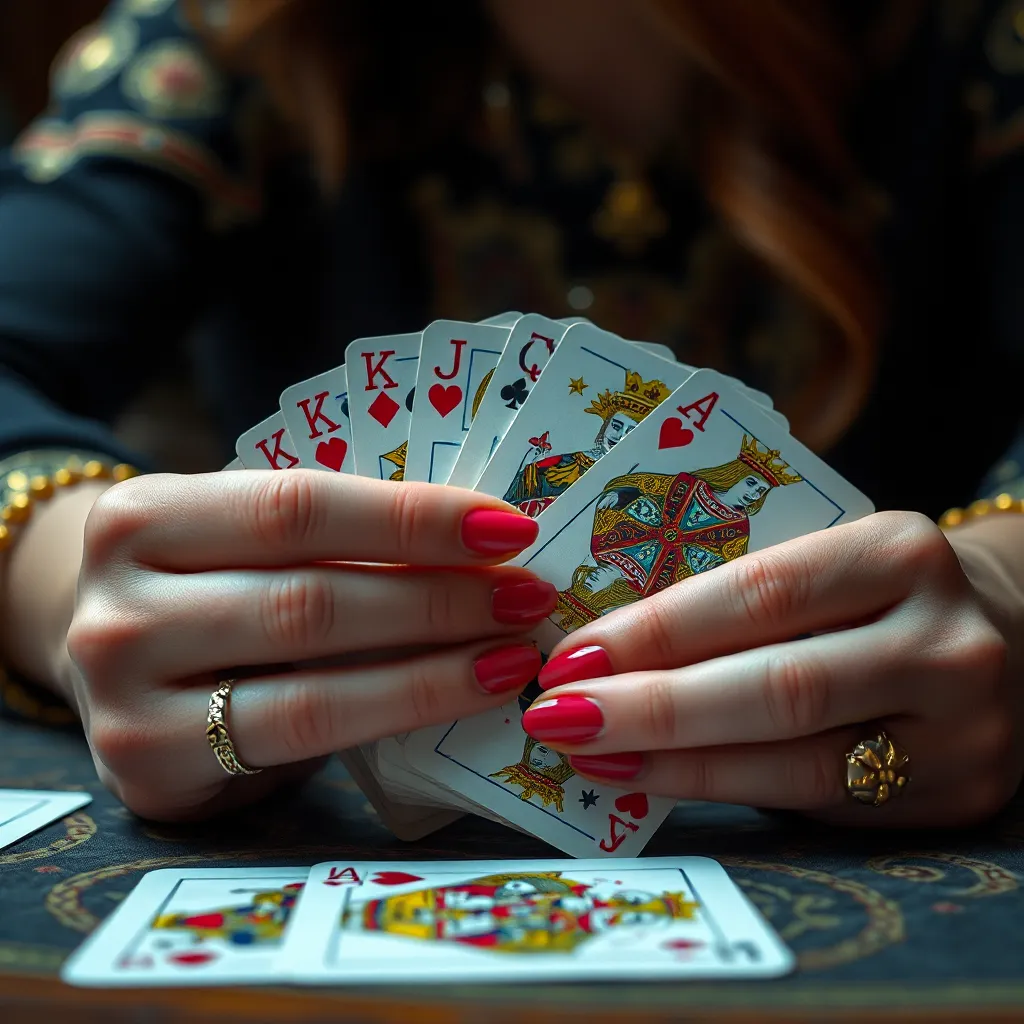
The face cards in a playing deck—Jacks, Queens, and Kings—serve as the Major Arcana of cartomancy. These cards represent archetypal energies and significant life themes, much like the Major Arcana cards in tarot. For example, the King of Hearts can embody the qualities of the tarot’s King of Cups: emotional maturity, compassion, and wisdom. The Queen of Diamonds might reflect the Queen of Pentacles, symbolizing nurturing abundance and practicality. Meanwhile, the Jack of Spades could mirror the Page of Swords, indicating curiosity, communication, or a new intellectual pursuit.
Interpreting face cards requires attention to their traditional meanings as well as their suit associations. A King of Clubs, for instance, might represent a charismatic leader or someone driven by passion and creativity, akin to the Knight of Wands. The Queen of Spades could signify a complex or challenging figure, reflecting the tarot’s Queen of Swords, who embodies independence and sharp intellect. By studying these connections, you can weave face cards into spreads that reveal major life events or spiritual lessons, just as you would with tarot’s Major Arcana.
Practical Techniques for Reading with Playing Cards
One of the most accessible ways to use playing cards for divination is through simple one-card pulls. Draw a single card to gain insight into a current situation or question. For example, pulling the 5 of Diamonds might suggest financial instability or a need to reassess your resources, while the Queen of Hearts could indicate a nurturing influence or emotional support in your life. For more detailed guidance, try a three-card spread representing past, present, and future, or mind, body, and spirit. This approach allows you to explore different facets of a situation using the familiar structure of tarot spreads.
Another effective technique is the “Celtic Cross” adaptation, where you use playing cards to represent each position in the spread. For instance, the first card could represent the current situation, the second card the challenge, and the third card the subconscious influences. By interpreting each card in the context of its suit and position, you can create a nuanced narrative that mirrors traditional tarot readings. Don’t be afraid to experiment with reversals, where cards are read upside down to signify blocked or internalized energy, adding another layer of depth to your practice.
Common Spreads for Cartomancy
For beginners, a simple three-card spread is an excellent starting point. Place the first card to the left, representing the past or foundation of the situation. The middle card signifies the present or current influences, while the rightmost card offers insight into the future or potential outcome. This spread is versatile and can be used for questions about relationships, career, or personal growth. For example, if you draw the 8 of Clubs in the past position, it might indicate a period of hard work that has led to your current situation, while the 3 of Diamonds in the future position could suggest a financial opportunity on the horizon.
A seven-card spread offers a deeper dive into a situation, incorporating elements of timing, external influences, and hidden factors. Each position in the spread corresponds to a specific aspect of the query, such as obstacles, advice, or external influences. For instance, the card in the “advice” position might reveal a need for patience or a change in perspective, while the “outcome” card could hint at a transformative event. By tailoring spreads to your needs, you can use playing cards to explore virtually any question or concern, much like you would with a traditional tarot deck.

Advanced Tips for Mastering Cartomancy
As you become more comfortable with playing card readings, consider developing your own interpretations based on personal experiences and intuition. While traditional meanings provide a solid foundation, your unique perspective can enrich your readings. For example, if you consistently draw the Ace of Spades in challenging situations, you might associate it with resilience or a need to confront difficult truths. Journaling your readings and tracking patterns can help you refine your interpretations over time.
Another advanced technique is combining playing cards with other divination tools, such as crystals or astrology. For instance, you might pull a playing card to represent your current emotional state and then select a crystal that aligns with its energy, such as rose quartz for the Queen of Hearts or citrine for the King of Diamonds. This multi-sensory approach can deepen your connection to the cards and enhance the clarity of your readings. Additionally, studying the numerology of the cards—such as the spiritual significance of the number 7 or the transformative power of the number 10—can add another layer of insight to your cartomancy practice.
Conclusion
Playing cards offer a unique and accessible pathway into the world of tarot, blending familiar symbols with deep spiritual wisdom. By understanding the connections between suits and face cards and their tarot counterparts, you can unlock a wealth of intuitive guidance using a deck you likely already own. Whether you’re performing a quick one-card pull or diving into a complex spread, cartomancy allows you to explore life’s questions with clarity and creativity. As you continue to practice, you’ll discover that your poker deck is more than just a game—it’s a powerful tool for divination, self-reflection, and personal growth. Embrace the magic of playing cards and let them guide you on your journey of discovery.
FAQ
Can playing cards be used for tarot readings?
Yes, playing cards can be interpreted in a similar way to tarot cards, following their symbolic meanings and associations.
What do the suits in playing cards correspond to in tarot?
Hearts correspond to Cups, Diamonds to Pentacles, Clubs to Wands, and Spades to Swords in tarot.
What are some techniques for reading with playing cards?
Techniques include one-card pulls, three-card spreads, and adaptations of traditional tarot spreads like the Celtic Cross.
Leave a Reply