Short Answer
The Queen of Pentacles stands as a prominent symbol within the realm of tarot, embodying qualities that resonate deeply within Christian perspectives. This card not only reflects material prosperity and nurturing attributes but also weaves these elements into a tapestry rich with spiritual significance. By exploring this card through a Christian lens, we can unearth its multifaceted meanings and how they align with biblical teachings.
At its core, the Queen of Pentacles represents wealth and resourcefulness, two themes that, when analyzed in light of Christian doctrine, unveil essential truths about stewardship and responsibility. The Biblical narrative frequently underscores the importance of managing one’s resources wisely, a concept poignantly illustrated in the parable of the talents (Matthew 25:14-30). This parable underscores that wealth is not merely for self-indulgence but is a tool for good. The Queen, with her generous heart and keen intuition, echoes this sentiment, portraying the ideal of a faithful steward whose management of earthly possessions glorifies God.
Moreover, the nurturing aspect of the Queen of Pentacles cannot be overlooked in this discussion. In Christianity, nurturing and caring for others is a fundamental tenet of faith. The Queen exemplifies this through her warmth and attentiveness, tending not only to her material resources but also to the emotional and spiritual well-being of those around her. Just as Christ embodied compassion and benevolence, the card encourages believers to embody these qualities in their own lives, fostering a community where love, support, and grace abound.

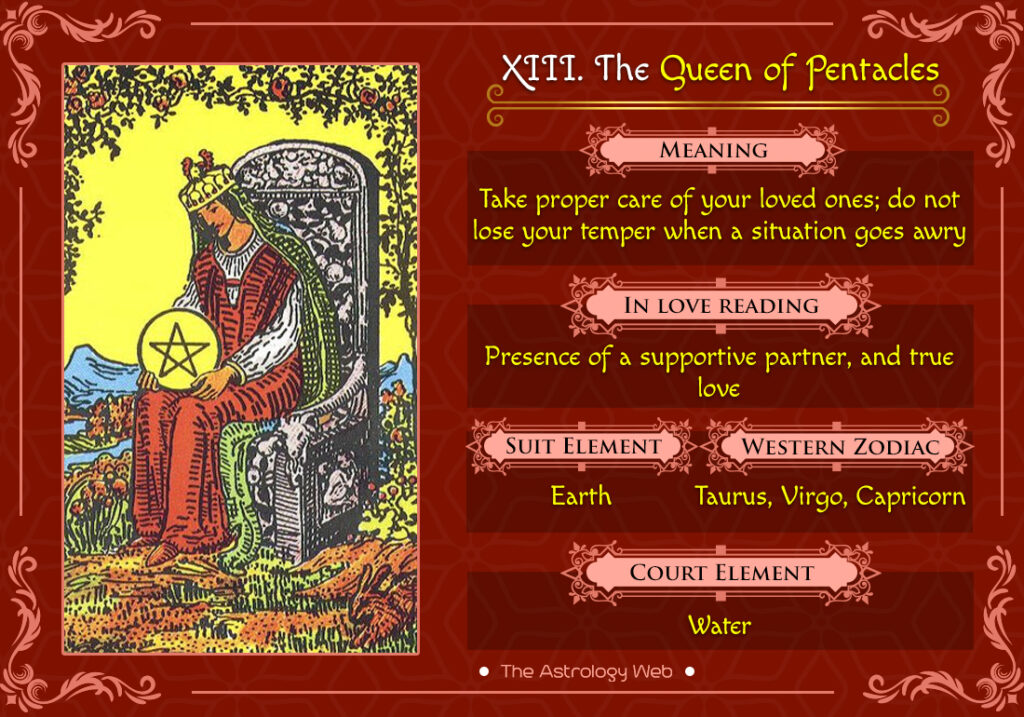
When we delve deeper, the card’s imagery provides profound insight. The Queen often appears surrounded by nature, symbolizing fertility and growth, unexpectedly aligning with Christian themes of creation. The Biblical account in Genesis details God’s creation of the earth, where the beauty of nature reflects His divine craftsmanship. Therefore, the Queen’s association with the natural world serves as a reminder of the interconnectedness of all creation, encouraging believers to appreciate and nurture the gifts provided by God.
Critically, one must also consider the dichotomy of the Queen of Pentacles when viewed in its reversed position. In this state, the card may suggest an imbalance or neglect of priorities. From a Christian perspective, this can manifest as a warning against materialism and the perils of placing worldly possessions above spiritual well-being. Christ made it clear in Matthew 6:19-21 that one should not store up treasures on earth where they can decay. The reversed Queen of Pentacles serves as a cautionary tale that resonates with those who may veer off course, urging a recalibration towards faith and reliance on God rather than on transient material wealth.
Furthermore, the Queen of Pentacles invites contemplation on the balance between work and faith. This card often emphasizes diligence and hard work; however, it also brings attention to the need for spiritual replenishment. Christians are called to labor not only for their own needs but to advance the Kingdom of God. Thus, the Queen becomes a metaphor for the Christian’s dual role as both a worker and a nurturer. This balance ensures that while addressing earthly responsibilities, one does not neglect their spiritual journey.
In addition, the Queen serves as an exemplar of female energy and empowerment within a Christian framework. Historically, women in the Bible play vital roles—think of Proverbs 31’s virtuous woman who embodies strength, wisdom, and kindness. The Queen of Pentacles embodies these regal traits, calling Christian women to recognize their inherent value and importance in their various spheres of influence, from family to community and beyond. The card’s embrace of feminine qualities does not limit it to gender, rather exemplifying universal virtues of care and guidance.
Ultimately, engaging with the Queen of Pentacles through a Christian lens necessitates a holistic interpretation that intertwines themes of wealth, nurturing, stewardship, and empowerment. The card invites believers to reflect on how they interact with their surroundings, urging them to embrace gratitude and generosity. It reinforces the idea that true prosperity lies not solely in material abundance but in the richness of relationships, community, and faith.
As individuals delve into the tarot’s intricate narratives, they can glean wisdom about their own journeys. The Queen of Pentacles, in her nurturing yet practical manner, encourages believers to remain grounded in their spiritual convictions while actively contributing to the world around them. Through this interlacing of earthly and spiritual, Christians are reminded that every resource, every relationship, is entrusted to them for a divine purpose.
The Queen of Pentacles, therefore, invites a deeper exploration of self and spirituality. As believers navigate their daily lives, they are encouraged to embody the card’s principles—embracing nurturing roles, engaging in their communities, and fostering a sense of gratitude for both spiritual and material blessings. This card, reflective of biblical teachings, nurtures a conversation where wealth meets faith, and personal responsibility intertwines with collective well-being.
FAQ
What does the Queen of Pentacles Tarot card represent?
The Queen of Pentacles represents wealth, nurturing, resourcefulness, and the importance of balancing material and spiritual responsibilities.
How does the Queen of Pentacles relate to Christian teachings?
The card embodies themes of stewardship, compassion, and the significance of managing resources wisely in alignment with Christian values.
What does the reversed Queen of Pentacles symbolize?
The reversed Queen of Pentacles may indicate neglect of priorities, cautioning against materialism and emphasizing the importance of spiritual well-being.
Leave a Reply